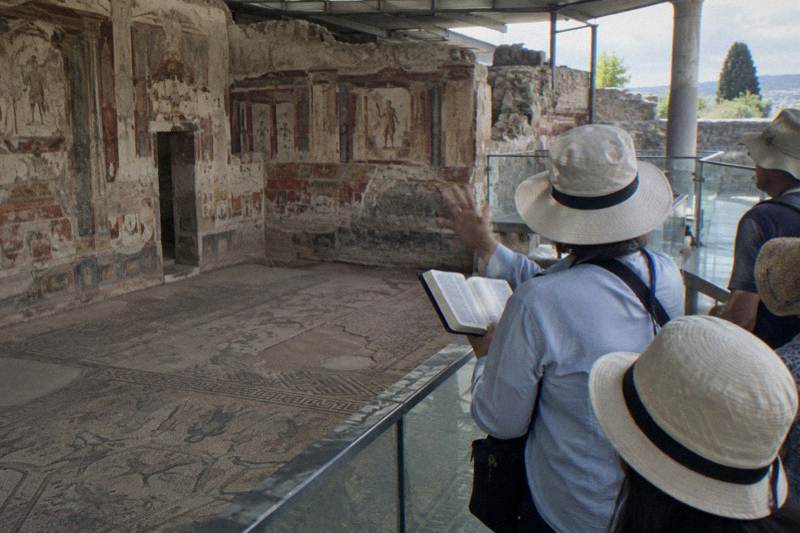
Is Ephesus Worth Visiting On A Biblical Tour?
A decision guide to whether Ephesus fits a biblical visit: what the Ministry says the site is, which Christian stops tour lines name, and how the trips compare on duration and price.
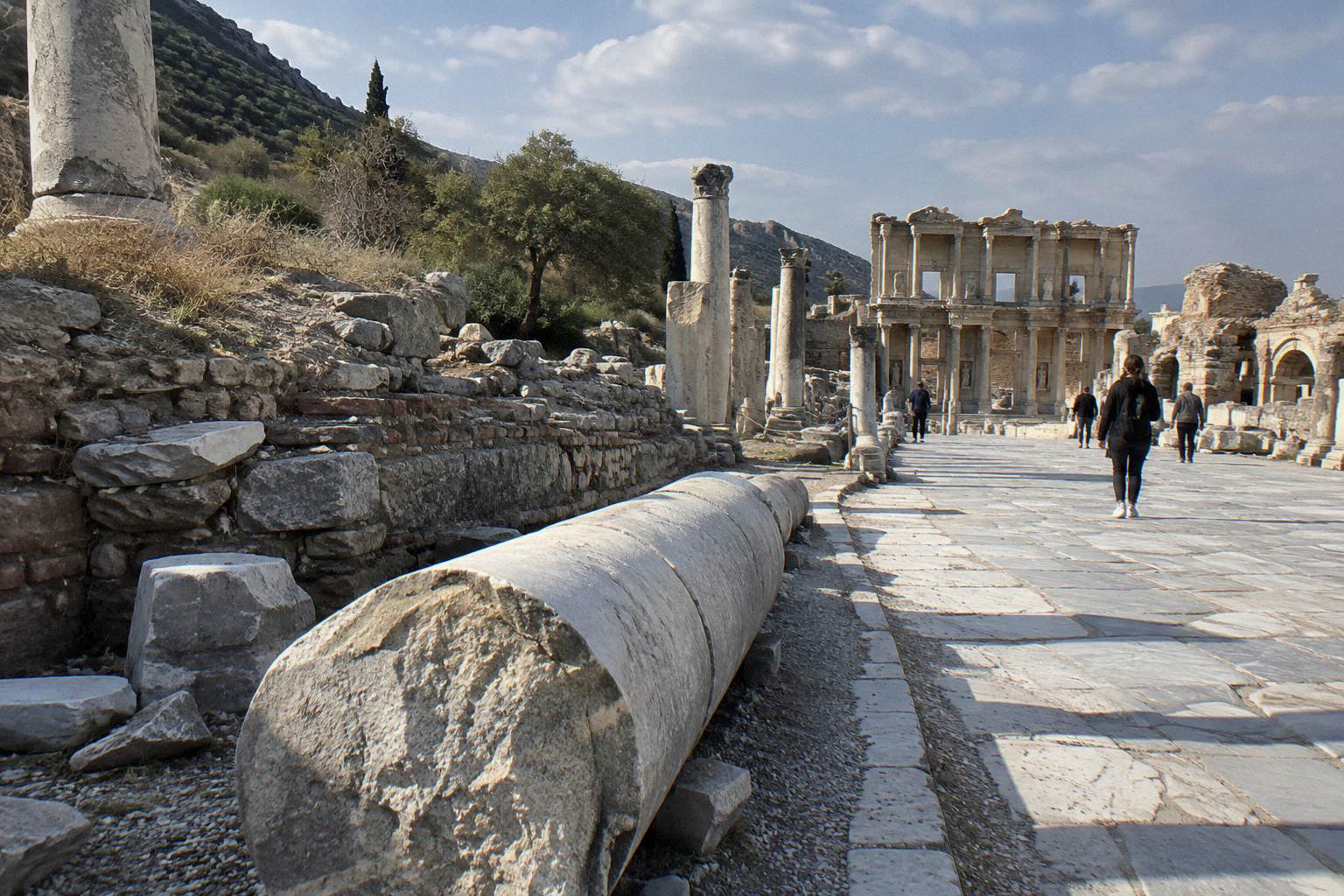
Ephesus fits readers who want to stand in the city Paul preached in and the church addressed in Revelation 2. The Ministry of Culture and Tourism calls it "a key city in the expansion of Christianity, from which St Paul launched many of his missions". A visit takes roughly 2 to 3 hours on foot, and tours here run from 4 hours upward.
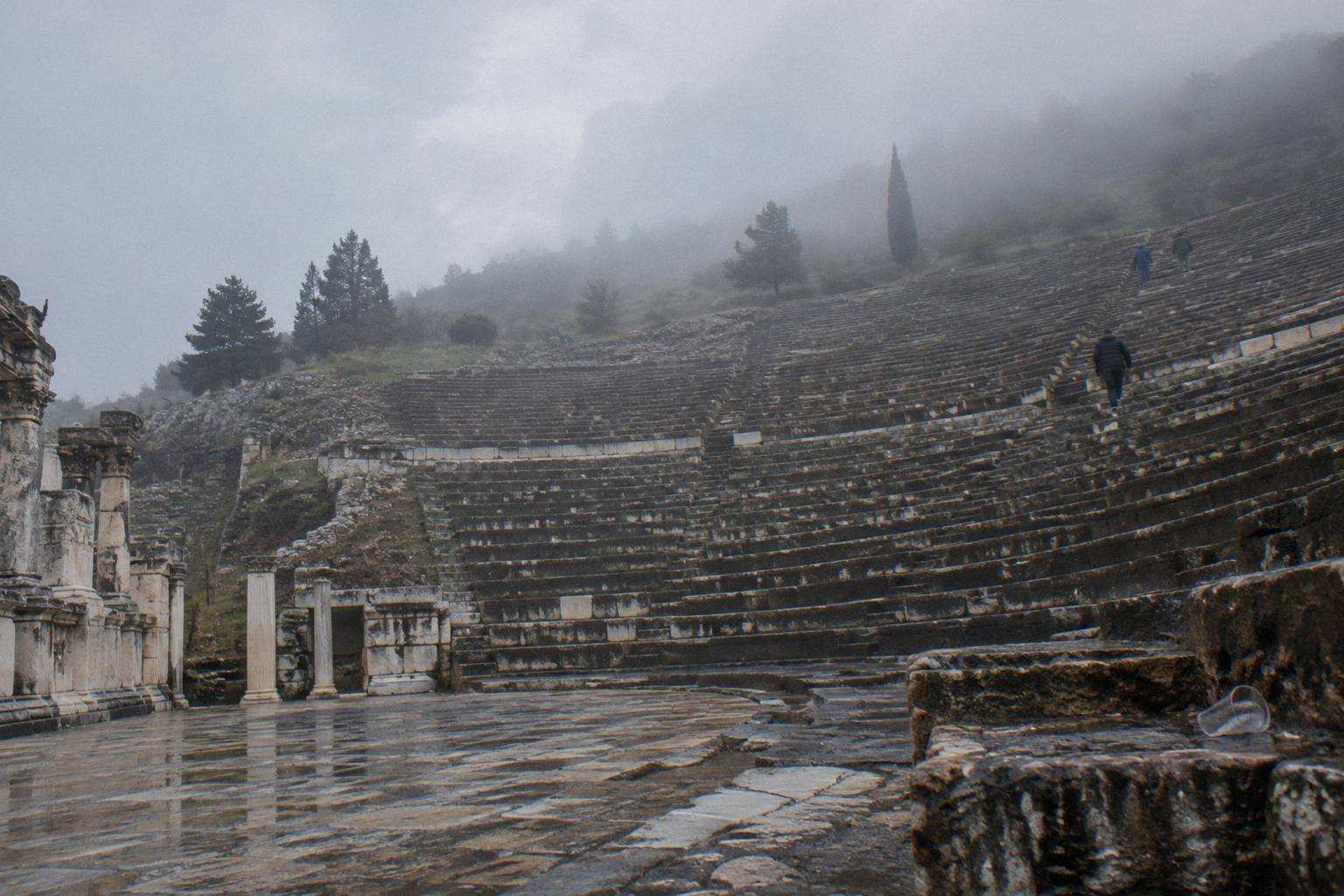
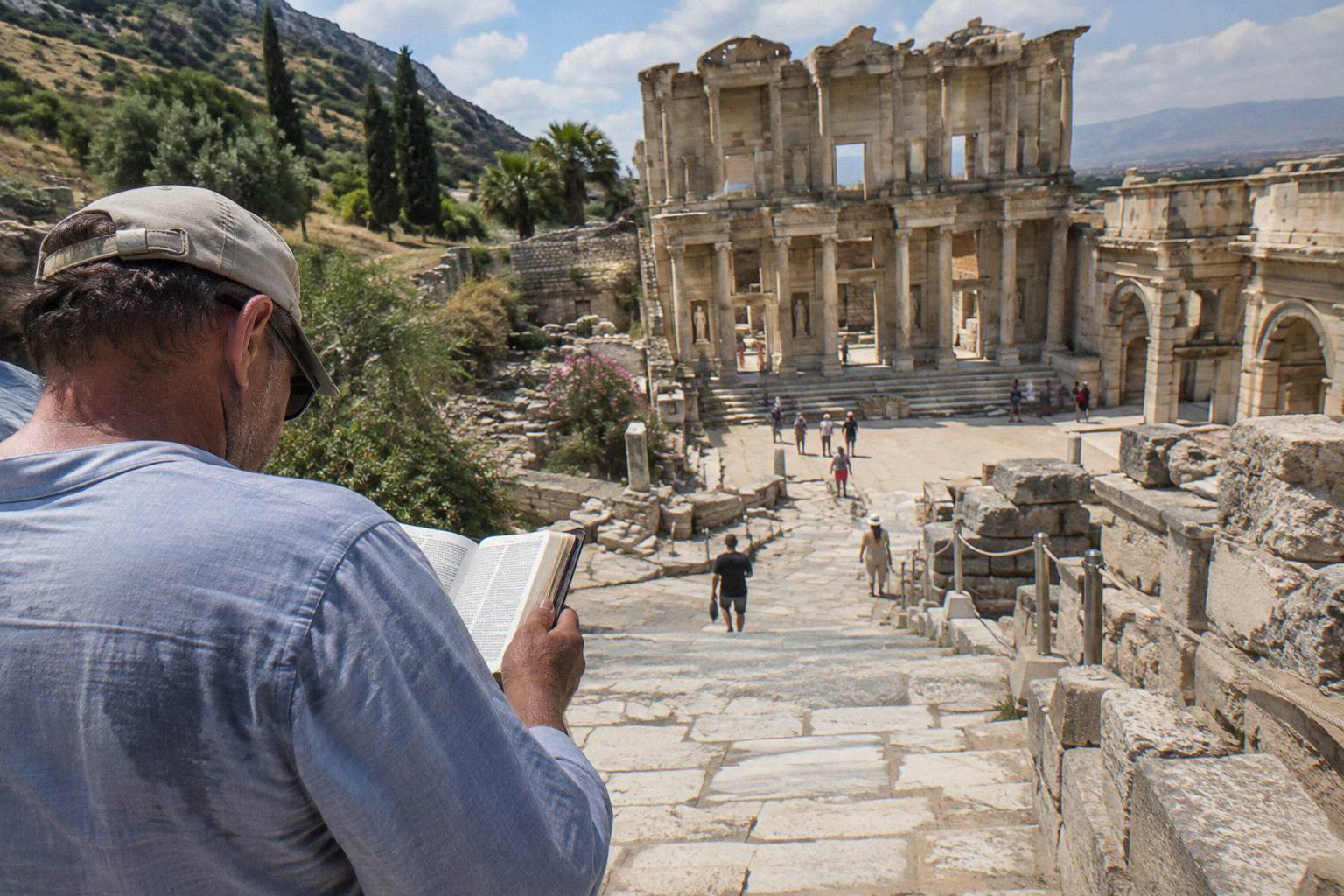
That is the shape of the decision. Ephesus is not a single ruin with a plaque; it is a whole Greco-Roman city, inscribed on the UNESCO World Heritage List since 2015, with a Great Theatre of roughly 25,000 seats by the usual estimate, the Library of Celsus, the Marble Road, and the Agora all on one walk. The biblical layer sits on top of that: the synagogue where Paul "spake boldly for the space of three months" (Acts 19:8), the theatre where the crowd "rushed with one accord" during the riot of the silversmiths (Acts 19:29), and the church that received the first of the seven letters of Revelation.
For a hesitant reader, the question usually comes down to three smaller ones. Is the site real and substantial, or a few stones in a field? Is the biblical connection traceable in the ruins, or is it all read in from the text? And does a tour add anything over arriving alone? The sections below answer each in turn, using only what the Ministry publishes and what the tour lines themselves name.
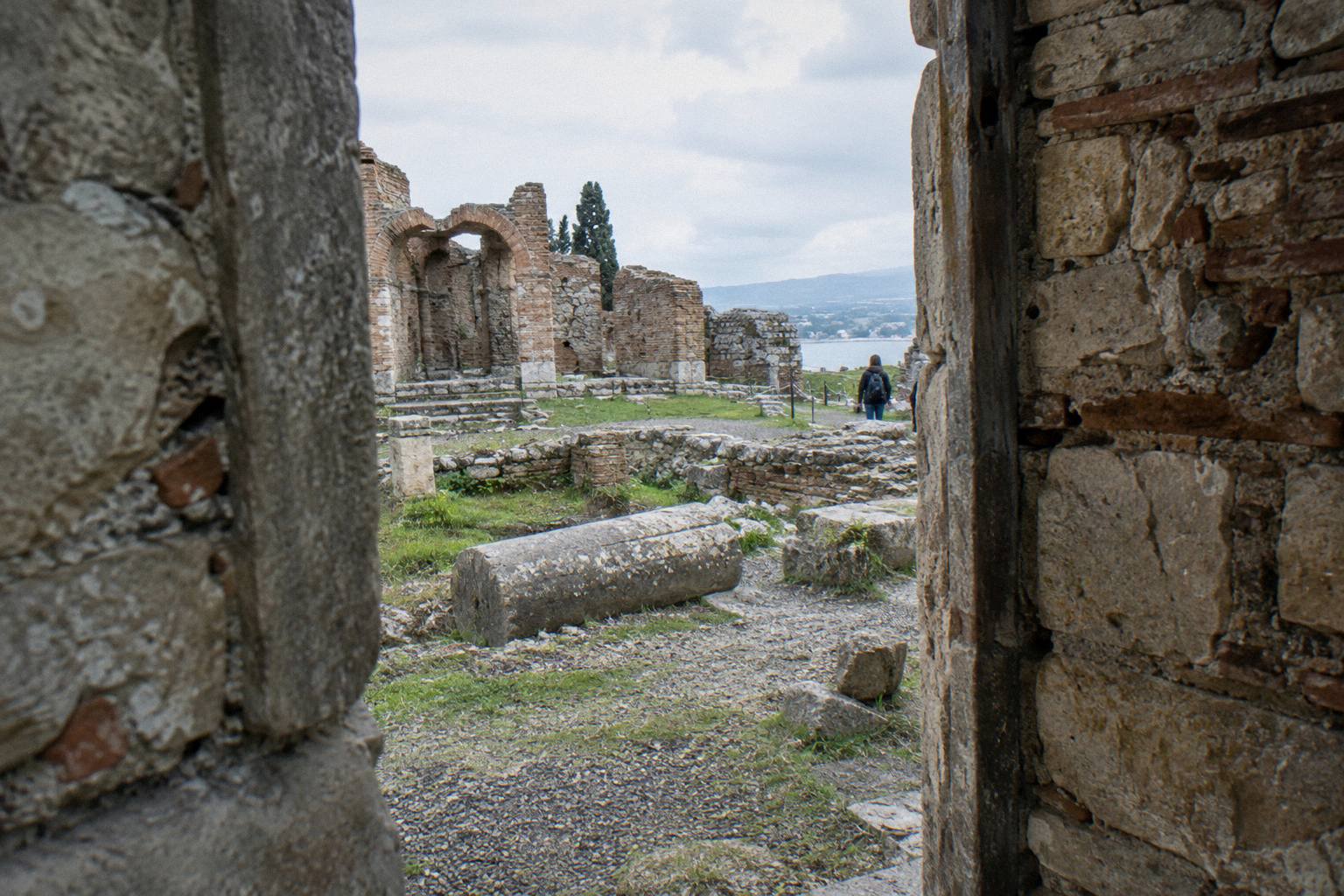
One thing settles the first question fast. The Ministry page for the site names the Great Theatre, the Odeum, the Library of Celsus, bathhouses and the Agora, dates the settlement to about 6,000 BC, and lists an audio-guide service; the site is open every day, and hours shift by season, so check the Ministry page on the day (the official Ephesus page). Nobody arrives at Ephesus to find a fenced-off foundation. The walk from the upper gate to the lower gate is about 1.5 km one way, downhill, and the whole of it is ancient street.
The trips above are the three most direct ways to do this in a day: the Best-Seller Cruise Tour with a ticket option from $15 per person (4.9 from 1,190 reviews), the Guide Of Ephesus Private from $22.73 per person (5.0 from 164 reviews), and the All Inclusive Private with lunch from $151.20 per person (5.0 from 1,137 reviews). All three are private or small-group formats, so the per-person figure falls as the group grows. The rest of the article explains what each kind of day actually contains, so the comparison is about the stops, not just the numbers.
What Does The Ministry Say Ephesus Is?
The Ministry describes Ephesus as a major Mediterranean city on the western coast of Asia Minor, later the capital of Roman Asia, built around an ancient shrine of the earth goddess Artemis, and as a key city in the expansion of Christianity. The UNESCO inscription adds Ayasuluk Hill, with the Basilica of St John and the Temple of Artemis area, to the protected property. The House of the Virgin Mary is a pilgrimage site, not an inscribed component.
That description matters because it defines what a "biblical" visit to Ephesus can be. The ruins themselves are Roman: Curetes Street, the Library of Celsus, the terraced houses of wealthy Ephesians on the slope of Mount Koressos, the bathhouses, the Agora. The biblical reading of those ruins comes from the text. Acts 19:10 says of Paul's teaching, "And this continued by the space of two years; so that all they which dwelt in Asia heard the word of the Lord Jesus, both Jews and Greeks." Acts 20:31 gives three years, so the span is two to three years; the discrepancy stays as it is.
The riot scene is the most physical connection. Acts 19:24-28 records Demetrius the silversmith, who "made silver shrines for Diana", turning the city against Paul's companions, and Acts 19:29 puts the crowd in the building every visitor walks past: they "rushed with one accord into the theatre" having caught Gaius and Aristarchus. The Great Theatre a tour line names is that theatre. Standing in it, the passage reads differently than it does on a page.
The Temple of Artemis completes the picture and tempers it. It was one of the Seven Wonders of the Ancient World, the centre of the cult that Paul's preaching threatened, and today it is an open site with no entry fee where one re-erected column stands among the foundations. Tours that name it are naming a five-minute stop with a long shadow, not a second Ephesus. Readers who expect another acropolis there will be disappointed; readers who want to see where "Great is Diana of the Ephesians" (Acts 19:28) was shouted get exactly that.
Revelation gives the site its second anchor. Revelation 2:1 opens, "Unto the angel of the church of Ephesus write...", and the letter that follows praises the church's labour and patience before the famous rebuke of 2:4: "Nevertheless I have somewhat against thee, because thou hast left thy first love." The letter is read at Ephesus itself by many groups. None of this is archaeology you can point a camera at; it is text and place together, which is what most people booking a biblical tour are actually buying.
Which Christian Stops Do Tours Actually Name?
Every tour line for a day trip from Kuşadası names the Ephesus ancient city, and nearly all name the House of the Virgin Mary by tradition, the Temple of Artemis, and the Basilica of St John. Durations run 4 to 7 hours for those day trips. The multi-day Seven Churches trips name the further sites, Pergamum, Thyatira, Sardis, Philadelphia, Laodicea and Pamukkale with Hierapolis, over 3 to 5 days.
The distinction between "named on the line" and "maybe on the day" is the whole value of reading the stops list before booking. The House of the Virgin Mary, for example, appears on almost every Kuşadası day trip, but the Bible Oriented Guide, All Inclusive trip itemises only the Ephesus ancient city, so Mary's house is not a stop there. The Cave of the Seven Sleepers is named on exactly one line, the Private 7 Hour Full Day from İzmir, and the Grotto of St Paul is reported closed for conservation with no reopening date, so no tour can promise it.
Here is where each Christian stop comes from, source by source:
| Stop | Source | How To Read It |
|---|---|---|
| Great Theatre | Acts 19:29 names the theatre; Ministry page lists it | The riot crowd's destination; roughly 25,000 seats by the usual estimate |
| Basilica of St John | 6th-century basilica rebuilt under Justinian | Over the traditional tomb; no archaeological confirmation of remains |
| House of the Virgin Mary | 19th-century tradition, 1891 search by Lazarist priests | Venerated as where Mary is believed to have spent her last years; the Church has not formally ruled |
| Temple of Artemis | One of the Seven Wonders; Acts 19 context | Open site, one re-erected column, no entry fee |
| Cave of the Seven Sleepers | Tradition; visitor guides report a viewing path | Named on one tour line only; chambers are not entered |
A reader who wants Paul should check one more thing: the Church of Mary inside the ancient city, the so-called Double Church, is traditionally identified as a meeting place of the Council of Ephesus in 431, which declared Mary Theotokos against Nestorius. No tour line here itemises it by name, so treat it as something to ask the guide about on the day rather than a promised stop. The question of whether the day includes Mary's house and St John's at all is covered in more depth in does a tour include the House of Mary and St John's.
How Long Does A Visit Take?
Walking the ancient city takes roughly 2 to 3 hours on its own, along about 1.5 km of worn, uneven marble from the upper gate down to the lower gate. Adding the House of the Virgin Mary, about 7 km from Ephesus, and the Basilica of St John in Selçuk fills out the 4 to 6 hour range most Kuşadası day trips run. Full-day formats run 5 to 7 hours and add lunch.
Cruise passengers feel this arithmetic most. A call at Kuşadası typically lasts 8 to 11 hours, and the ship's own all-aboard time governs; the drive from the port to the ruins is roughly 20 to 35 minutes by road. A 4 to 6 hour tour therefore fits comfortably inside a call, with buffer. A 7 hour trip fits too, but with less room, which is why several lines spell out an on-time return for cruise guests in their inclusions. Everything else covered here is indexed on Biblical Ephesus Tour.
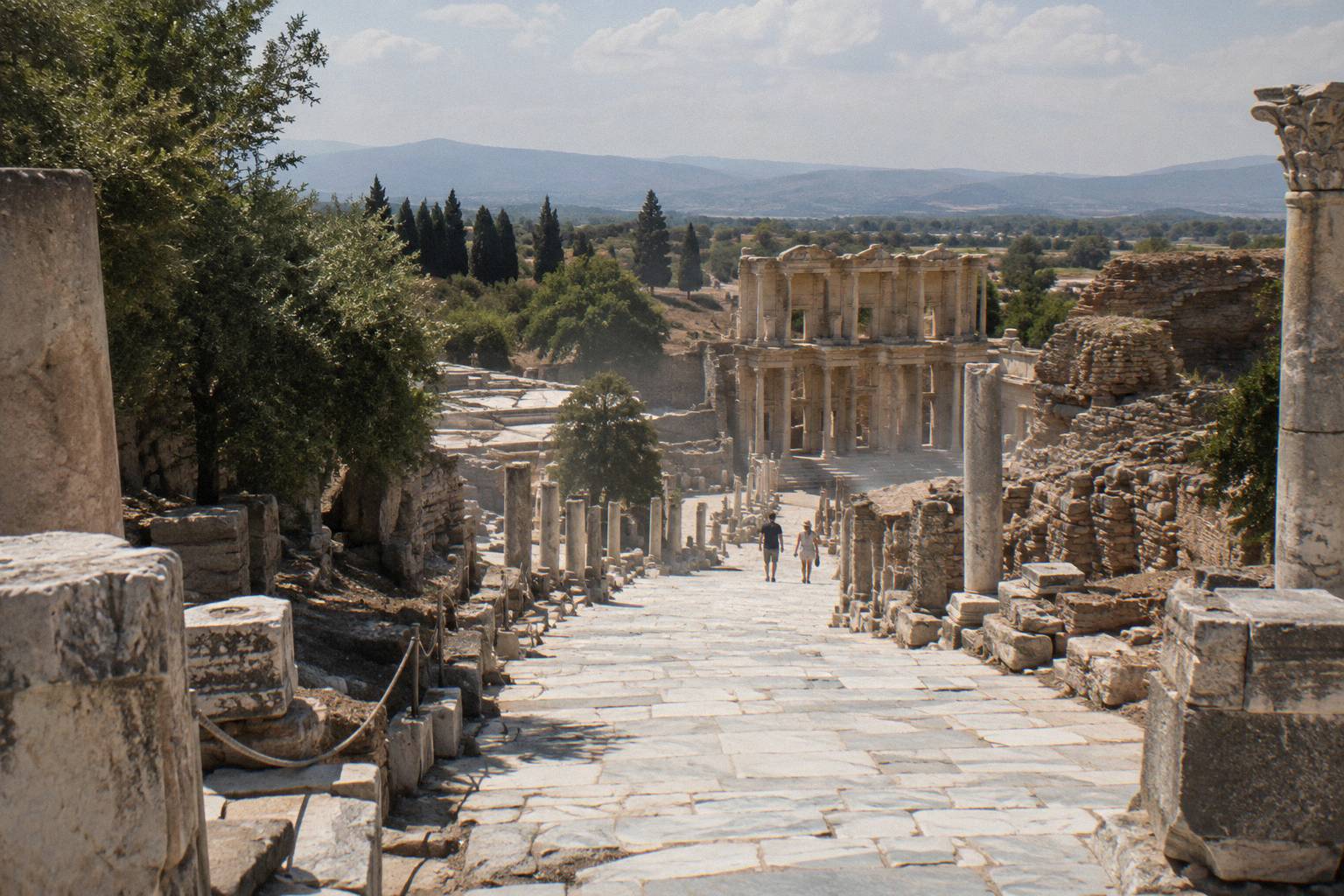
The pace inside the site is the other variable. Visitor guides describe the lower gate as the flatter route to the Library and the Theatre, which matters for anyone with limited mobility; the walk itself is downhill from the upper gate, and the marble is two millennia old. The full accessibility picture, including what a tour can and cannot do about it, is in whether Ephesus is wheelchair accessible on a tour.
Among the 5 to 6 hour options, the Guide Of Ephesus Private from $22.73 per person is a good illustration of what a mid-length day buys. It is rated 5.0 from 164 reviews, lists cruise port pick-up and drop-off, lunch in the countryside, parking fees, a professional licensed local tour guide and a private vehicle with a separate driver, and its inclusions state an on-time return for cruise passengers, with the ship's own all-aboard time governing. Entrance fees are paid separately: the guide arranges tickets and the fee is paid in cash. See the full details on the Guide Of Ephesus private cruiser tour or Check availability.
Whatever the duration, the published fees apply on every line that excludes tickets. The Ephesus Archaeological Site is EUR 40, including the Ephesus Experience Museum on the site; the Basilica of St John is EUR 6; the Terrace Houses are a separate EUR 15 ticket; the Ephesus Museum in Selçuk town is EUR 10. These are published Ministry fees for non-Turkish adults, they change yearly, and the current figure is on the Ministry page, so check before going. Where a tour's exclusions list the House of Mary ticket, a separate fee is paid at the gate. The whole fee picture, including the EUR 165 Museum Pass Türkiye, is worked through in Ephesus entrance fees and Museum Pass Türkiye.
How Do The Tours Compare On Duration And Price?
Day trips from Kuşadası run from $15 per person for a 4 to 6 hour port-to-port trip to $151.20 per person for a 5 to 7 hour all-inclusive private day with lunch and entrance fees listed as included. The gap is almost entirely explained by three items: whether tickets are included, whether lunch is included, and whether the line names a Bible-oriented guide.
Every private trip here prices per person with the figure falling as the group grows, so a family of four pays well under four times the solo rate; that is stated once and applies throughout. Free cancellation up to 24 hours before the start is on every day-trip line, so the decision to book is reversible until the day before.
| Tour | Duration | Price From | Rating | Tickets And Lunch |
|---|---|---|---|---|
| Best-Seller Cruise Tour, Ticket Option | 4 to 6 hours | $15 per person | 4.9 from 1,190 reviews | Tickets via the ticket option; lunch not listed |
| Guide Of Ephesus Private | 4 to 6 hours | $22.73 per person | 5.0 from 164 reviews | Tickets paid in cash to the guide; lunch included |
| Travelshow Private, Lunch Included | 4 to 6 hours | $39.04 per person | 4.9 from 918 reviews | Tickets excluded; lunch and a Bible-expertise guide |
| All Inclusive Private, Lunch | 5 to 7 hours | $151.20 per person | 5.0 from 1,137 reviews | Entrance fees listed as included; lunch included |
| Bible Oriented Guide, All Inclusive | 6 to 7 hours | $143.20 per person | 5.0 from 646 reviews | Entrance fees listed as included; Bible-oriented guide; lunch |
Reading across the table: the cheapest entry is the Best-Seller Cruise Tour from the port, run by Moira Travel Agency, from $15 per person with port or hotel pickup and drop-off and an air-conditioned Mercedes with a separate driver; its entry tickets come only through the "Entry Tickets Included" option, otherwise they are paid separately at the Ministry fees above.
The middle of the table is where the biblical reader should look hardest. The Travelshow Private trip, from $39.04 per person, is one of only a few lines that lists a guide with biblical expertise; it also lists lunch, parking, a private vehicle, and an on-time return for cruise guests, with the ship's all-aboard time governing, while the Ephesus, House of Mary and St John tickets are excluded and paid separately. That combination, a Bible-focused guide plus a modest ticket bill, is the value shape most readers deciding whether a biblical tour is worth it are actually comparing.
The top of the table buys simplicity. At $143.20 to $151.20 per person, the two all-inclusive privates fold in lunch and list entrance fees as included, so nothing is paid at gates; both also list an on-time return to the port for cruise guests. Whether that premium beats paying the EUR fees at the gate yourself depends on group size, since the private per-person rate falls as the group grows while the Ministry fees do not. The comparison of what the money actually buys continues in what you pay for on a private Bible tour.
Is The House Of The Virgin Mary Worth The Stop?
The House of the Virgin Mary, about 7 km from Ephesus on Bulbul Mountain, is a small stone chapel venerated by Catholic and Muslim pilgrims as the place where Mary is believed to have spent her last years. The identification dates to 1891, when Lazarist priests from Smyrna searched the slope guided by the visions of Anne Catherine Emmerich. The Church has never formally ruled on its authenticity; it is a pilgrimage tradition.
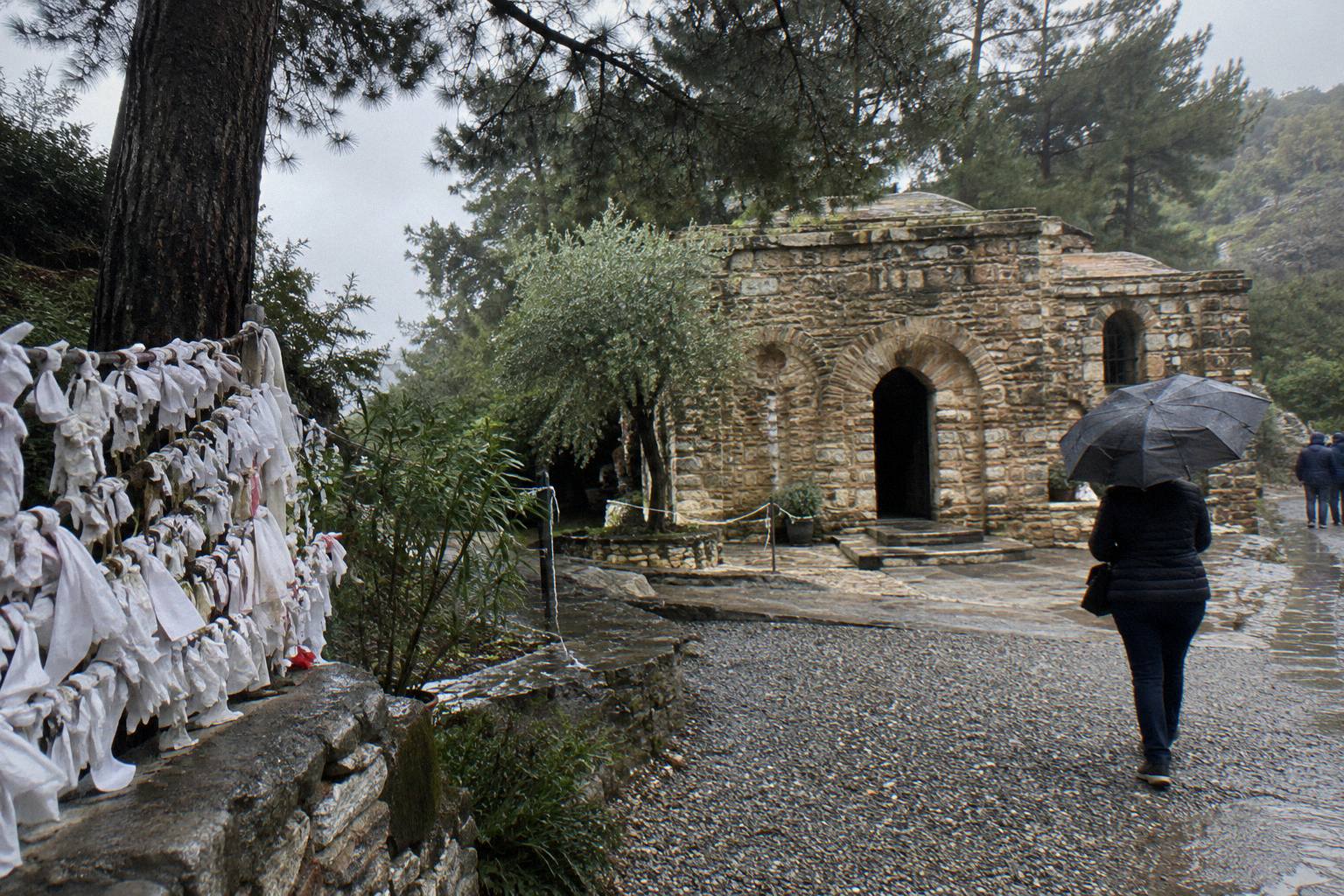
For some readers that is disqualifying and for others it is the whole point. Three popes have visited: Paul VI on 26 July 1967, John Paul II on 30 November 1979, and Benedict XVI on 29 November 2006, who celebrated a Eucharist at the shrine. The Assumption feast on 15 August draws an annual pilgrimage with Mass, and the site has a holy-water spring and a wall where visitors tie wishes. Mass is held daily in the warm months and on Sundays through the winter; confirm the current schedule with the shrine itself before going.
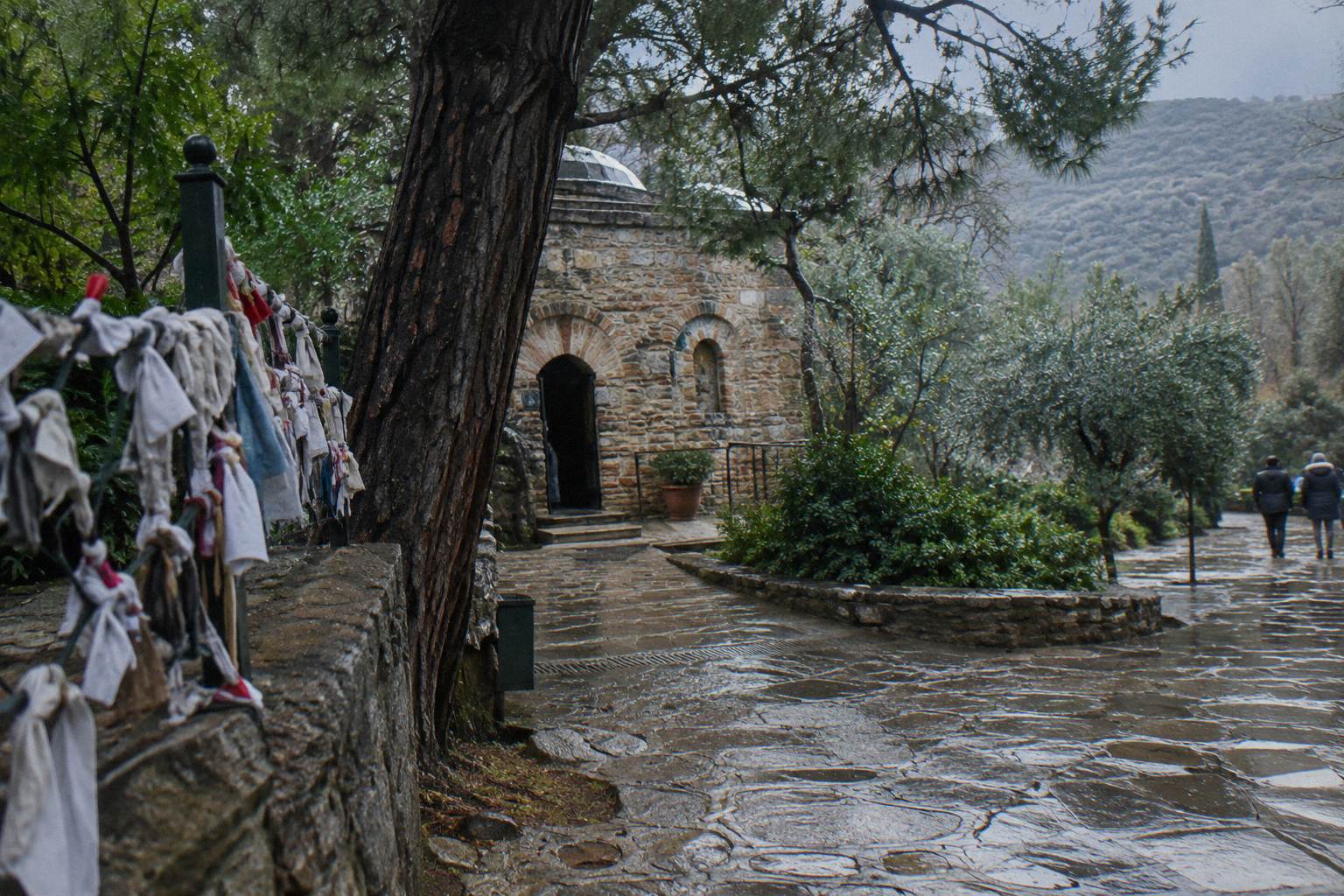
Two practical notes. Dress with shoulders and knees covered, as signs at the entrance ask, because it is an active chapel. And it is not a Ministry site: it is run by an association with a Capuchin community, it is not covered by the Museum Pass, and a separate fee is paid at the gate. The deeper question of what the tradition rests on is examined in whether the House of the Virgin Mary is real.
The Basilica of St John pairs with it naturally, and most lines that name one name the other. The 6th-century basilica stands on Ayasuluk Hill over the traditional tomb of the apostle; the Ministry text says John is "believed to have written" the Gospel of John in Ephesus and is said to have taken the Virgin Mary there, which is how the two traditions connect. No archaeological confirmation of remains exists, so every description stays with "the traditional tomb".
For a reader who wants Mary's house handled end to end, the All Inclusive Private, Lunch trip from $151.20 per person, rated 5.0 from 1,137 reviews, itemises Ephesus and the House of the Virgin Mary as its stops and lists the entrance fees and a traditional Turkish lunch as included, with an on-time return to the port for cruise guests and the ship's all-aboard time governing. Details are on the All Inclusive Ephesus and Mary day and you can Check availability there too.
Who Does A Bible Tour Of Ephesus Fit?
A biblical tour fits readers who want the text and the stones in the same day: Paul's two to three years in the city, the riot in the Great Theatre, the letter in Revelation 2, and the traditions of John and Mary. It fits less well readers who want a museum-grade collection, since most artefacts sit in Selçuk or further away, or a beach-plus-ruins day squeezed into two hours.
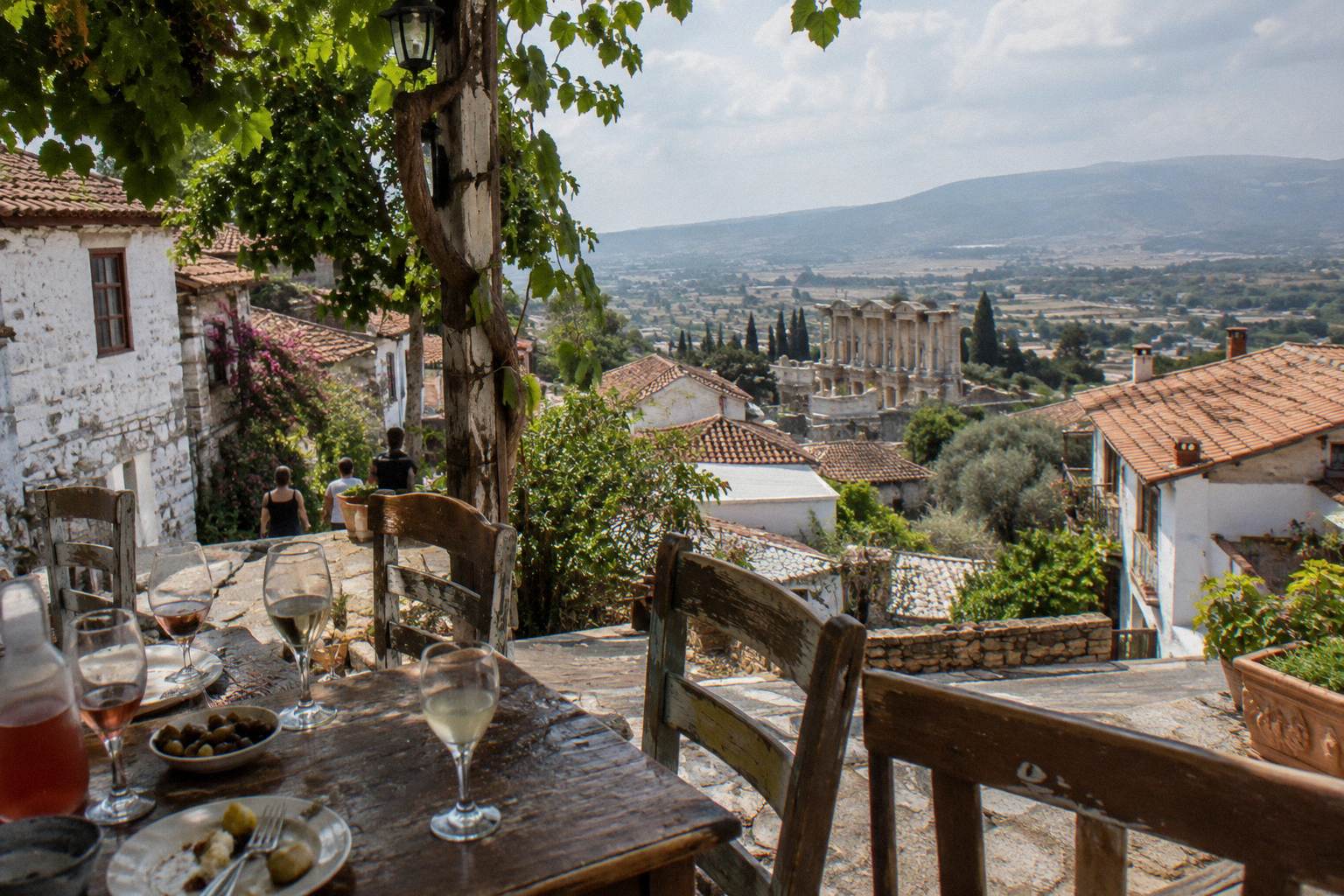
The site itself rewards the fit. It has been a World Heritage property since 2015 under criteria iii, iv and vi, and the Ministry page for the Ephesus Archaeological Site suggests the village of Şirince as a nearby addition, which several longer days can absorb. Readers wanting Paul's movements traced stop by stop should read following Paul's steps on a tour before choosing a line.
The timing of the year is the last variable. Turkish State Meteorological Service normals for İzmir put April to early June and late September to October between the cool wet winter and the hottest weeks; July and August are the hottest months. That reading, and the month table behind it, is worked through in when to visit Ephesus on a Bible tour.
One more thing belongs in the decision. The US State Department lists Türkiye at Level 2, "Exercise Increased Caution", and the UK Foreign, Commonwealth and Development Office advises against all travel to within 10 km of the border with Syria; neither advisory names İzmir province, Selçuk, Kuşadası or Ephesus as a restricted area. Advisories change, so read the current one on the day of booking; free-cancellation terms are each tour's own line, and every day trip here offers cancellation up to 24 hours before the start. More on that framing is in whether an Ephesus tour is safe right now.
So the answer to the opening question is a conditional yes, and the condition is the reader's own. Ephesus is a substantial, daily-open ancient city with a direct New Testament paper trail; the tours here put a guide, a vehicle and a return window around it for between $15 and $151.20 per person. Readers who want that get it. Readers who want the Sea of Galilee will not find it here, and no line claims otherwise. Biblical Ephesus Tour covers the stops, the fees and the routes in the guides linked throughout.
Common Questions About Visiting Ephesus
Is Ephesus Worth Visiting On A Biblical Tour?
For readers who want to stand where Paul taught for two to three years, where the Revelation 2 letter was received, and where John is believed to have written his Gospel, yes: the Ministry itself calls Ephesus a key city in the expansion of Christianity, and the tours here run 4 to 7 hours from $15 per person. The detailed case is made at the top of this article.
How Long Should I Plan At Ephesus?
Walking the ancient city takes roughly 2 to 3 hours along about 1.5 km of uneven marble. Day trips that add the House of the Virgin Mary and the Basilica of St John run 4 to 6 hours; full-day formats with lunch run 5 to 7 hours.
Are Entrance Tickets Included On Tours?
It depends on the line. Trips like the Best-Seller Cruise Tour and the Travelshow Private exclude tickets, which are then paid separately at the published Ministry fees: EUR 40 for the Ephesus site, EUR 6 for the Basilica of St John, with the fees changing yearly. The all-inclusive privates list entrance fees as included.
Is The House Of The Virgin Mary A Real Biblical Site?
It is a pilgrimage tradition, not an archaeologically established fact. The identification dates to an 1891 search guided by the visions of Anne Catherine Emmerich, and the Church has never formally ruled on its authenticity. Catholic and Muslim pilgrims venerate it, and three popes have visited.
Can I Visit Ephesus On My Own Instead Of A Tour?
Yes. The site is open daily and the Ministry lists an audio-guide service, and the Temple of Artemis has no entry fee at all. A tour adds a guide, transport, and for cruise guests a stated on-time return; the trade-off is compared in the Ephesus tour or on your own guide.
What Is The Great Theatre's Connection To The Bible?
Acts 19:29 records the crowd rushing "with one accord into the theatre" during the riot stirred by Demetrius the silversmith, who feared for the temple of Diana. The theatre on the site today, roughly 25,000 seats by the usual estimate, is that building.