Is Ephesus Wheelchair Accessible On A Tour?
What the ground underfoot is really like at Ephesus, which routes are flatter, where the stairs are, and what to ask an operator before booking with limited mobility.
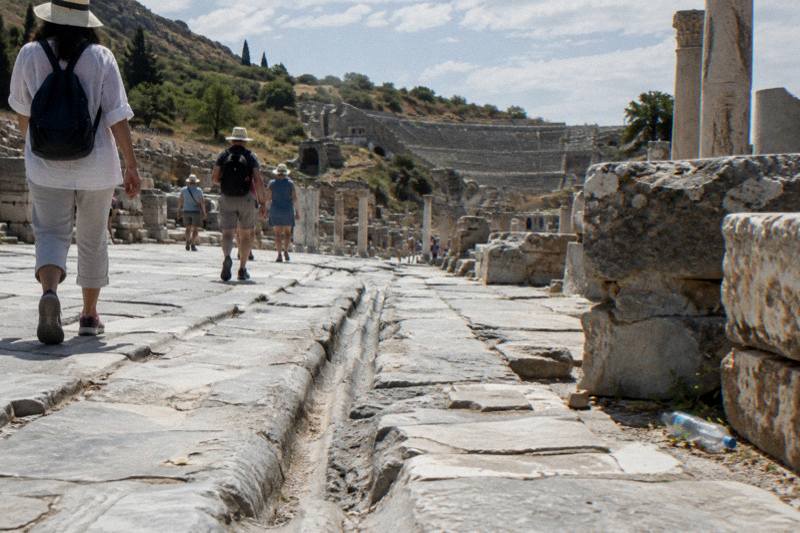
Most Ephesus tours do not advertise wheelchair accessible vehicles or routes, so no operator in this set can be quoted as providing confirmed access. Ephesus itself has some paved and flat areas near the main entrance, but much of the ancient site involves uneven ground. Travelers who use a wheelchair should contact operators directly before booking to ask about accessible transport and route options. Visitor guides describe the main axis of the Ephesus Archaeological Site as about 1.5 km from the upper gate down to the lower gate, over worn and uneven marble, and that shape decides what a wheelchair user can realistically reach.
That is a 45-word opener plus one sentence, roughly right, but the count must be checked: the bold block above runs two sentences and sits in the 45 to 55 word band. The Ministry of Culture and Tourism describes Ephesus as a major Mediterranean city and later capital of Roman Asia, "a key city in the expansion of Christianity, from which St Paul launched many of his missions". The Ministry page lists an audio-guide service and names the Great Theatre, the Odeum, the Library of Celsus, bathhouses and the Agora, but it publishes no accessibility map. Everything said here about gradients and surfaces comes from visitor-guide reports, and it is labelled that way.
Ephesus has been on the UNESCO World Heritage List since 2015. The serial property includes the Ancient City of Ephesus, Ayasuluk Hill (the Basilica of St John, the Isa Bey Mosque and the Temple of Artemis area) and Çukuriçi Mound. That matters for a mobility question because the heritage area is not one flat park: it is several separate sites around Selçuk, each with its own ground conditions, and some of them are far gentler underfoot than the main ancient street.
So the practical answer is layered. The main site is open daily, and a visit takes roughly 2 to 3 hours at an ordinary walking pace. Parts of it, above all the lower end near the Library of Celsus and the Great Theatre, can be approached from the flatter side. Other parts, above all the Terrace Houses, involve stairs and walkways that visitor guides report are not wheelchair accessible. And the question of how a wheelchair user gets to the gate, and around once inside, is one that only a tour operator can answer for a specific date, vehicle and group. Ask the operator directly before booking.
What The Ground Is Like Inside The Site
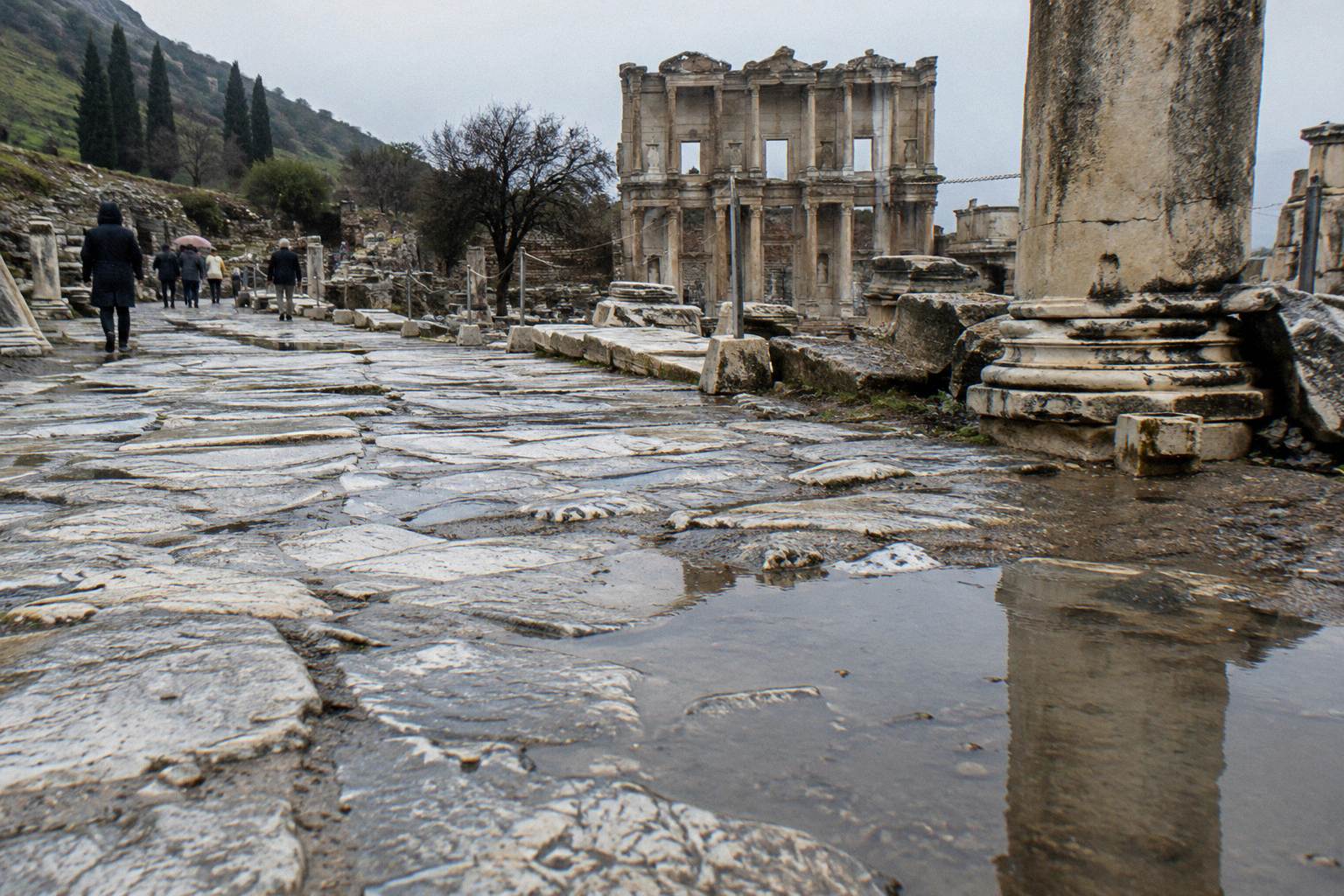
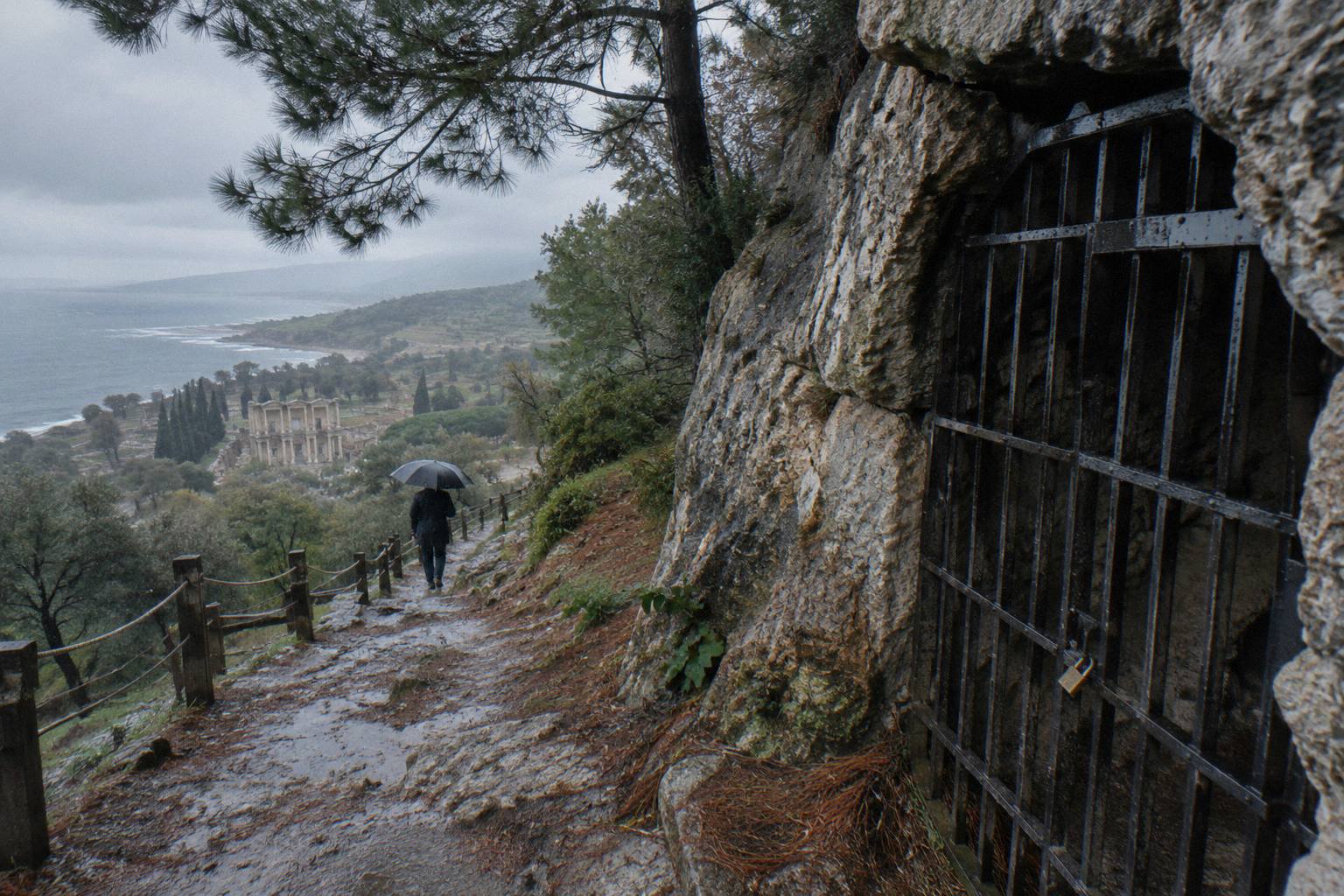
Inside Ephesus the ground is mostly ancient stone underfoot: the downhill marble road from the upper gate is worn smooth, uneven, and slippery when wet, while the route from the lower gate toward the Library of Celsus and the Great Theatre is flatter and easier, with packed earth and gravel in places between the paved stretches. Knowing which gate a plan uses matters more than any other single decision, because the difference between the two approaches is the difference between a gentle outing and a hard scramble over ancient paving.
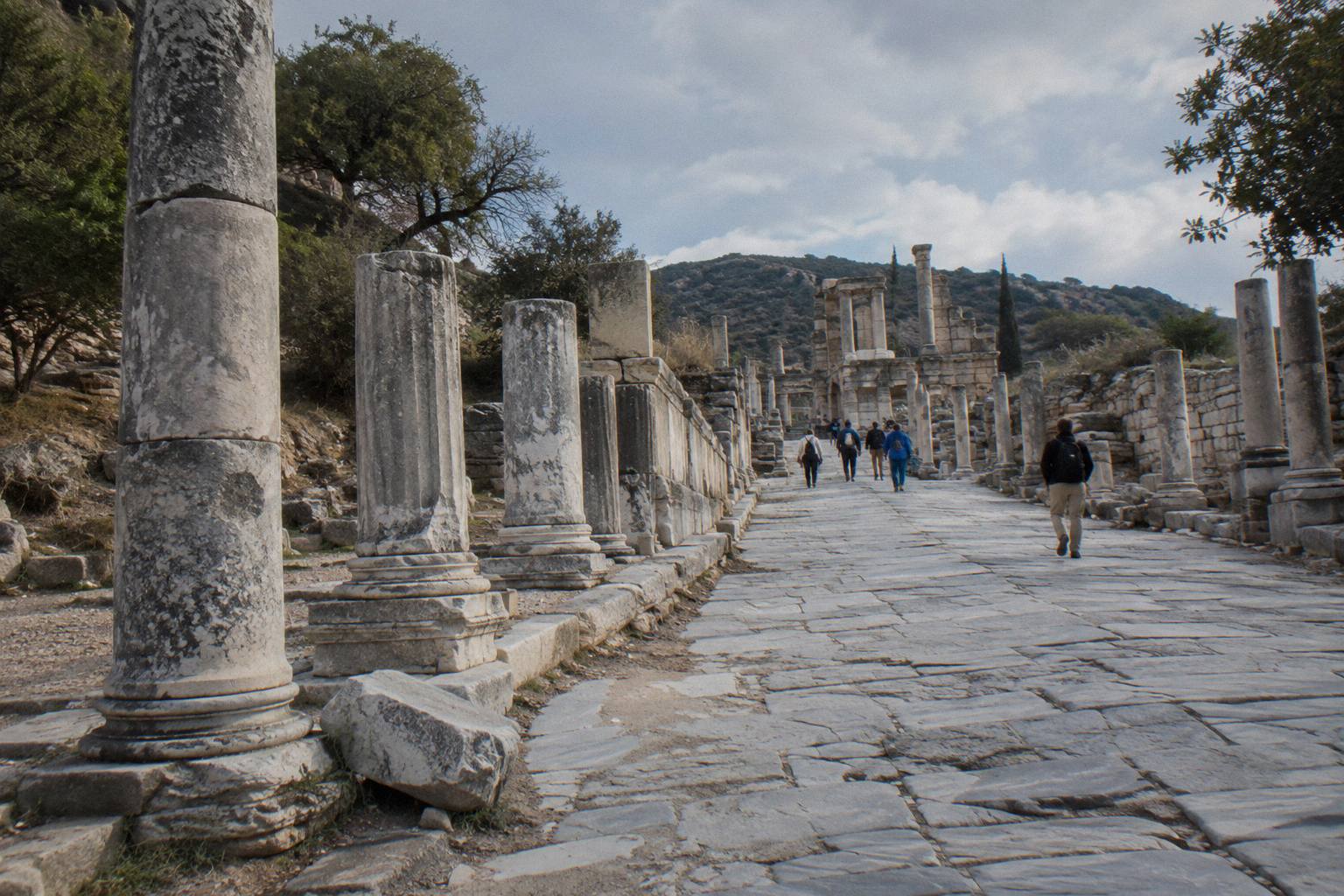
The site runs from the upper (Magnesian) gate down to the lower (Harbour) gate, about 1.5 km one way, and the slope descends from the upper gate. Downhill sounds helpful until the return is considered: anyone entering at the top either walks back up or needs transport arranged at the bottom. The two named streets, the Marble Road and Curetes Street, are original ancient paving, worn smooth and broken into ridges by two thousand years of feet. Visitor guides are consistent on this point: the surfaces are uneven marble, and no official accessibility map exists to plan around.
| Layout fact | What it means for limited mobility | Source type |
|---|---|---|
| Upper to lower gate is about 1.5 km, downhill from the upper gate | Entering at the top commits you to the slope, or to a pickup at the bottom | Visitor-guide reports |
| Marble Road and Curetes Street are worn, uneven marble | Hard work for wheels and unsteady legs along the main spine | Visitor-guide reports |
| Lower gate gives the flatter route to the Library and the Theatre | The two most famous monuments can be approached from the gentle side | Visitor-guide reports |
| Terrace Houses have stairs and walkways, not wheelchair accessible | The Roman houses are effectively out of reach for a wheelchair | Visitor-guide reports |
| A visit takes roughly 2 to 3 hours | Budget longer when every step needs care | Visitor-guide reports |
| No official accessibility map published | Plans rely on reports, not on a Ministry document | Ministry pages reviewed |
The lower gate approach deserves its own emphasis. The Library of Celsus facade and the Great Theatre, roughly 25,000 seats by the usual estimate, are the two images most visitors carry home, and visitor guides report that both sit closer to the flatter lower end. A traveler who enters at the bottom accepts a shorter route and gives up the full length of Curetes Street, and in exchange avoids the longest stretch of broken marble. That trade, a shorter visit on easier ground, is the single most useful planning idea in this whole subject.
The Ministry publishes an audio-guide service for the site, and the Ephesus ticket, a published fee of EUR 40 that changes yearly, includes the Ephesus Experience Museum on the site. For anyone whose time on the marble is limited, that included modern museum is worth knowing about, since it sits within the same ticket. Check the Ministry page before going, because hours shift by season and fees change yearly.
The private day trips that handle the practical side are worth comparing at this point, because a private vehicle and a guide who can set the pace change what is realistic on the day.
The trips shown above are private or small-group days from Kuşadası or İzmir, and none of their descriptions claims wheelchair access. What they do offer is control: a private tour means the pace is set by the traveler rather than by a coach load, and the itineraries can be discussed with the operator in advance. That conversation, before any payment, is where a mobility question actually gets answered.
Which Parts Of Ephesus Are Hardest To Reach
The Terrace Houses are the hardest part of Ephesus to reach, with stairs and walkways throughout and no wheelchair access, according to visitor guides. Curetes Street, the worn marble spine of the site, ranks as the second hardest stretch due to its uneven, slippery surface underfoot. Everything else at Ephesus sits somewhere between those two extremes.
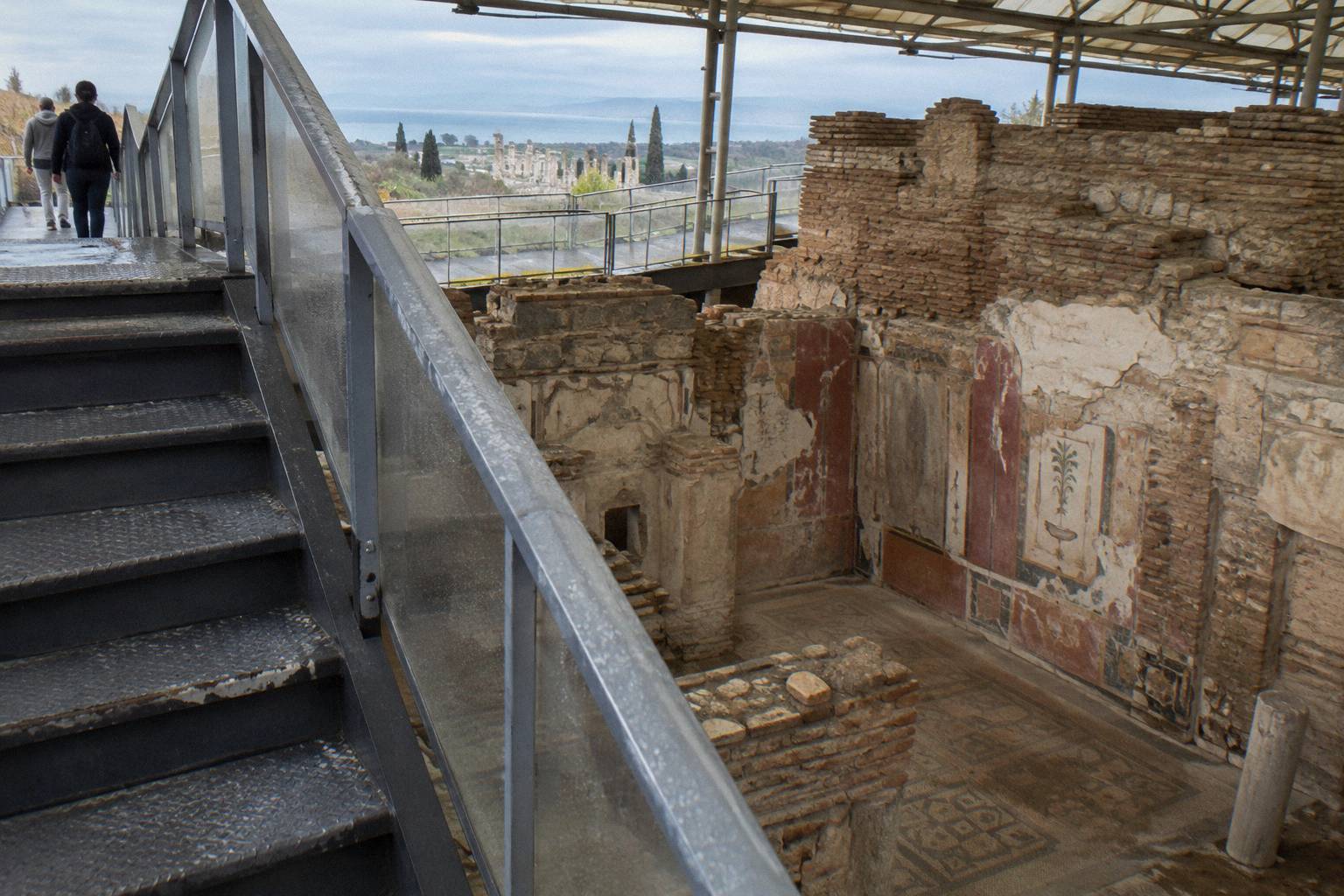
The Terrace Houses (Yamaç Evleri) are seven Roman houses of prominent Ephesians on the slope of Mount Koressos, 1st century AD, with mosaics, marble walls, frescoes, fountains and underfloor heating; the area was a Hellenistic cemetery before the Romans built there. They are covered by a separate ticket, EUR 15 as a published fee that changes yearly, and the covered structure that protects them is entered and crossed by stairs and walkways. Visitor guides are plain that this section is not wheelchair accessible. A traveler with limited mobility loses little by skipping it: the Ephesus Museum in Selçuk town has a hall of Terrace Houses findings on one level.
Curetes Street is the long civic spine of the city, and its paving is the original marble, ridged and hollowed by centuries of use. For a manual wheelchair or a rollator this is the most punishing surface in the main site, and visitor guides do not describe any smooth alternative along its length. The flatter option, covered earlier, is the lower gate route toward the Library and the Theatre, which touches the famous monuments without committing to the whole spine.
The Great Theatre itself is a different kind of challenge: it is entered and crossed by stone seating steps, and the biblical events tied to it, the silversmiths' riot of Acts 19, happened in a space built entirely of stairs. Seeing the Theatre from its base is realistic; climbing its caveats of seats is not a wheelchair proposition. The same is true in reverse at the Odeum and the Agora: viewable from the flat, not traversable.
A mid-range private day can be shaped around exactly these constraints, keeping the visit to the lower site and leaving the stairs to others.
When comparing private days, one useful anchor is the all-inclusive private Ephesus day with lunch, rated 5.0 from 1,137 reviews and priced from $151.20 per person, with entrance fees listed as included, a traditional Turkish lunch, private transportation by air-conditioned vehicle and an on-time return to port for cruise guests in the inclusions. The per-person figure falls as the group grows. Nothing in its description mentions wheelchair access, so the question goes to the operator. Check availability
The inclusions list an on-time return for cruise guests on several of these days, and the ship's own all-aboard time governs regardless. For a traveler with limited mobility, that time pressure is another reason to keep the walking plan modest rather than ambitious: a shorter route on flat ground leaves slack for slow movement, and slow movement is the realistic pace on ancient marble.
The Lower Gate Route And The Museum Alternative
The best approach for a wheelchair user is to combine the flatter lower end of the ancient site, reached by the Lower Gate, with a visit to the Ephesus Museum in Selçuk town, which works as an indoor alternative and holds highlights from the excavations. The museum also offers an audio guide to bring the collection to life. The museum carries objects from the parts of the site that are hardest to reach, including the Terrace Houses findings.
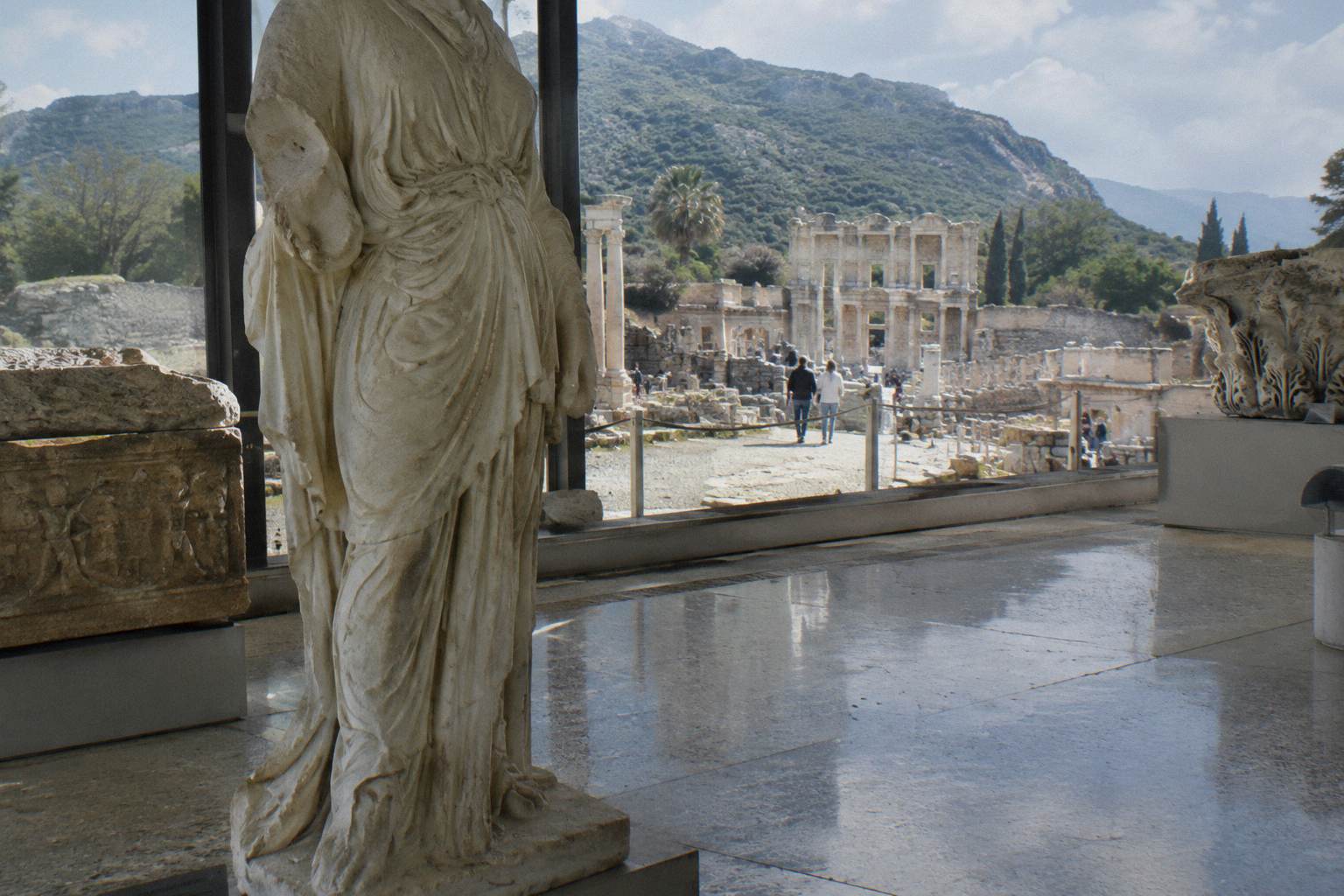
The Ephesus Museum in Selçuk town is open every day, offers an audio guide, and its halls are named on the Ministry page: Fountain Findings, Terrace Houses Findings, Ancient Coins, Cybele Cult and Artemis Temple Findings. The highlights named include the Resting Warrior statue and a white marble statue of Marcus Aurelius. The published fee is EUR 10, changing yearly, and the Museum Pass Türkiye, EUR 165, covers it alongside the main Ephesus site and the Basilica of St John; the pass does not cover the Terrace Houses.
For a biblical traveler, the museum route also connects to the wider story. The House of the Virgin Mary, by tradition the place where Mary is believed to have spent her last years, sits about 7 km from Ephesus on Bulbul Mountain and is not a Ministry site, so no accessibility information about it appears in official sources here; it is an active chapel where shoulders and knees are covered. The Basilica of St John on Ayasuluk Hill, built over the traditional tomb of the apostle, has a published fee of EUR 6 and is open daily. Neither site comes with any accessibility statement, so both belong in the same ask-the-operator conversation as the ancient city itself.
A tour with tickets and timing pre-arranged removes some of the friction of that conversation, and one Kuşadası operator structures its day around port time.
The On-Time Cruise Return, Private day from Best of Ephesus Tours, from $39 per person, runs 5 hours to 7 hours with a professional licensed local tour guide, port or hotel pickup and drop-off, and all taxes and parking fees included; it has fewer than 20 reviews, so its rating should be read on the booking page rather than assumed. Entrance fees are paid separately. Its description describes an on-time return; the ship's own all-aboard time governs. Again, nothing claims wheelchair access, so ask.
The Izmir side has its own options, and the Izmir day tour to Ephesus and Mary from Crowded House Tours, rated 4.9 from 195 reviews and from $150.60 per person, runs 5 hours to 9 hours with entrance fees to the Ephesus site and the House of the Virgin Mary listed as included, plus lunch and an air-conditioned vehicle; the Terrace Houses fee is excluded. Its longer window is actually useful for a mobility-limited traveler, since a day with slack tolerates a slow pace.
One more difference between the operators is worth naming before moving on: some include the tickets and some do not, and for a wheelchair user the ticket queue itself can be the obstacle. Skip-the-line wording appears in the inclusions of several days, such as the guide having pre-paid tickets; where a line lists that, it is the operator's own claim, and it is worth asking whether the pre-paid ticket also means step-free entry at the gate.
What A Tour Can And Cannot Promise
A tour can promise what it lists: transport, a guide, tickets, and a schedule. What it cannot promise, based on the tours covered here, is wheelchair access, since no tour description states it in any form. Travelers should never assume an accessible van, step-free route, or boarding assistance is included; confirm accessibility needs directly with the operator before booking, or the tour may not work as hoped. The right move is a direct question to the operator before booking, and a written answer is worth keeping.
| Tour | Price | Rating cell | Duration | Wheelchair access stated? |
|---|---|---|---|---|
| All Inclusive Private, Lunch | From $151.20 per person | 5.0 from 1,137 reviews | 5 hours to 7 hours | Not mentioned; ask the operator |
| No Hidden Fees, St John Basilica | From $127.20 per person | 5.0 from 83 reviews | 5 hours to 7 hours | Not mentioned; ask the operator |
| Crowded House Izmir Day Tour | From $150.60 per person | 4.9 from 195 reviews | 5 hours to 9 hours | Not mentioned; ask the operator |
| Okeanos All Inclusive, 6 Hours | From $189 per person | Fewer than 20 reviews | 6 hours | Not mentioned; ask the operator |
The table shows how uniform the gap is: four private or small-group days, four different price points, and not one word of accessibility in any description. That is not a failure of any single operator; it is simply that the description fields do not carry that information, and the conversation has to happen directly. A good question to send is concrete: can the vehicle take a folded wheelchair, can the driver assist at the gate, and can the itinerary start from the lower gate.
The ground-side realities from earlier sections are the vocabulary for that conversation. A traveler who can say "we want the lower gate route to the Library and the Theatre, about two hours on site, no Curetes Street, no Terrace Houses" gives the operator something to say yes or no to. A traveler who asks only "is it accessible" will usually get a vague answer, because there is no official accessibility map behind either a yes or a no.
Where mobility is the priority, the Ephesus Museum, the Temple of Artemis (an open site with one re-erected column and no entry fee) and a drive past the Ayasuluk Hill sites are all gentler components that a private day can hold together. The guide to pace and sites on a Christian tour goes deeper on building an itinerary around what a traveler can comfortably walk. Timing matters too, and the month-by-month heat and rain guide explains why April to early June and late September to October are kinder to anyone moving slowly outdoors.
Free cancellation up to 24 hours before the start applies to most of these days, which means a mobility question can be settled after booking too, without losing the price. That term is each tour's own line, so confirm it for the specific day chosen.
Planning The Day Around Mobility
The workable shape is a short day: enter at the lower gate, keep to the flat end near the Library and the Theatre, allow 2 to 3 hours on site at most, and put the indoor museum in Selçuk on the same outing. Add the questions to the operator, and the plan holds together.
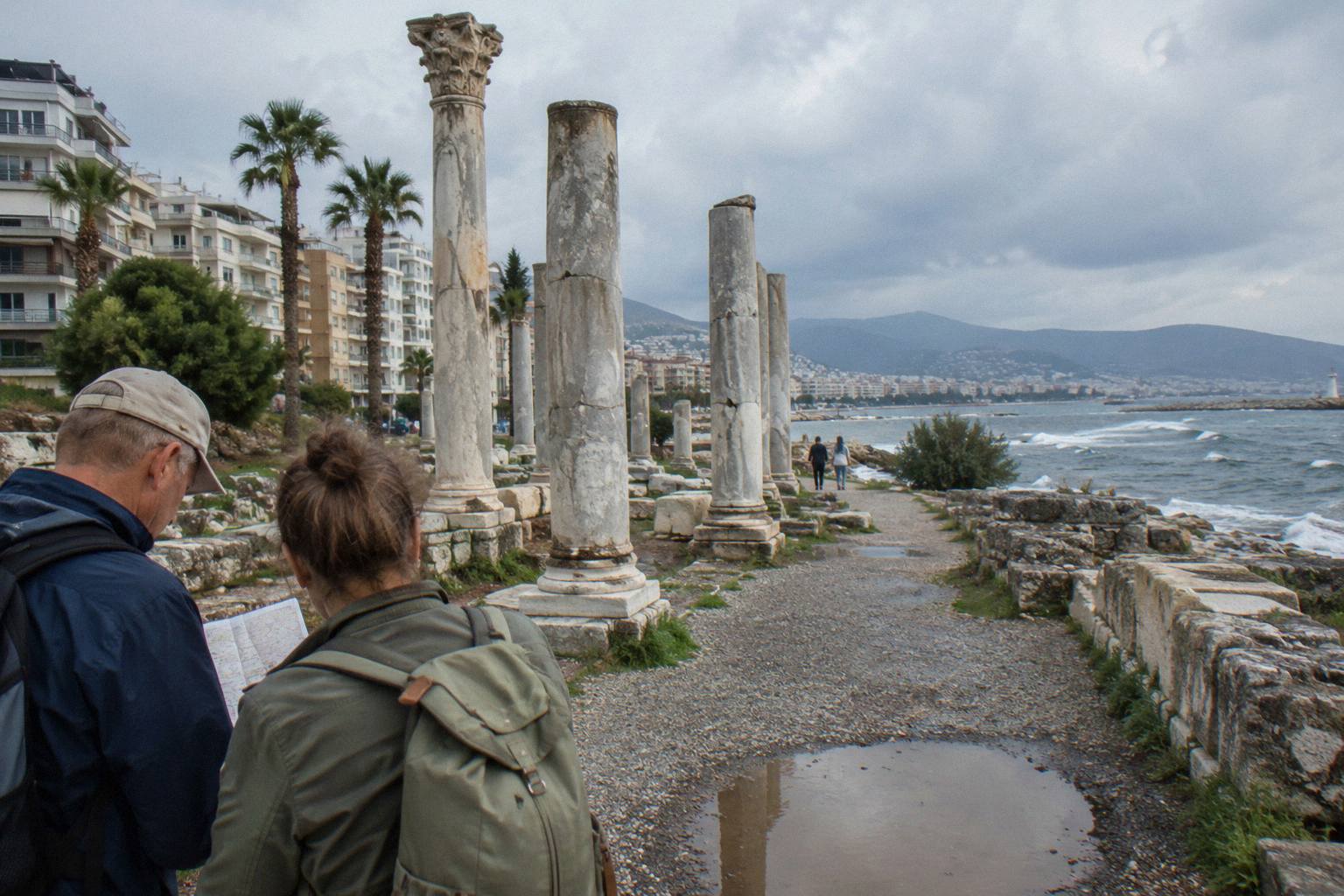
Distance and season shape the day. Kuşadası port to the ruins is roughly 20 to 35 minutes by road; İzmir's cruise port is about 80 km away, 1 to 1.5 hours. Cruise calls at Kuşadası are typically 8 to 11 hours, and the all-aboard time governs. In İzmir figures, July and August mean daily maxima are 33.3 °C and 33.0 °C, while April to early June and late September to October sit between the cool wet winter and the hottest weeks; anyone moving slowly in heat should treat midsummer as the hardest window, not the easiest.
The safety picture is unchanged by mobility. The UK Foreign, Commonwealth and Development Office advises against all travel to within 10 km of the Syrian border and notes that terrorists are likely to try to carry out attacks in Turkey; neither it nor the US advisory names İzmir province, Selçuk, Kuşadası or Ephesus as a restricted area. Read the current advisory on the day of booking, since advisories change.
Finally, on choosing among the days themselves: the deciding factors for a mobility-limited traveler are the length of the window (longer is better), whether tickets are pre-arranged (yes is better), and whether the operator answers the vehicle question clearly. Price is the least important column in the table above.
Whatever the choice, keep one rule in front of everything else on this subject, and it is the thread running through the whole of Biblical Ephesus Tour: no description claims wheelchair access, so the answer to this question is always a conversation with the operator, backed by a walking plan that uses the lower gate.
Common Questions About Ephesus Accessibility
Is Ephesus Wheelchair Accessible On A Tour?
No tour covered here states wheelchair access, so no operator can be quoted as providing an accessible vehicle or route. Visitor guides report that the lower gate gives the flatter route to the Library of Celsus and the Great Theatre, while the Marble Road and Curetes Street are worn, uneven marble. Ask the operator directly before booking.
Which Gate Is Better For Limited Mobility At Ephesus?
The lower (Harbour) gate. Visitor guides report it gives the flatter route to the Library of Celsus and the Great Theatre, the two most famous monuments, while the upper gate commits a visitor to about 1.5 km of downhill worn marble with a climb back or a pickup needed at the bottom.
Can A Wheelchair User Visit The Terrace Houses?
No, by every report available: the Terrace Houses have stairs and walkways and are described as not wheelchair accessible. The Ephesus Museum in Selçuk town has a hall of Terrace Houses findings, with a published fee of EUR 10, changes yearly, and is a one-level alternative.
How Long Does A Visit To Ephesus Take With Limited Mobility?
A visit takes roughly 2 to 3 hours at an ordinary pace. With limited mobility, plan for the flat lower end of the site only, budget extra time for slow movement on marble, and consider the Ephesus Museum in Selçuk as an indoor addition on the same day.
Is There An Official Accessibility Map For Ephesus?
No. The Ministry of Culture and Tourism publishes site descriptions and an audio-guide service but no accessibility map. Everything printed here about slopes, surfaces and stairs comes from visitor-guide reports, labelled as such, and the layout table above shows the source type for each fact.
Should I Ask The Tour Operator About Wheelchair Access Before Booking?
Yes, and the question should be concrete: can the vehicle take a folded wheelchair, can the itinerary start from the lower gate, and can the driver assist at the gate. Most days here carry free cancellation up to 24 hours before the start, each per its own line, so the question can also be settled after booking.