When To Visit Ephesus On A Bible Tour: Heat, Rain And Months
The only published climate data for Selçuk and Kuşadası is the İzmir station table. Read month by month, it shows April to early June and late September to October sitting between the cool wet winter and the hottest weeks of July and August.
Short answer
April to early June and late September to October sit between the cool wet winter and the hottest weeks. July is the hottest month by the İzmir figures, with a mean daily maximum of 33.3 °C; August is close behind at 33.0 °C. December has the most rainy days at 12.7; July the fewest at 0.5. Sites are open daily, so any month works with the right plan.
The mean daily maximum at the İzmir station runs from 12.5 °C in January to 33.3 °C in July. Those are the only published climate normals that cover Selçuk and Kuşadası, because the Turkish State Meteorological Service does not publish the two towns separately, and they answer most of what a Bible-tour visitor wants to know before picking a month.
Everything below is read off that single table. The sites at Ephesus are open daily, hours shift by season, so no month is closed to a visit; the difference between months is how the heat and the rain feel on worn marble, and what that means for pace, clothing and the length of day you book. Biblical Ephesus Tour covers the tours that run from Kuşadası and İzmir in every month, and the climate figures here are the ones to hold against each tour's duration.
When To Visit Ephesus On A Bible Tour?
April to early June and late September to October sit between the cool wet winter and the hottest weeks, and by the İzmir figures they are the months that give a full day on the marble without the July heat or the December rain. July is the hottest month, with a mean daily maximum of 33.3 °C. December is the wettest by rainy days, with 12.7.
The way to answer the question is one table, because that is all the data that exists. The Turkish State Meteorological Service publishes normals from its İzmir (Konak) station covering 1938 to 2025; Selçuk and Kuşadası are not published separately, so the table is labelled İzmir figures throughout. Aydın province, the province that actually contains Selçuk and Kuşadası, is hotter at its extremes: a mean maximum from 13.2 °C in January to 36.4 °C in July, and a mean minimum from 4.4 °C in January to 20.7 °C in July.
What the table cannot tell you is crowd size, ship schedules or month-by-month pricing, and no figure of that kind appears here. What it can tell you is precise: how hot the average afternoon is, how cool the average night falls, and how many days of rain to expect in a month. For a visitor worried about heat on marble, those three columns are the whole decision.
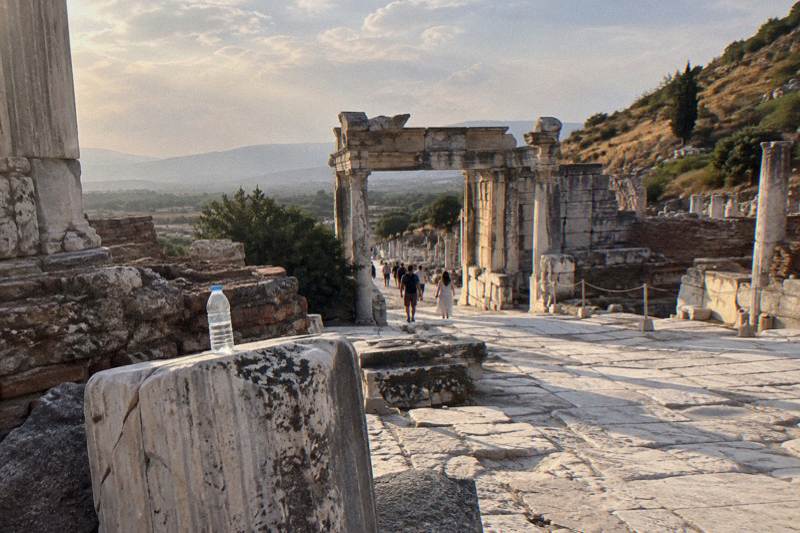
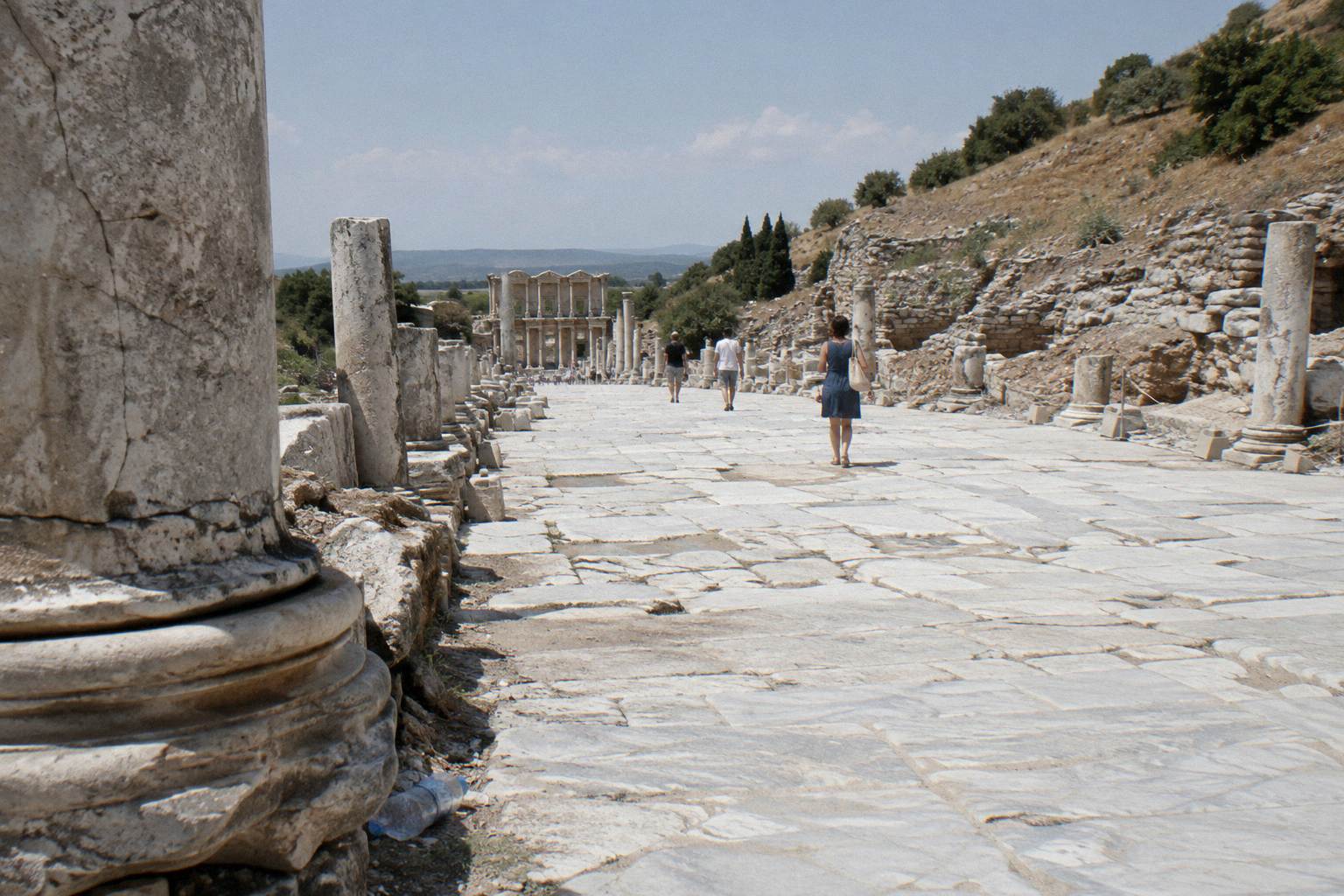
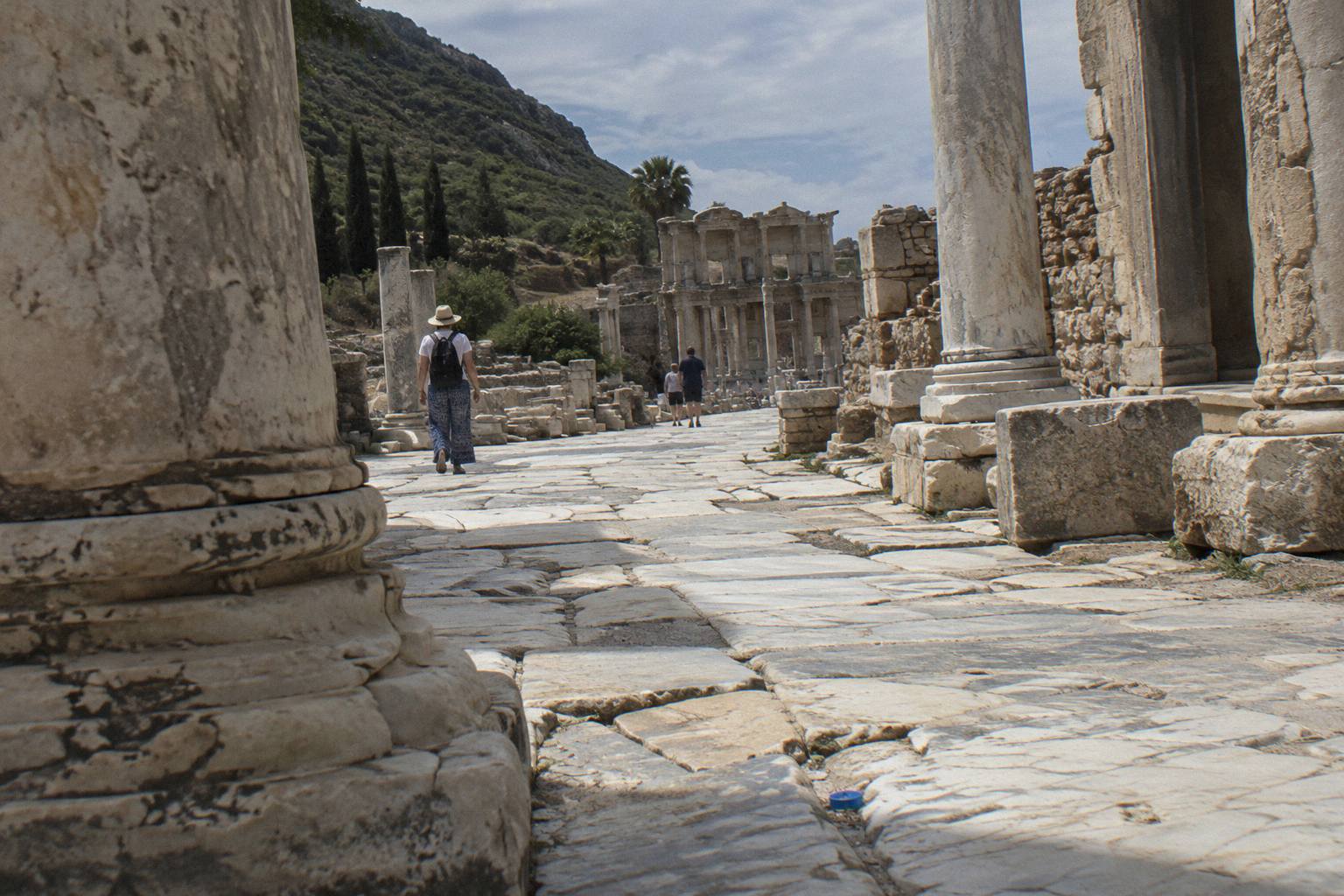
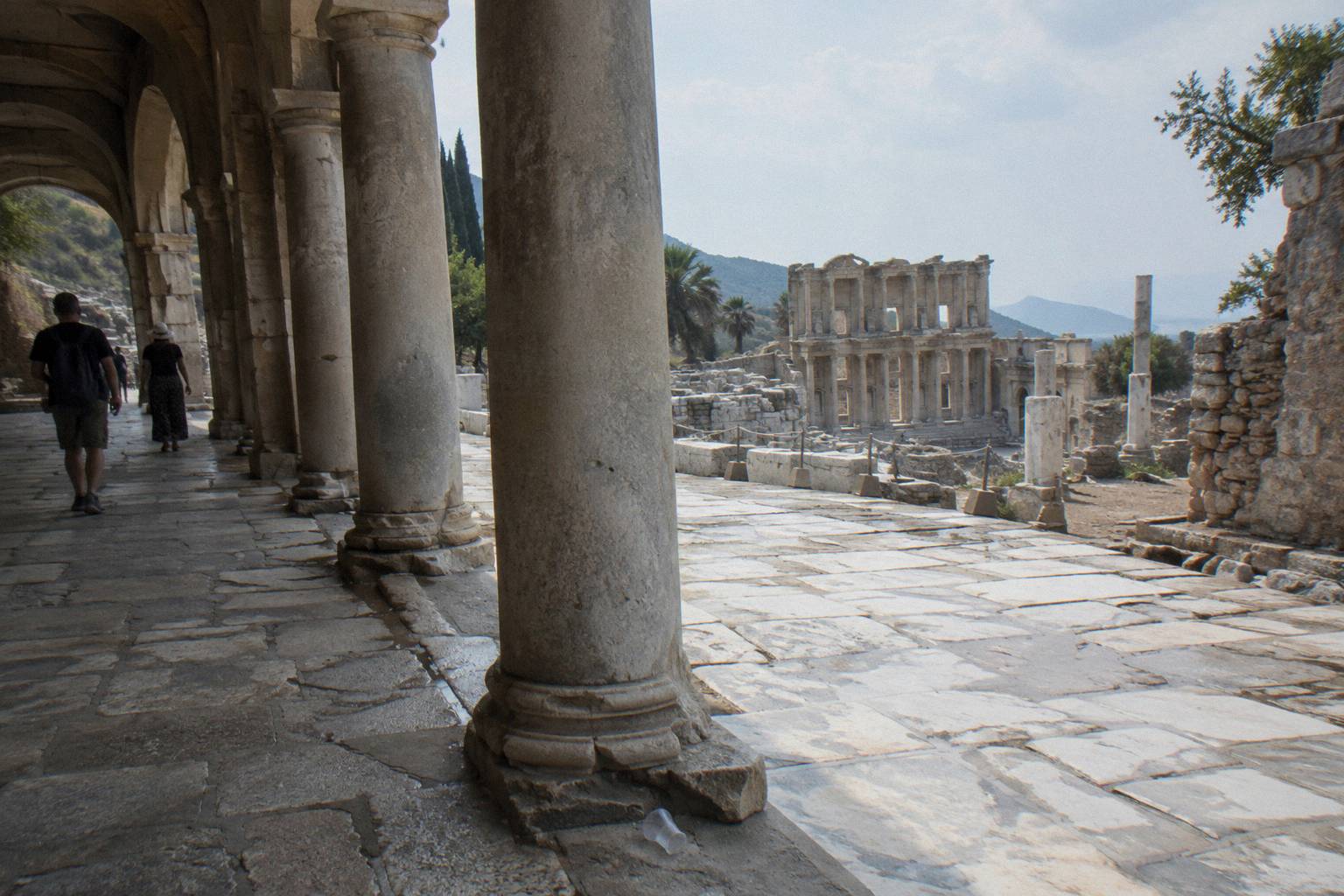
A visit to the Ephesus ruins takes roughly 2 to 3 hours as visitor guides report it, over about 1.5 km one way from the upper gate down to the lower gate. That walk is the part the weather touches most: the Marble Road and Curetes Street are worn, uneven marble, and there is very little shade along them in any month.
What Does The İzmir Climate Table Say?
These are long-term normals from 1938 to 2025, not a forecast, so they describe a typical month rather than any particular day. Read them against the Turkish State Meteorological Service statistics for İzmir, which is the source for every figure below. Because Selçuk and Kuşadası sit south of the city, the Aydın province range is worth holding beside the table: hotter in July at 36.4 °C mean maximum, colder in January at 4.4 °C mean minimum, and rainiest in December at 12.9 rainy days.
| Month | Mean daily maximum C | Mean daily minimum C | Mean rainy days |
|---|---|---|---|
| January | 12.5 | 5.8 | 12.6 |
| February | 13.7 | 6.2 | 10.5 |
| March | 16.4 | 7.7 | 9.2 |
| April | 21.0 | 11.2 | 7.8 |
| May | 26.2 | 15.5 | 5.3 |
| June | 30.8 | 19.9 | 2.3 |
| July | 33.3 | 22.6 | 0.5 |
| August | 33.0 | 22.5 | 0.6 |
| September | 29.3 | 18.8 | 1.9 |
| October | 24.1 | 14.7 | 5.3 |
| November | 18.7 | 10.8 | 8.8 |
| December | 14.2 | 7.6 | 12.7 |
Three patterns stand out. The maximum climbs steeply from March (16.4 °C) to June (30.8 °C), then plateaus across July and August. The rainy-day count falls the other way, from 12.6 in January to 0.5 in July. And the shoulder months sit in the middle on both counts: April at 21.0 °C with 7.8 rainy days, October at 24.1 °C with 5.3.
The minimum column matters for anyone booking a day that starts early or ends late. A July night averages 22.6 °C, so an early start brings little relief; an April night averages 11.2 °C, so the first hour on the site can feel genuinely cool before the sun reaches the streets.
Because the sites are open daily in every month, the table changes how you plan a day rather than whether you can have one. A 4 to 6 hour private tour from Kuşadası port, roughly 20 to 35 minutes by road from the ruins, fits the same window in January as in July; what changes is where in that window you want to be walking.
Which Months Are Coolest And Driest?
Read off the table, the driest months are July, August and September, with 0.5, 0.6 and 1.9 rainy days, but those are also the hottest. The coolest dry-ish months are April, May and October, at 21.0, 26.2 and 24.1 °C mean maximum with 7.8, 5.3 and 5.3 rainy days.
Cool and dry pull in opposite directions on this coast, and the decision table below makes the trade explicit. Nobody gets a month that is both the coolest and the driest; the choice is which compromise to take. The reading the climate block allows is the one stated above: April to early June and late September to October sit between the cool wet winter and the hottest weeks.
| What You Want From The Month | Best Fit By The İzmir Figures | What You Trade |
|---|---|---|
| The coolest walking | January to March, 12.5 to 16.4 °C maximum | 9.2 to 12.6 rainy days and short cool nights |
| The least rain | July and August, 0.5 and 0.6 rainy days | The two hottest months, 33.3 and 33.0 °C maximum |
| A middle ground | April, May, October: 21.0 to 26.2 °C, 5.3 to 7.8 rainy days | Neither extreme, neither perfect |
| Warm but past the peak heat | September, 29.3 °C with 1.9 rainy days | Still a hot month by any measure |
| Mild with fewer wet days than winter | November, 18.7 °C with 8.8 rainy days | Rain returns and afternoons shorten |
The month you pick also shapes which tour format earns its price. In the hotter months a shorter private day, started early, leaves the marble before the afternoon peak; in the cooler months a longer day costs nothing in comfort. The Travelshow private Bible tour from Kuşadası runs 4 to 6 hours from Kuşadası port with lunch included, a guide the operator lists as having biblical expertise, and skip-the-lines wording in its inclusions, from $39.04 per person, rated 4.9 from 918 reviews; its tickets for Ephesus, the House of the Virgin Mary and the Basilica of St John are listed as excluded and paid separately. Check availability
That lunch matters more in the hot months than the cool ones: a seated meal in the middle of the day is a break from the streets exactly when the table says the heat peaks. The inclusions also list an on-time return for cruise guests, and the ship's own all-aboard time governs. Free cancellation applies up to 24 hours before the start, which matters when a month with 7.8 rainy days is on the table and the forecast shifts.
Tickets, when a tour excludes them, follow the published Ministry fees in EUR: Ephesus Archaeological Site EUR 40, which includes the Ephesus Experience Museum on the site; the Basilica of St John EUR 6. These are published fees that change yearly, so check before going. The Museum Pass Türkiye at EUR 165 covers the main site, the Ephesus Museum and the Basilica, but never the Terrace Houses (EUR 15, a separate ticket) and never the House of the Virgin Mary, which is not a Ministry site.
How Does Heat Change A Day On The Marble?
The ruins are about 1.5 km one way, downhill from the upper gate, over worn uneven marble with very little shade, and a visit takes roughly 2 to 3 hours. In July and August, when the mean daily maximum is 33.3 and 33.0 °C, that walk is a different experience from April at 21.0 °C, and the tour you book should reflect it.
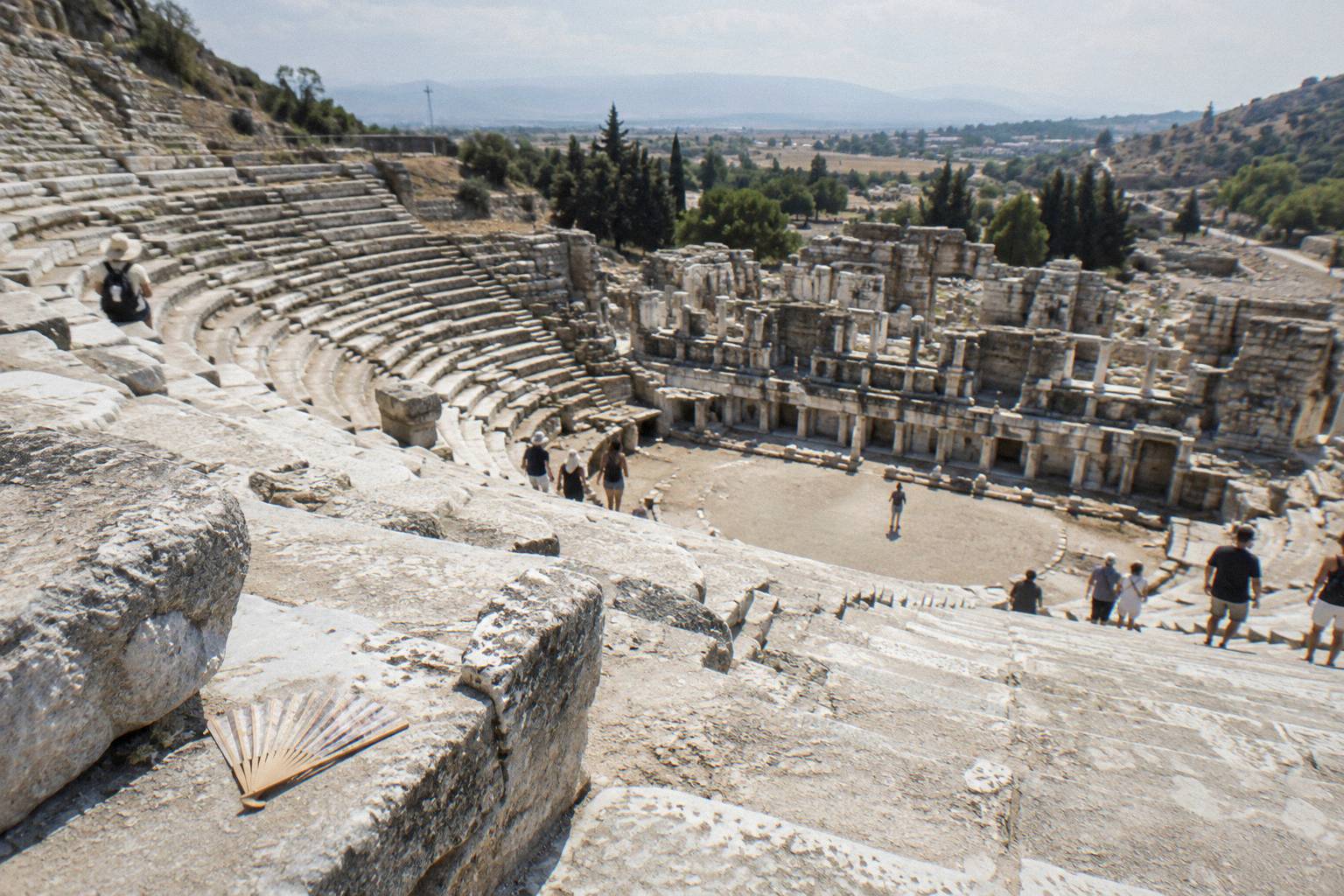
The physical facts of the site do not change with the month. The Marble Road and Curetes Street are the two main streets, both original worn marble, both open to the sky for most of their length. The lower gate gives the flatter route to the Library of Celsus and the Great Theatre, which roughly 25,000 seats by the usual estimate, and that flatter route is the one to prefer when the table says the afternoon will be hot. The Terrace Houses, on the slope of Mount Koressos, add stairs and walkways.
Ephesus has been on the UNESCO World Heritage List since 2015, and the serial property includes the Ancient City, Ayasuluk Hill and Çukuriçi Mound. None of that is weather-dependent; all of it is walked in the open. The Ministry describes the city as "a key city in the expansion of Christianity, from which St Paul launched many of his missions", and Paul's ministry here ran two to three years by Acts 19:10 and 20:31. Standing where he stood is the point of the visit, and the month decides how long you can comfortably stand there.
A practical reading: in July and August, treat the early hours as the ones to be on the marble and let the middle of the day belong to a vehicle, a lunch or the Basilica of St John on Ayasuluk Hill, a shorter open site. In April, May or October the same route can absorb a fuller 2 to 3 hours at any point in the day, and a longer tour duration stops being a cost.
The private tours here run 4 to 6 hours at the short end and 5 to 9 hours at the long end, and the choice between them is really a choice about the month. A longer day in a cool month buys Selçuk, the museum, the Basilica and the House of the Virgin Mary without rushing; a shorter day in a hot month keeps the walk concentrated in the bearable hours. For the full picture of how weather interacts with a shore day, see how Ephesus shore excursion timing works.
The Guide Of Ephesus private cruiser tour, from $22.73 per person and rated 5.0 from 164 reviews, runs 4 to 6 hours with cruise port pick-up and drop-off, lunch in the countryside, parking fees included, and a licensed local guide on its inclusions; the operator describes skip-the-line access through tickets the guide arranges, paid in cash, and the inclusions list an on-time return for cruise guests. A countryside lunch is a genuine mid-day exit from the streets, which is exactly what a July table row argues for.
Rain, by contrast, barely changes the itinerary in summer and changes it more than visitors expect in winter. The winter months carry 10.5 to 12.7 rainy days each, and worn marble is at its most treacherous when wet. The Ministry lists the sites as open daily; a wet December day is still a visiting day, just one for grippy shoes and a slower pace down Curetes Street.
What Should You Wear In Each Season?
By the İzmir figures, July and August nights stay near 22.5 to 22.6 °C, so light clothing carries the whole day, while January nights fall to 5.8 °C and call for layers. At the House of the Virgin Mary, an active chapel, shoulders and knees should be covered in every month, as signs at the entrance report.
The temperature columns set the wardrobe. Summer means the mean daily minimum never drops below 22.5 C: there is no cool start to dress for. Winter means a 5.8 °C night average in January and rain on roughly 12 days, so a waterproof layer over warm clothes is the base, and the middle months need both a warm layer for the morning and something lighter for a 24 to 26 °C afternoon.
| Season By The Table | Mean Maximum | Mean Rainy Days | Clothing To Carry |
|---|---|---|---|
| Winter: December to February | 12.5 to 14.2 °C | 10.5 to 12.7 | Warm layers, waterproof, grippy shoes for wet marble |
| Spring: March to May | 16.4 to 26.2 °C | 5.3 to 9.2 | Layers for cool mornings, covered shoulders for the chapel |
| Summer: June to August | 30.8 to 33.3 °C | 0.5 to 2.3 | Light breathable clothing, sun cover, water |
| Autumn: September to November | 18.7 to 29.3 °C | 1.9 to 8.8 | Light clothing early in the season, layers by November |
The chapel rule is the one that catches summer visitors. The House of the Virgin Mary, by tradition the place where Mary is believed to have spent her last years, is a small stone chapel on Bulbul Mountain about 7 km from Ephesus, venerated by Catholic and Muslim pilgrims alike, and it is an active place of worship rather than a ruin. Shoulders and knees covered, whatever the thermometer says.
One clothing note belongs to the terrain rather than the temperature: the streets are original worn marble, uneven underfoot and polished by centuries of feet. Flat-soled shoes with real grip serve every month on the table, and doubly so in the wet ones. For a fuller season-by-season kit, the guide to what to wear on a Bible tour of Ephesus goes into the detail.
Does The Assumption Feast On 15 August Change A Visit?
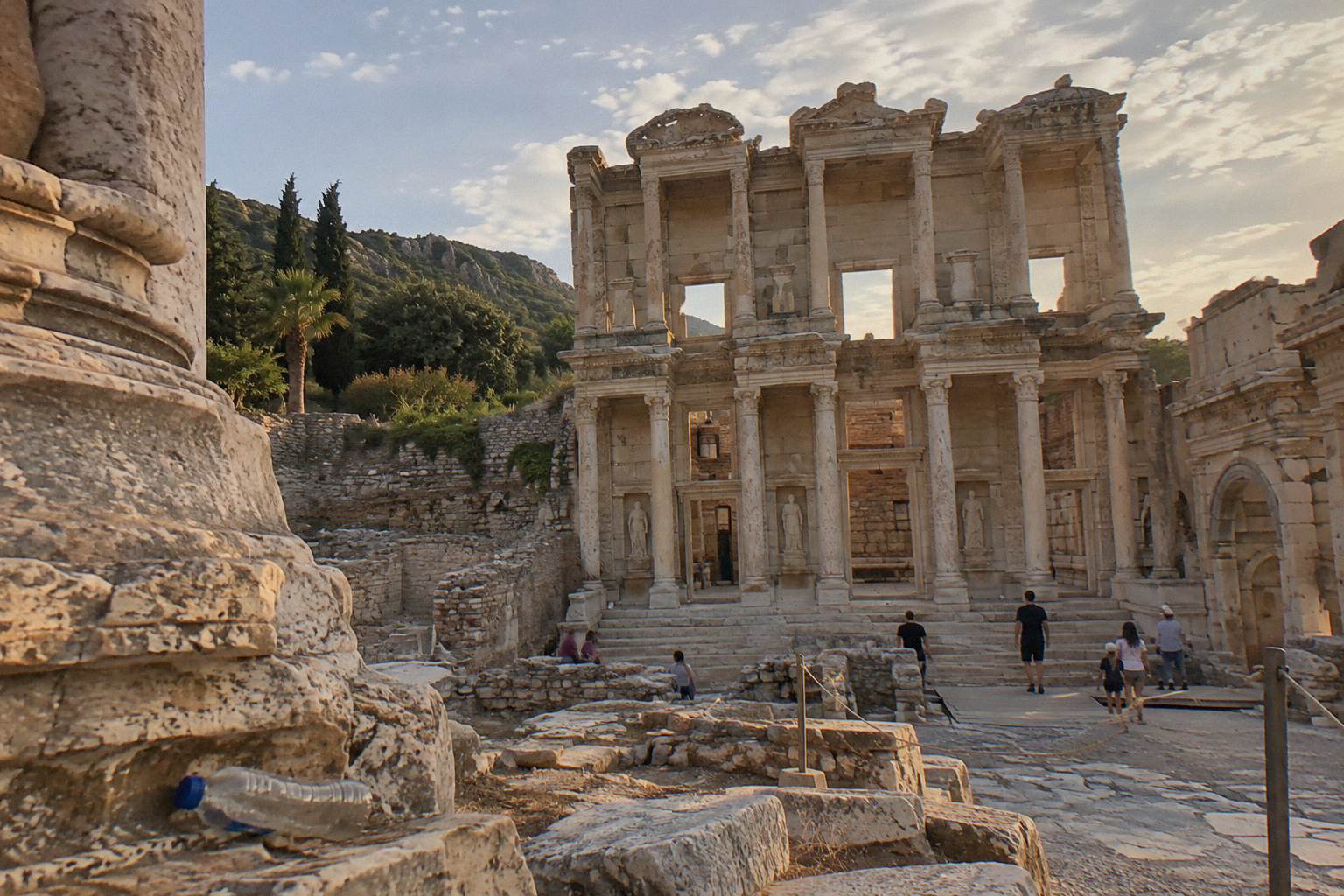
The Assumption feast on 15 August draws a pilgrimage with Mass at the House of the Virgin Mary, and it is the one dated event on the calendar that touches a Bible tour. A mid-August visit therefore lands on the hottest and busiest week at the shrine, with a mean daily maximum of 33.0 °C.
Everything else about the year is pattern, not event. The shrine holds Mass daily in the warm months and on Sundays through the winter; confirm the current schedule with the shrine before going, and never a clock time appears here because none is published. The site itself, with its holy-water spring and the wall where visitors tie wishes, is the same in every month.
The identification of the house is a tradition rather than a settled fact. The search dates to 1891, led by Lazarist priests from Smyrna, modern İzmir, guided by the visions of Anne Catherine Emmerich, and the Church has not formally ruled on its authenticity. Papal visits give the tradition its weight: Paul VI on 26 July 1967, John Paul II on 30 November 1979, and Benedict XVI on 29 November 2006, who celebrated a Eucharist at the shrine. The shrine's own association, with a Capuchin community, operates it; it is not a Ministry site and the Museum Pass does not cover it.
For a tour, the practical reading is simple. If the pilgrimage itself is the reason for the trip, mid-August is the date. If it is not, every other month gives the same chapel with a different backdrop of heat and rain, and the table says which. The Ministry's own page for the Basilica of St John notes that John is said to have taken the Virgin Mary to Ephesus, which is the scriptural thread the shrine hangs on; more on that in what a tour stop at the House of Mary means.
Where a tour's exclusions list the House of Mary ticket, a separate fee is paid at the gate; no fee is printed here. The All Inclusive Private Ephesus and House of Mary tour, from $151.20 per person and rated 5.0 from 1,137 reviews, takes a different approach: the operator lists entrance fees as included, with a guide holding pre-paid tickets, plus a traditional Turkish lunch and an on-time return to the port for cruise guests in its inclusions, over 5 to 7 hours. It is the format that removes the ticket queue from a hot day entirely.
Do Tours Run In Every Month?
The Ministry lists the Ephesus sites as open daily, with hours that shift by season, so a Bible tour can run in any month of the table. What changes is not availability but comfort and pace, and each tour's own cancellation terms are the ones that matter if weather moves a booking.
No month closes the site. The Ministry page for the Ephesus Archaeological Site lists it open every day and describes a settlement dating to about 6,000 BC; hours shift by season, so check the Ministry page on the day. The same applies to the Terrace Houses, the Ephesus Museum in Selçuk town and the Basilica of St John.
The tour operators here publish year-round products with free cancellation up to 24 hours before the start on most lines. That term is what makes a winter booking low-risk: with 12.7 rainy days in a December, a traveller can hold a date and cancel the day before if the forecast turns. The cancellation terms are each tour's own line, so read them on the operator's own page before booking.
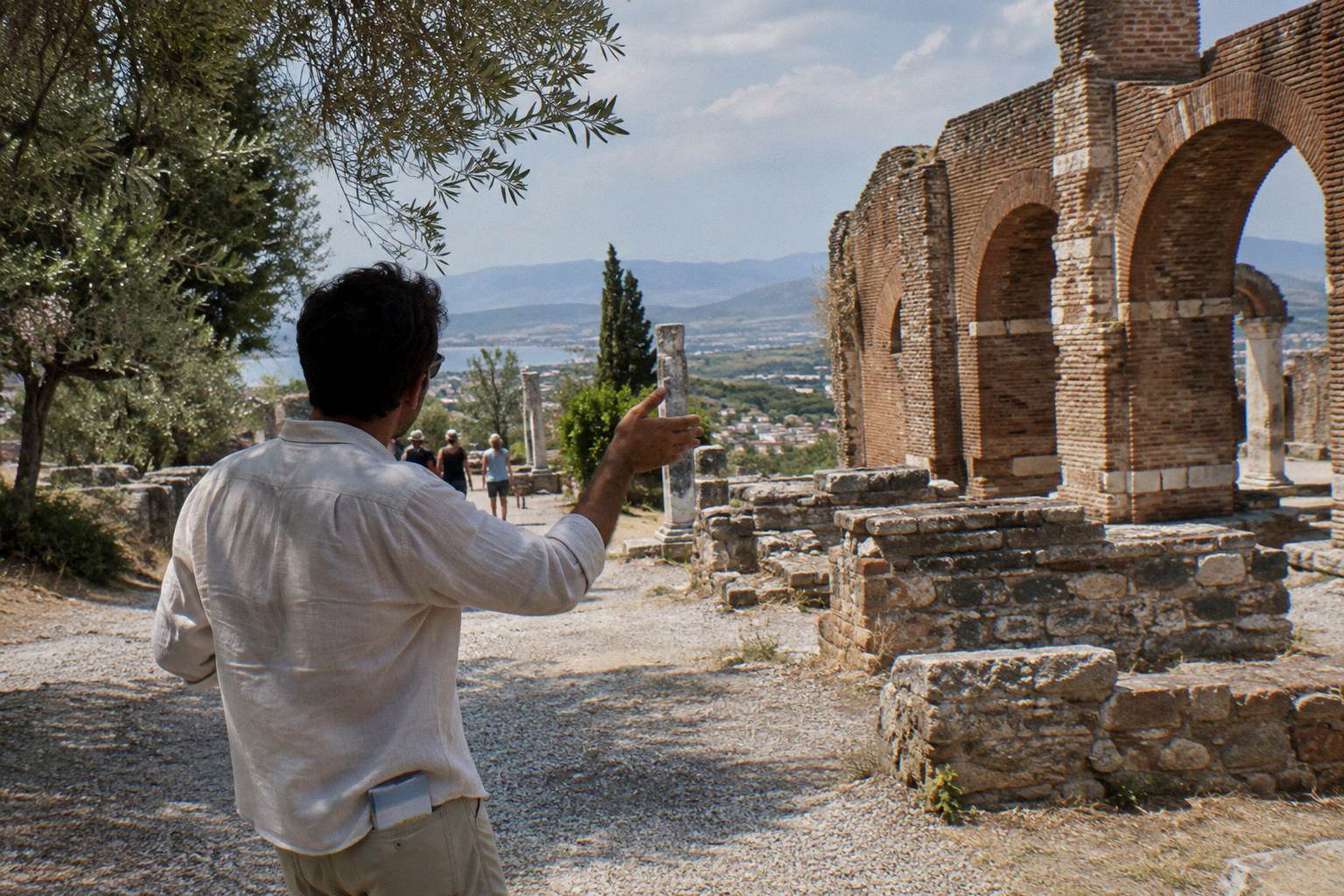
From İzmir, the longer transfers shape the decision. İzmir port to Ephesus is about 80 km, 1 to 1.5 hours, and the Crowded House Izmir day tour, from $150.60 per person and rated 4.9 from 195 reviews, runs 5 to 9 hours with lunch and the entrance fees for the Ephesus site and the House of the Virgin Mary listed as included; the Terrace Houses fee is excluded. A 9-hour day reads very differently at 14 °C than at 33 °C, which is the whole argument for matching duration to the table. Anyone starting from the city rather than the port should read the guide to taking a Bible tour from İzmir port or hotel alongside these figures.
One more month-by-month caution: no crowd, sell-out or seasonal-price claim is made anywhere here, because no data for one is published. The climate table is the only month-level fact set that exists for this destination, and it is enough to pick a month on. If the heat on marble is the worry, the answer is already above: April, May, late September or October, or an early start in any month at all.
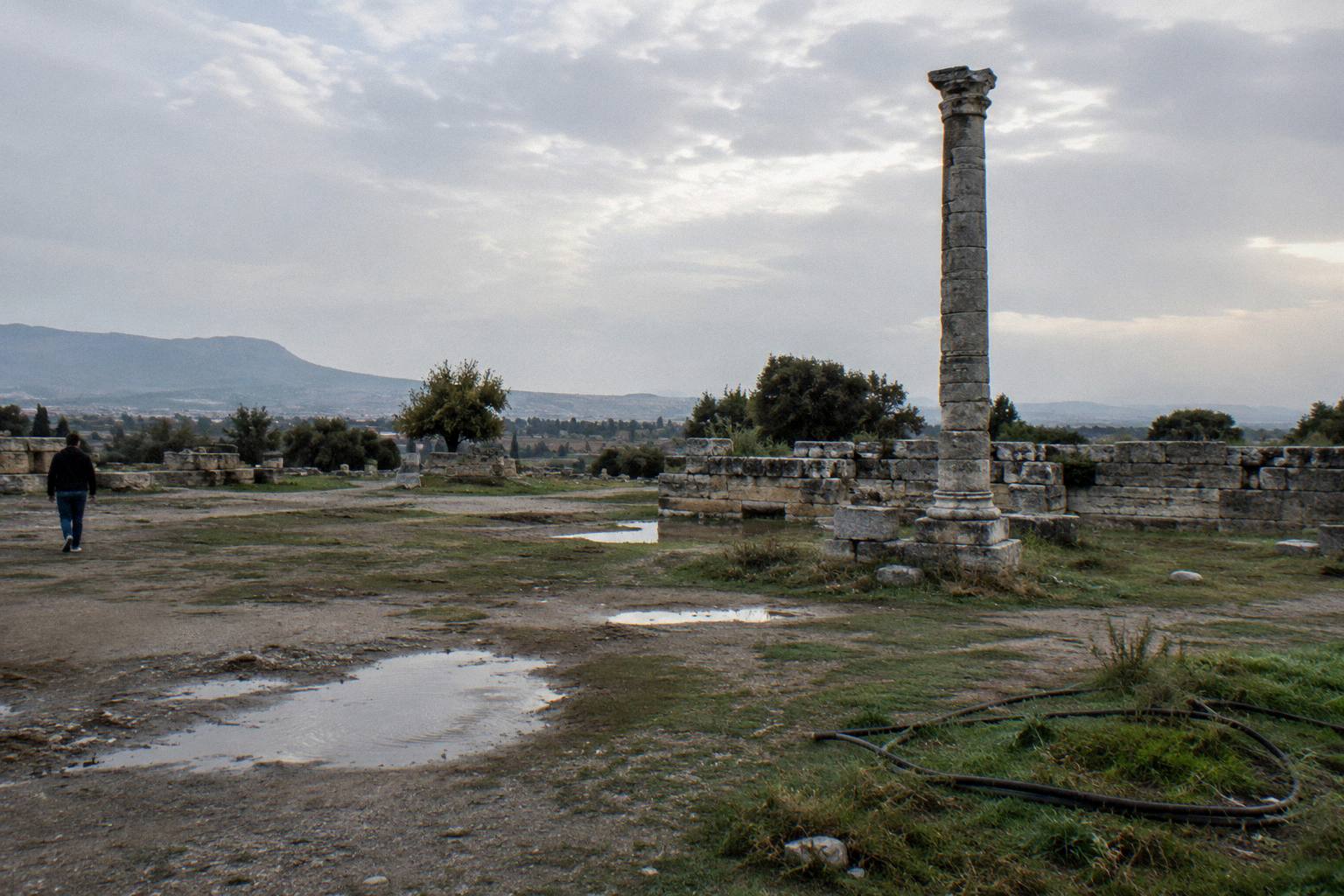
The Temple of Artemis makes a fitting last stop in any month, because there is nothing left to shelter. One re-erected column stands among the foundations of one of the Seven Wonders of the Ancient World, an open site with no entry fee, and Acts 19 records the silversmiths' riot in the Great Theatre in the goddess's name. A month with 5.3 rainy days or 0.5 changes little there; the marble streets above it are where the table earns its keep.
Whichever month the figures point you toward, the tours above run in it. Match the duration to the temperature, keep the chapel dress rule in mind, and let each tour's free-cancellation term carry the risk of a shifting forecast.
Common Questions About Visiting Ephesus By Month
When To Visit Ephesus On A Bible Tour?
April to early June and late September to October, by the İzmir figures: mean daily maxima of 21.0 to 26.2 °C with 5.3 to 7.8 rainy days, between the cool wet winter and the hottest weeks of July and August.
What Is The Hottest Month At Ephesus?
July, with a mean daily maximum of 33.3 °C in the İzmir figures; August is close behind at 33.0 °C. Aydın province, which contains Selçuk and Kuşadası, runs hotter still at 36.4 °C in July.
What Is The Wettest Month At Ephesus?
December, with 12.7 rainy days in the İzmir figures, followed by January at 12.6. July is the driest at 0.5 rainy days and August next at 0.6.
Is Ephesus Open In Winter?
Yes. The Ministry lists the Ephesus Archaeological Site, the Terrace Houses, the Ephesus Museum and the Basilica of St John as open every day, with hours that shift by season; check the Ministry page on the day.
Does The House Of The Virgin Mary Have A Dress Code?
Yes. It is an active chapel, and signs at the entrance ask for shoulders and knees covered, in every month. It is venerated by tradition as the place where Mary is believed to have spent her last years.
Is There A Dated Event That Affects A Visit?
One: the Assumption feast on 15 August draws a pilgrimage with Mass at the House of the Virgin Mary. Mass is otherwise held daily in the warm months and on Sundays through the winter; confirm the schedule with the shrine before going.