Is The House Of The Virgin Mary In Ephesus Real?
What the tradition, the history and the tour lines actually say about the House of the Virgin Mary near Ephesus, and what a tour stop there involves.
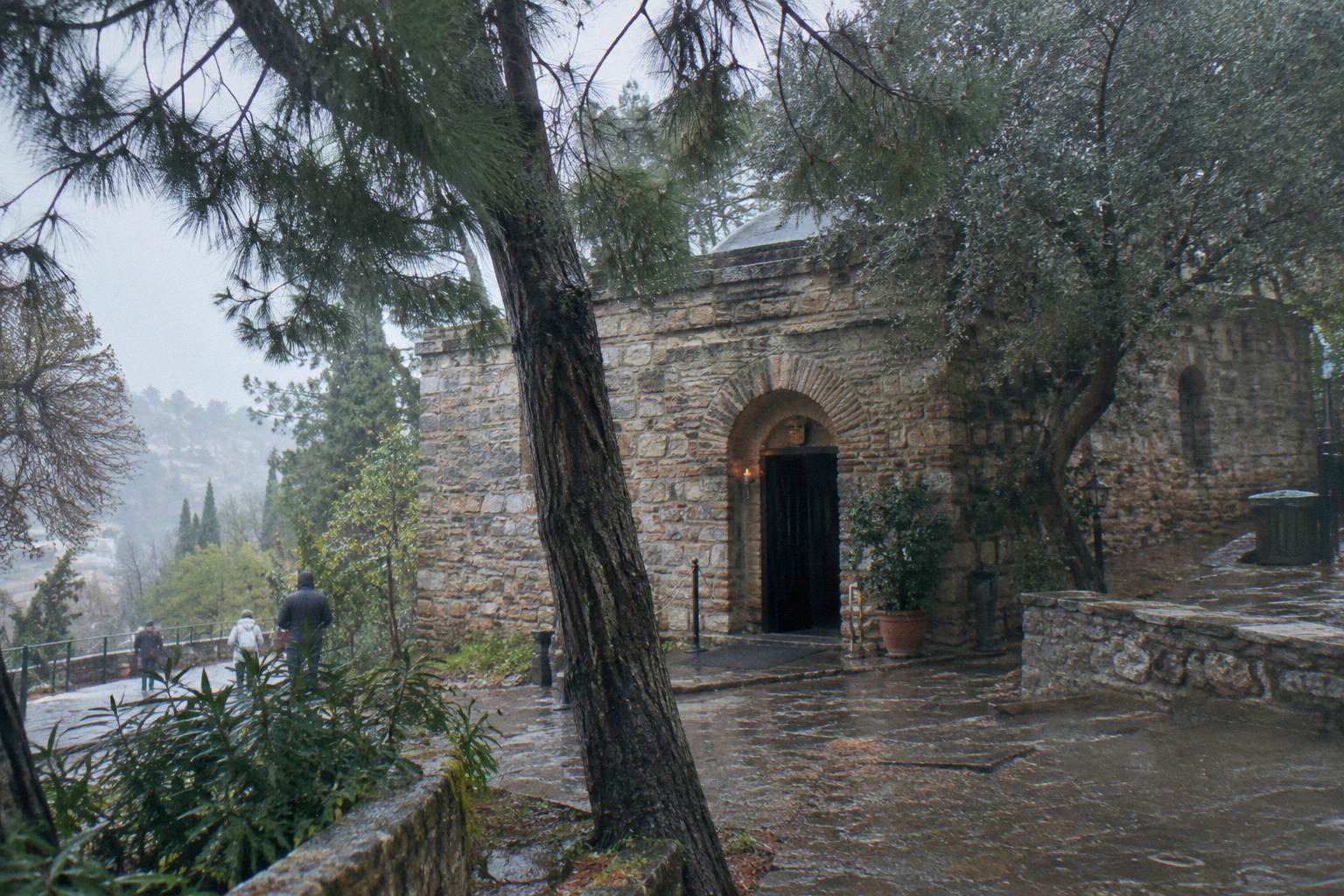
Nobody can call the House of the Virgin Mary real or fake, and no authority has. It is a pilgrimage tradition: a small stone chapel on Bulbul Mountain, venerated since the 19th century as the place where Mary is believed to have spent her last years. The Church has never formally ruled on its authenticity, and no excavation has confirmed it.
That answer surprises some travellers, because the site is presented with such confidence on itineraries, in guidebooks and by cruise lines. The Chapel of Meryem Ana Evi sits about 7 km from the Ephesus ruins, in the Mount Koressos area, and it draws Catholic and Muslim pilgrims alongside ordinary tourists. Three popes have visited and prayed there: Paul VI on 26 July 1967, John Paul II on 30 November 1979, and Benedict XVI on 29 November 2006, who celebrated a Eucharist at the shrine. And yet the identification of the house rests on a search carried out in 1891, guided by the recorded visions of a German nun who never travelled to Turkey.
What follows separates what each kind of source actually says: the 19th-century tradition, the Ministry of Culture and Tourism's own texts, the UNESCO listing, and the tour operators who name the house as a stop. The distinction matters for a believer deciding whether the stop deserves a place on a limited day ashore, because cruise calls at Kuşadası typically run only 8 to 11 hours and the ship's own all-aboard time governs. The shrine's own site describes its history and current pilgrimage life at the House of the Virgin Mary's official page.
A tour that includes the stop is not making a claim about history. It is taking you to an active place of prayer that many believers treat as holy ground, whatever the archaeological record says or does not say.
Where Did The Tradition Come From?
The identification dates to the 19th century. A search in 1891 by Lazarist priests from Smyrna, modern İzmir, guided by the visions of Anne Catherine Emmerich, found the ruins of a small house on Bulbul Mountain. The Catholic Church has not formally ruled on its authenticity; it remains a pilgrimage tradition, not a doctrine.
Anne Catherine Emmerich was an Augustinian nun in Germany who recorded visions of the life of Mary, including a description of a house near Ephesus where Mary was said to have lived. She never visited Asia Minor. Her visions were published, and years later a priest known as the Venerable Julien Gouyet used the descriptions to search the slopes of Mount Koressos, without persuading his superiors. The 1891 Lazarist search, led by priests from Smyrna, put the site on the map for pilgrims and led to the chapel's restoration as a place of worship.
The older strand of the tradition is the one the Ministry of Culture and Tourism itself prints. Its page for the Basilica of St John says John is said to have taken the Virgin Mary to Ephesus, and that John is "believed to have written" the Gospel of John there; the Ministry's Basilica of St John page carries the wording. That is the ancient idea: Mary came to Ephesus with John, the disciple to whom Jesus entrusted her. The 6th-century Basilica on Ayasuluk Hill in Selçuk was rebuilt under Justinian over an earlier shrine marking the traditional tomb of the apostle, with no archaeological confirmation of his remains, so the same careful language, "traditional", applies to both the basilica and the house. The 1891 house is the later claim: that the exact dwelling has been located.
The two claims are separate. Believing Mary lived near Ephesus is ancient and widely held. Believing the chapel on Bulbul Mountain stands on that exact spot dates from the 19th century and has never been ratified by Rome. A good summary of both strands, including the papal visits, is at the House of the Virgin Mary overview, and the basilica's history is covered in the companion piece on what remains at the Basilica of St John.
Here is how the main claims sort by the kind of source that stands behind them:
| Claim | Source type | What it actually establishes |
|---|---|---|
| John took Mary to Ephesus | Ministry text, Basilica of St John | An ancient tradition the Ministry itself reports |
| John "believed to have written" the Gospel in Ephesus | Ministry text, Basilica of St John | A belief, stated as a belief |
| Mary spent her last years on Bulbul Mountain | 19th-century tradition | Veneration, never a formal church ruling |
| The house was found in 1891 | Historical record | The search happened; what was found is a matter of faith |
| Three papal visits: 1967, 1979, 2006 | Historical record | The popes prayed there; none declared it authentic |
| Ephesus is on the UNESCO list since 2015 | UNESCO inscription | The ancient city, not the house |
The distinction in that table is the whole answer for a traveller weighing the stop. Nothing about the house is a fraud or a mistake; it is a living tradition with a documented 19th-century beginning, layered on a much older belief about Mary and John in Ephesus. Pilgrims have treated it as holy since the search of 1891, and the shrine is run today by an association with a Capuchin community, not by the Ministry of Culture and Tourism. For a longer read on how the sites of Paul and John connect on a single day, see following Paul's steps on a tour.
What Does A Tour Stop At Meryem Ana Evi Look Like?
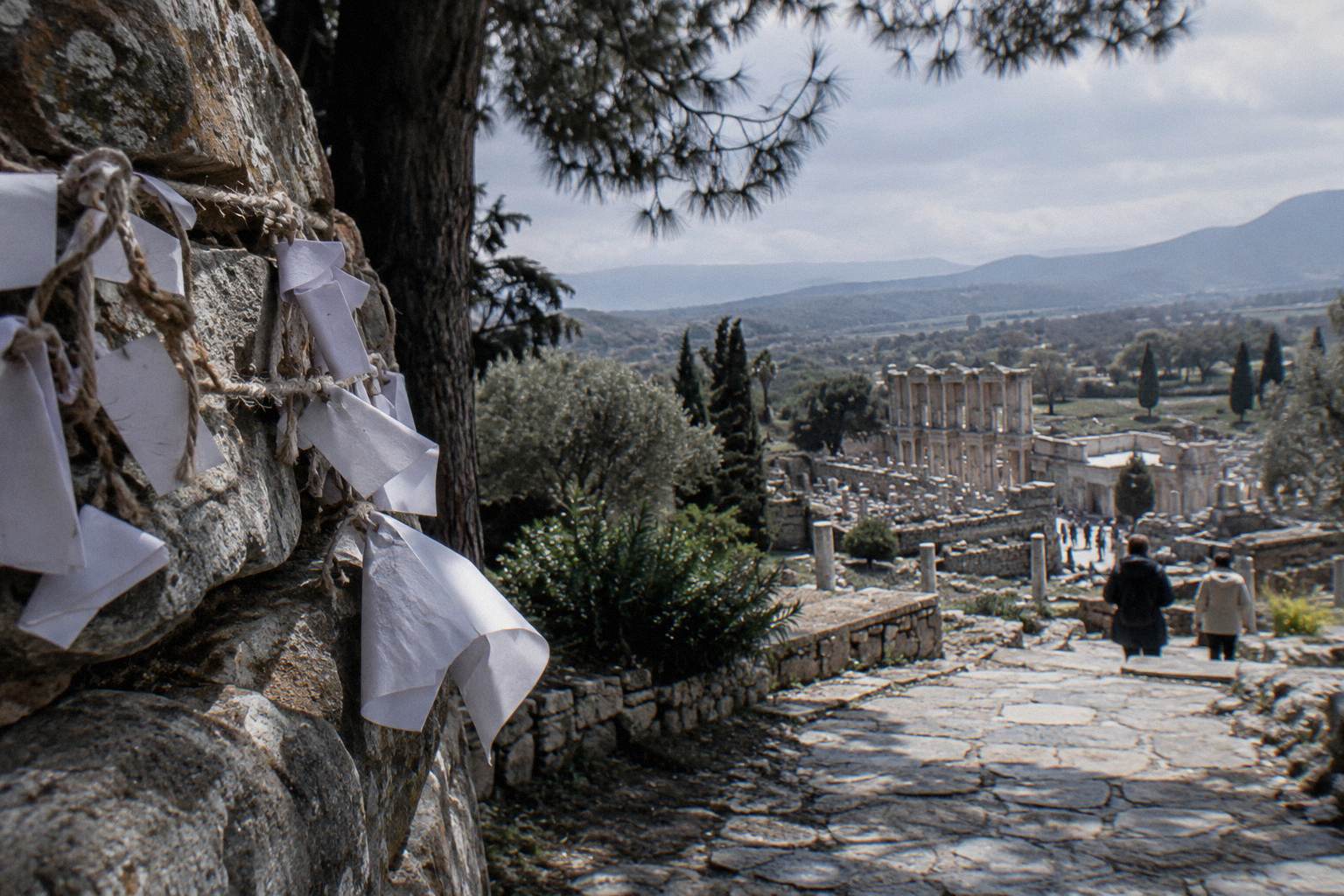
A stop at the House of the Virgin Mary is a short visit to an active chapel and its grounds: the small stone house you pass through quietly, a holy-water spring, and a wall where visitors tie written wishes. There is no archaeological park here, no ruins circuit and no Museum Pass desk; it is a shrine, and the visit usually runs well under an hour.
The chapel is small enough that visitors walk through in single file. Mass is held daily in the warm months and on Sundays through the winter; confirm the current schedule with the shrine before going if attending is important to you. The Assumption feast on 15 August draws a large pilgrimage with Mass, and that day the grounds are at their busiest.
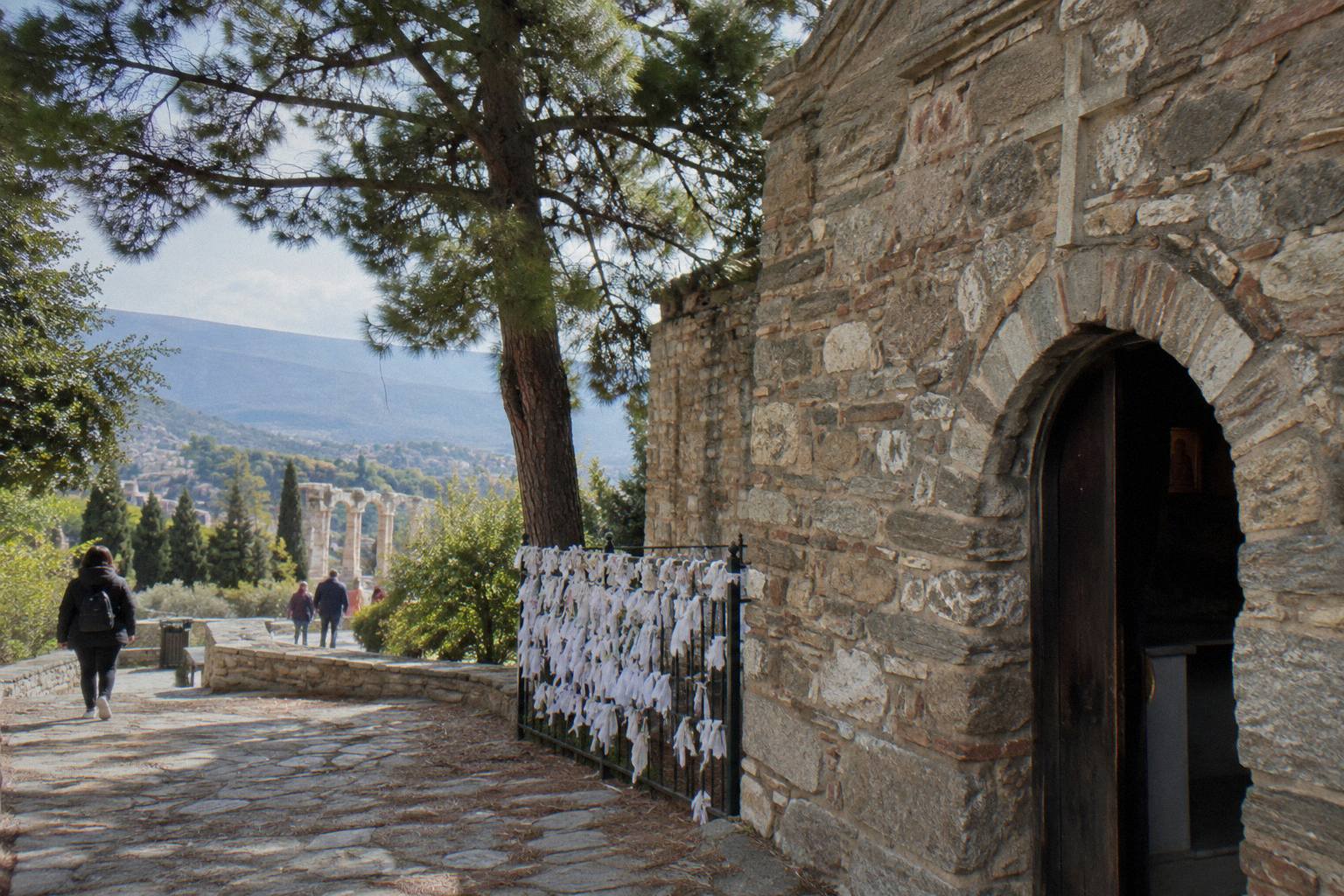
Dress matters because this is a working chapel: shoulders and knees covered, with signs at the entrance as visitor guides report. Both Christians and Muslims venerate the site, and Muslim visitors come as pilgrims too, since Mary is honoured in Islam. The atmosphere is quiet and devotional rather than museum-like, and most tours allow free time for the spring and the wish wall rather than lecturing at length.
Because the site is not a Ministry museum, it is not covered by the Museum Pass Türkiye (EUR 165), which covers the main Ephesus site, the Ephesus Museum in Selçuk and the Basilica of St John. Where a tour's exclusions list the House of Mary ticket, a separate fee is paid at the gate; the Ministry publishes no fee for it, and neither does this article. The full ticket picture, including the Terrace Houses as a separate EUR 15 ticket, is untangled in the guide to entrance fees and the Museum Pass.
Geographically, the house pairs naturally with Ephesus: it sits about 7 km from the ruins, on the same side of Selçuk as the upper gate approach, so a driver can link Ephesus, Meryem Ana Evi and the Basilica of St John in one loop. That is exactly the shape most private tours from Kuşadası take, and the port is roughly 20 to 35 minutes from the ruins by road. For the full timing picture, see the guide on timing a shore day at Ephesus.
Which Tours Name The House Of The Virgin Mary?
Most of the day tours covered here name the House of the Virgin Mary as a stop, and the difference between them is mostly what else is bundled: tickets, lunch and the guide's background. Prices run from from $15 per person for a port-pickup tour without tickets to from $189 per person for an all-inclusive private; private per-person prices fall as the group grows.
The Travelshow Private, Lunch Included tour is the natural match for a believer who wants the stop explained, because its inclusions list a Professional Tour Guide with Biblical Expertise alongside a local lunch, a private vehicle, parking and an on-time return for cruise guests. It runs 4 to 6 hours from the Kuşadası port, rates 4.9 from 918 reviews, and costs from $39.04 per person; the Ephesus, House of Mary and St John tickets are excluded and paid separately. Read the full Travelshow private Bible tour details or Check availability.
The Guide Of Ephesus Private tour also names the house, the Library of Celsus, the Temple of Artemis and the Great Theatre, from $22.73 per person, rating 5.0 from 164 reviews. Its line lists a lunch in the countryside, parking fees, a licensed local guide, and tickets arranged by the guide with the fee paid in cash to the guide. The operator describes skip-the-line access and an on-time return for cruise guests; the ship's own all-aboard time governs. Other pages covering the same trip are gathered on Biblical Ephesus Tour.
At the top of the price range, the All Inclusive Private, Lunch tour names the house and the Ephesus ancient city, lists entrance fees as included with the guide holding pre-paid tickets, and adds a traditional Turkish lunch. It runs 5 to 7 hours from the port or hotel, rates 5.0 from 1,137 reviews, and costs from $151.20 per person. Here is how the main candidates compare:
| Tour | Price | Rating | House of Mary ticket | Duration |
|---|---|---|---|---|
| Best-Seller Cruise Tour, Ticket Option | from $15 per person | 4.9 from 1,190 reviews | Paid separately (entry only via the ticket option) | 4 hours to 6 hours |
| Travelshow Private, Lunch Included | from $39.04 per person | 4.9 from 918 reviews | Paid separately | 4 hours to 6 hours |
| Guide Of Ephesus Private | from $22.73 per person | 5.0 from 164 reviews | Paid separately, arranged by the guide in cash | 4 hours to 6 hours |
| All Inclusive Private, Lunch | from $151.20 per person | 5.0 from 1,137 reviews | Operator lists entrance fees as included | 5 hours to 7 hours |
| No Hidden Fees, St John Basilica | from $127.20 per person | 5.0 from 83 reviews | Operator lists entrance fees as included | 5 hours to 7 hours |
Two things to weigh. First, every paid-separately ticket above is on top of the tour price; the Ministry's published fees for the other sites are Ephesus EUR 40, the Basilica of St John EUR 6 and the Ephesus Museum EUR 10, published fees that change yearly, so check before going. The House of Mary fee is simply paid at the gate. Second, only the Travelshow and a handful of other lines list a guide with biblical expertise or a Bible-oriented guide; where a line does not say so, nothing about the guide's script can be assumed.
The question of how these tours stack up against every option from the port, including group formats, is covered in the Kuşadası port Bible tours guide. Whatever you pick, each tour's free cancellation runs up to 24 hours before the start.
Is The House Of Mary Part Of The Ephesus UNESCO Site?
No. Ephesus has been on the UNESCO World Heritage List since 2015, but the inscription covers the ancient city, Ayasuluk Hill and Cukuriçi Mound. The House of the Virgin Mary is described by UNESCO as a pilgrimage site and is not an inscribed component; the designation protects the ruins, not the shrine.
The UNESCO listing for Ephesus names three components: the Ancient City of Ephesus itself, Ayasuluk Hill with the Basilica of St John, the Isa Bey Mosque and the Temple of Artemis area, and Çukuriçi Mound, the prehistoric settlement. The House of the Virgin Mary appears in tour descriptions as a pilgrimage place in the vicinity, nothing more.
For a traveller this has a practical edge. The UNESCO badge people associate with "Ephesus" belongs to the Roman city and the Selçuk hill, both Ministry sites with published fees in EUR. Meryem Ana Evi sits outside that system entirely: run by an association with a Capuchin community, outside the Museum Pass, funded by its gate and its pilgrims. Treating it as "part of the Ephesus ticket" is a common first-time mistake on planning forums.
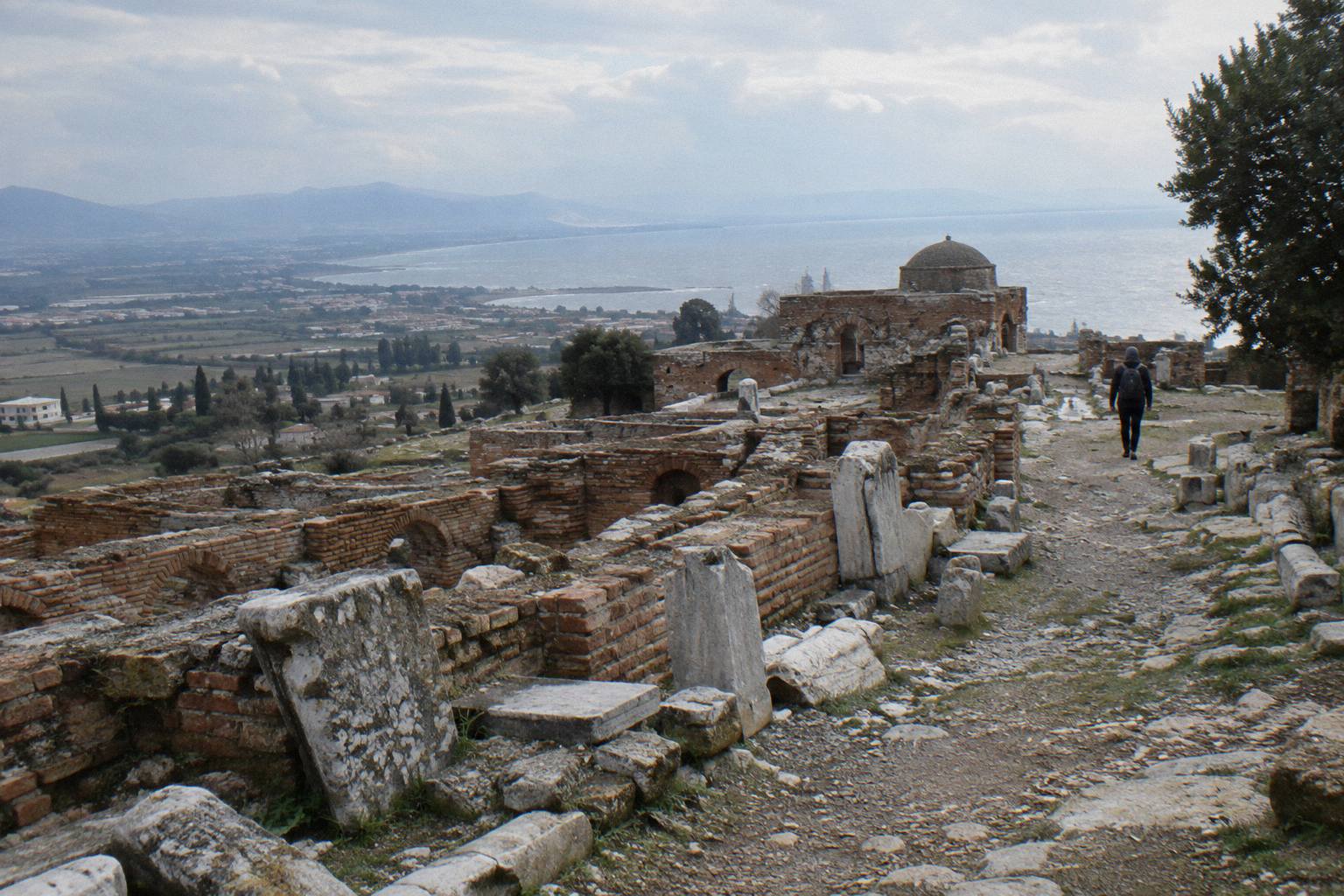
The distinction also clarifies what the stop is for. The ruins at Ephesus carry the archaeology of Paul's city, where Acts 19 says he reasoned in the synagogue and taught for two to three years, and where the silversmiths' riot over "the temple of the great goddess Diana" filled the Great Theatre, which holds roughly 25,000 seats by the usual estimate. The house on Bulbul Mountain carries none of that record; it carries prayer, candle light and a wish wall. A good day tour gives you both and lets each speak in its own register. For the wider question of what a faith-focused visit includes, the guide to planning a Christian tour of Ephesus goes deeper.
What Should You Know Before You Visit?
Dress with shoulders and knees covered, expect a quiet devotional site rather than a museum, and treat the Mass schedule as something to confirm with the shrine directly. The visit needs no ticket planning beyond the fee at the gate, and the stop fits comfortably between Ephesus and Selçuk on any private tour that names it.
A few points deserve repeating because they trip people up. The chapel is active: services run daily in the warm months and on Sundays through the winter, and the 15 August Assumption feast fills the grounds. If your ship calls on that day, expect the stop to be crowded and slower. Mass times are never printed here; confirm the current schedule with the shrine before going.
Weather is worth a thought too. The İzmir figures, the nearest published climate normals, put July and August at a mean daily maximum of 33.3 °C and 33.0 °C, with almost no rain; April to early June and late September to October sit between the cool wet winter and the hottest weeks, with roughly 5 rainy days in May and October. The chapel grounds are partly shaded, but the queue outside is not, so a morning stop reads better in high summer. The month-by-month breakdown lives in the when to visit Ephesus guide.
On safety, no verdict belongs in an article like this one. The US State Department lists Türkiye at Level 2, "Exercise Increased Caution", with its Level 4 "Do Not Travel" advisory covering the area within 10 km of the Syria and Iraq borders; the current US advisory for Türkiye should be read on the day of booking. Neither it nor the UK advisory names İzmir province, Selçuk, Kuşadası or Ephesus as a restricted area. Advisories change, and each tour's free-cancellation terms are its own line, up to 24 hours before the start on the tours above.
Finally, the question of what the stop means is yours to settle. The tradition is documented, the papal visits are history, and the chapel is real in the sense that pilgrims have prayed there since the search of 1891 and that both Christians and Muslims venerate it. Whether Mary's last years were spent on that slope is a matter of faith, and the sources above are careful about exactly where the record ends and the belief begins.
Common Questions About The House Of The Virgin Mary
Is The House Of The Virgin Mary In Ephesus Real?
Nobody can say real or fake, and no authority has. It is a pilgrimage tradition: identified in an 1891 search guided by Anne Catherine Emmerich's visions, never formally ruled on by the Church, and venerated by Catholic and Muslim pilgrims since that search.
Who Discovered The House Of The Virgin Mary?
Lazarist priests from Smyrna, modern İzmir, searched in 1891 using the published visions of Anne Catherine Emmerich, a German nun who never travelled to Turkey. An earlier search in the same century found the site but failed to persuade church authorities.
Is The House Of The Virgin Mary Part Of The Ephesus UNESCO Site?
No. Ephesus has been on the World Heritage List since 2015, covering the ancient city, Ayasuluk Hill and Çukuriçi Mound. The house is described as a pilgrimage site and is not an inscribed component.
Is The House Of Mary Ticket Included On Tours?
On most day tours from Kuşadası it is excluded and a separate fee is paid at the gate. On all-inclusive private tours, such as the All Inclusive Private, Lunch tour, the operator lists entrance fees as included.
Do Muslims Visit The House Of The Virgin Mary?
Yes. The site is sacred to both Christians and Muslims, and Muslim pilgrims visit alongside Catholic ones. Mary is honoured in Islam, and the shrine's grounds welcome both.
Is Mass Held At The House Of The Virgin Mary?
Mass is held daily in the warm months and on Sundays through the winter. Confirm the current schedule with the shrine before going, especially around the Assumption feast on 15 August, which draws a large pilgrimage.