Paul In Ephesus: Following His Steps On A Biblical Tour
Acts gives Ephesus more chapters than any other city in Paul's travels. Here is what the text says happened there, which ruins connect to it, and which tours name a Bible-oriented guide.
Short answer
Paul spent two to three years in Ephesus, teaching in the synagogue, the lecture hall and the city until a silversmiths' riot filled the Great Theatre. The Ministry of Culture calls Ephesus the city from which St Paul launched many of his missions. Tours with a listed Bible-oriented guide run from $143.20 per person.
The Turkish Ministry of Culture and Tourism describes Ephesus as "a key city in the expansion of Christianity, from which St Paul launched many of his missions" (on its page for the Ephesus Archaeological Site). No other city in Acts receives that much sustained attention from Luke. Ephesus appears across Acts 18 through 20, in two of Paul's own letters, and again in Revelation 2 as the first of the seven churches. For a traveller who wants the ruins explained through those texts rather than through emperors and marble alone, the city rewards a guide who knows the passages. This walkthrough from Biblical Ephesus Tour sets out what scripture actually says happened in Ephesus, which ruins the text names, and which of the tours covered here list a Bible-oriented guide in their inclusions.
Did Paul Actually Live In Ephesus?
Acts records three separate stays: a brief first visit with Priscilla and Aquila, a main ministry of two to three years, and a farewell meeting with the church elders near Miletus. The text places Paul teaching in the synagogue, then daily in the lecture hall of Tyrannus, and writing 1 Corinthians from the city. Ephesus was his base for the province of Asia.
Paul's first arrival is abrupt. Acts 18:19: "And he came to Ephesus, and left them there: but he himself entered into the synagogue, and reasoned with the Jews." The "them" is Aquila and Priscilla, the couple who stay behind when Paul sails on. While they are there, Acts 18:24 records that "And a certain Jew named Apollos, born at Alexandria, an eloquent man, and mighty in the scriptures, came to Ephesus." The city already has a believing community before Paul returns.
The second stay is the one that shaped the church there. Acts 19:1 says "...Paul having passed through the upper coasts came to Ephesus...", and what follows is the longest single narrative in Acts devoted to one city. He begins where he always begins, in the synagogue. Acts 19:8: "And he went into the synagogue, and spake boldly for the space of three months..." When opposition hardens, the text says he moved daily disputes to the school of Tyrannus, and Acts 19:10 gives the result: "And this continued by the space of two years; so that all they which dwelt in Asia heard the word of the Lord Jesus, both Jews and Greeks."
The length of the stay depends on which verse you read. Acts 19:10 counts two years of teaching; in his farewell, Acts 20:31, Paul says "by the space of three years I ceased not to warn every one night and day with tears". The two figures cover different spans, so the reading is simply two to three years, the longest recorded stay in any city of his missionary journeys. Scholars note the same span when working through the chronology of Acts (as the overview of the Ephesian correspondence sets out).
A visitor who wants the sequence in front of them while walking the site can hold the passages side by side:
| Passage | What the verse records | Where it sits in the story |
|---|---|---|
| Acts 18:19 | Paul reasons in the synagogue, leaves Aquila and Priscilla | First, brief visit |
| Acts 18:24 | Apollos, "mighty in the scriptures", arrives | The church grows before Paul returns |
| Acts 19:1 | Paul comes again "through the upper coasts" | Start of the main stay |
| Acts 19:8 | Three months of bold speaking in the synagogue | Opposition builds |
| Acts 19:10 | Two years of daily teaching; "all they which dwelt in Asia" hear | The ministry at its height |
| 1 Corinthians 16:8-9 | "But I will tarry at Ephesus until Pentecost" | Written from Ephesus during the stay |
| Acts 20:17 | From Miletus Paul "sent to Ephesus, and called the elders of the church" | The farewell, on the final journey |
One caution belongs here rather than further down. Ephesians 1:1 addresses "the saints which are at Ephesus, and to the faithful in Christ Jesus", but some early manuscripts omit "at Ephesus", and both the authorship and the place of writing are debated. No tour should tell you Paul wrote Ephesians in Ephesus, and none of the lines here make that claim. The one letter that does name Ephesus as its writing place is 1 Corinthians.
Where Did The Riot Happen And What Can You Stand In Today?
Acts 19:29 puts the crowd in the theatre: the silversmiths' protest over Demetrius's shrine trade "rushed with one accord into the theatre". The Great Theatre still stands at Ephesus and every tour that names the Great Theatre among its stops passes it. It is the one Paul-era structure the text itself puts you inside.
The riot is the hinge of the whole chapter. Demetrius, "which made silver shrines for Diana", warns his fellow craftsmen that Paul's teaching threatens "the temple of the great goddess Diana" and their trade. Acts 19:28 records the cry that followed: "Great is Diana of the Ephesians." The crowd seized Gaius and Aristarchus, Paul's travelling companions, and poured into the theatre. The disturbance ended only when the town clerk calmed the city, calling Ephesus "a worshipper of the great goddess Diana, and of the image which fell down from Jupiter" (Acts 19:35), and pointing out that the accused had neither blasphemed the goddess nor robbed her temple.
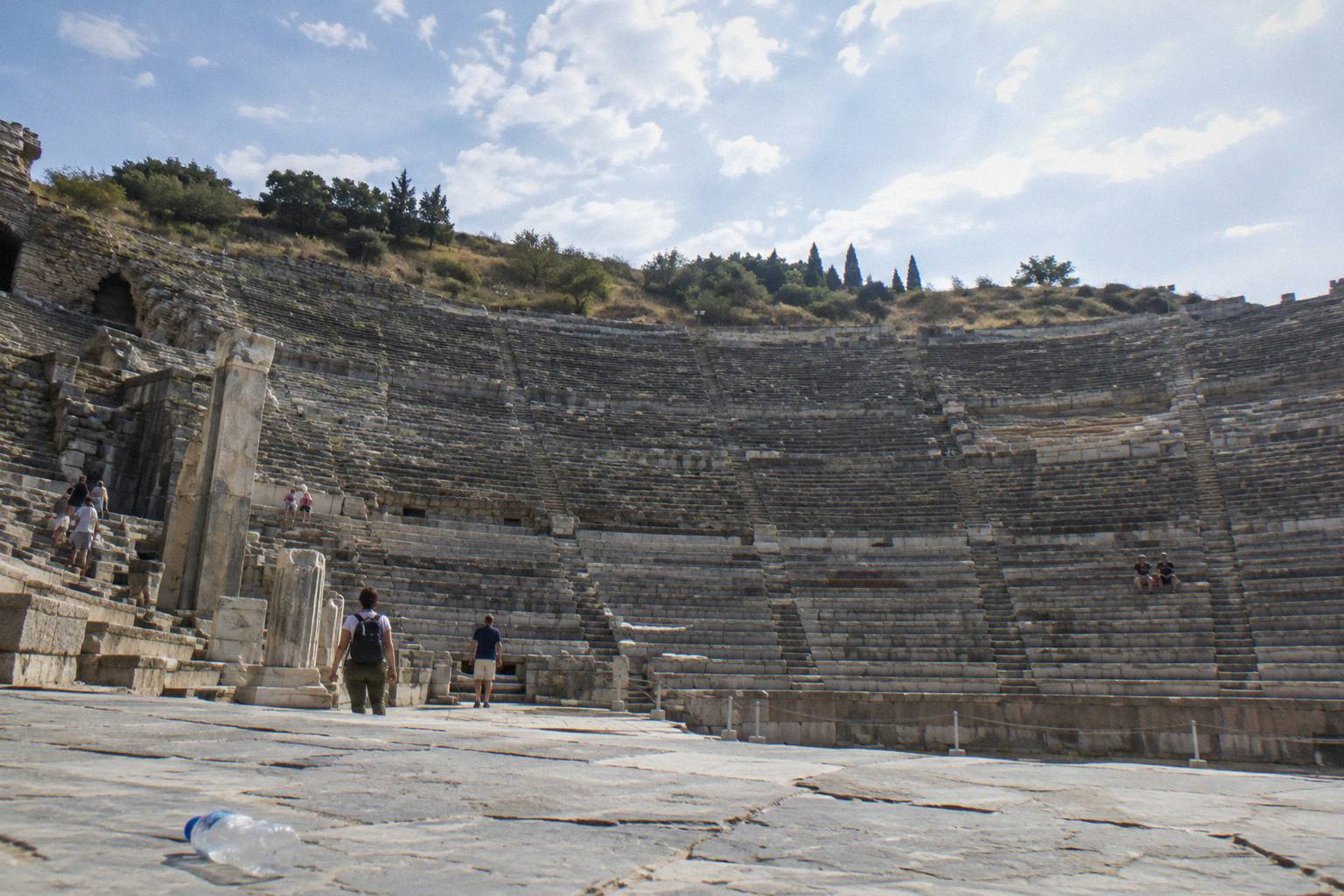
The Great Theatre is estimated at roughly 25,000 seats, and Ephesus has been on the UNESCO World Heritage List since 2015 (inscribed with Ayasuluk Hill and Çukuriçi Mound as a serial property). Standing in the cavea with Acts 19 open, the scene reads differently: the trade guilds of a wealthy Roman provincial capital defending a temple economy against a message that had, within two years, reached "all they which dwelt in Asia". Paul himself, the text says, was kept from entering the theatre by disciples and by provincial officials who were his friends.
What follows the riot is quieter and matters just as much. 1 Corinthians 15:32 looks back on real danger: "If after the manner of men I have fought with beasts at Ephesus, what advantageth it me, if the dead rise not?" And 1 Corinthians 16:8-9, written from the city, shows him staying on regardless: "But I will tarry at Ephesus until Pentecost. For a great door and effectual is opened unto me, and there are many adversaries." The ruins cannot show you a door or a lecture hall. They can show you the scale of the city those adversaries inhabited.
Three tours stand out for a reader who wants this narrative taught on site. Each names a Bible-oriented guide in its inclusions, and each prices its entrance fees differently, so the choice is mostly about what you want handled for you.
Read the inclusions of each line before choosing, because one tour itemises only the Ephesus ancient city as a stop while the others add the House of the Virgin Mary, by tradition venerated as the place where Mary is believed to have spent her last years, and the Basilica of St John.
Which Tours List A Bible-Oriented Guide?
Only a handful of the tours covered here write a Bible-oriented or biblical-expertise guide into their inclusions, and only those should be described that way. The rest list a professional or licensed guide, which is a different claim. Matching the wording on the tour line to what you want taught on site is the single most useful filter for a Paul-focused visit.
The distinction is not cosmetic. A licensed local guide can walk you through the archaeology of Curetes Street, the Library of Celsus and the Terrace Houses with full authority. A guide listed as Bible-oriented is engaged specifically to connect those stones to Acts and Revelation. The Ministry of Culture and Tourism cannot be used to confirm guide licensing one way or another here, so the tour lines are the only source: "licensed" appears only where an operator lists it, and "Bible-oriented" appears only where an operator lists that.
Here is every wording, tour by tour, exactly as the inclusions give it:
| Tour | Guide wording on the tour line | Price | Rating |
|---|---|---|---|
| Bible Oriented Guide, All Inclusive | Bible Oriented Professional Tour Guide listed | from $143.20 per person | 5.0 from 646 reviews |
| Lunch And Pre-Paid Tickets | Bible Oriented Private Professional Licenced Tour guide listed | from $143.20 per person | 5.0 from 80 reviews |
| No Hidden Fees, Lunch Included | Bible Oriented Private Professional Tour Guide listed | from $127.20 per person | 5.0 from 25 reviews |
| Travelshow Private, Lunch Included | Professional Tour Guide with Biblical Expertise listed | from $39.04 per person | 4.9 from 918 reviews |
| 5 Day Mini Group | Professional Bible-Oriented Licenced Tour guide listed | from $989 per person | 5.0 from 39 reviews |
| 3 Day, Private Or Group | Bible oriented tour guide listed | from $1,190 per person | Fewer than 20 reviews |
| Guide Of Ephesus Private | Professional, licensed local tour guide (no Bible wording) | from $22.73 per person | 5.0 from 164 reviews |
| Best-Seller Cruise Tour, Ticket Option | No guide wording beyond the operator's description | from $15 per person | 4.9 from 1,190 reviews |
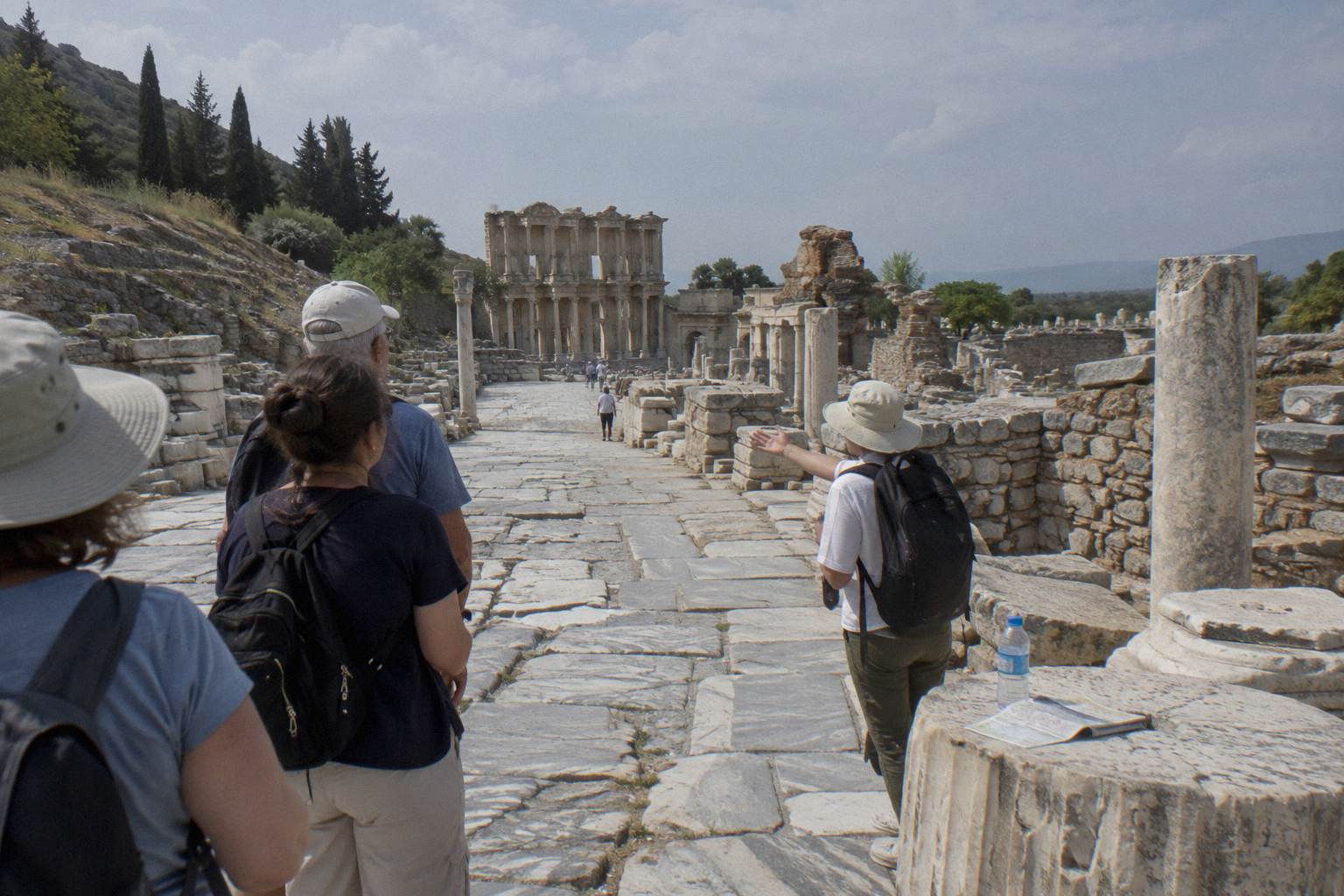
Private tour prices per person fall as the group grows, so every figure above is a starting point rather than a fixed quote. The all-inclusive Bible-oriented Ephesus day with lunch is the broadest of the day options: 6 to 7 hours, a traditional Turkish lunch, the operator listing entrance fees as included with pre-paid tickets, and a Bible Oriented Professional Tour Guide, at 5.0 from 646 reviews. You can check availability alongside reading how its stop list compares with the others. Its line itemises only the Ephesus ancient city, which suits a visitor whose whole interest is Paul's city rather than Mary's house or John's basilica.
If a biblical-expertise guide at a much lower starting price matters more to you than included tickets, the Travelshow private tour with lunch lists a Professional Tour Guide with Biblical Expertise, lunch, parking and a private vehicle, from $39.04 per person at 4.9 from 918 reviews. Its exclusions list the Ephesus, House of Mary and Basilica of St John entry tickets, so those are paid separately.
How Do You Map The Text Onto The Ruins?
Only two places in the Acts narrative can be matched to standing Roman Ephesus with any confidence: the Great Theatre of the riot and the Temple of Artemis whose goddess the crowd defended. The synagogue and the school of Tyrannus are not identified. Everything else a guide points to on a Paul-focused walk is context, not location.
That framing matters, because Ephesus is a layered site. The Ministry dates the settlement to about 6,000 BC and describes the Roman city as capital of Roman Asia, built around an ancient shrine of the earth goddess Artemis. Most of what stands today, the Library of Celsus, the Marble Road, the Terrace Houses on the slope of Mount Koressos, belongs to the same imperial city Paul walked through, even where no verse names it. A Bible-oriented guide earns their fee by keeping that line clear: here is the city, here is the text, and here is where the two can be joined.
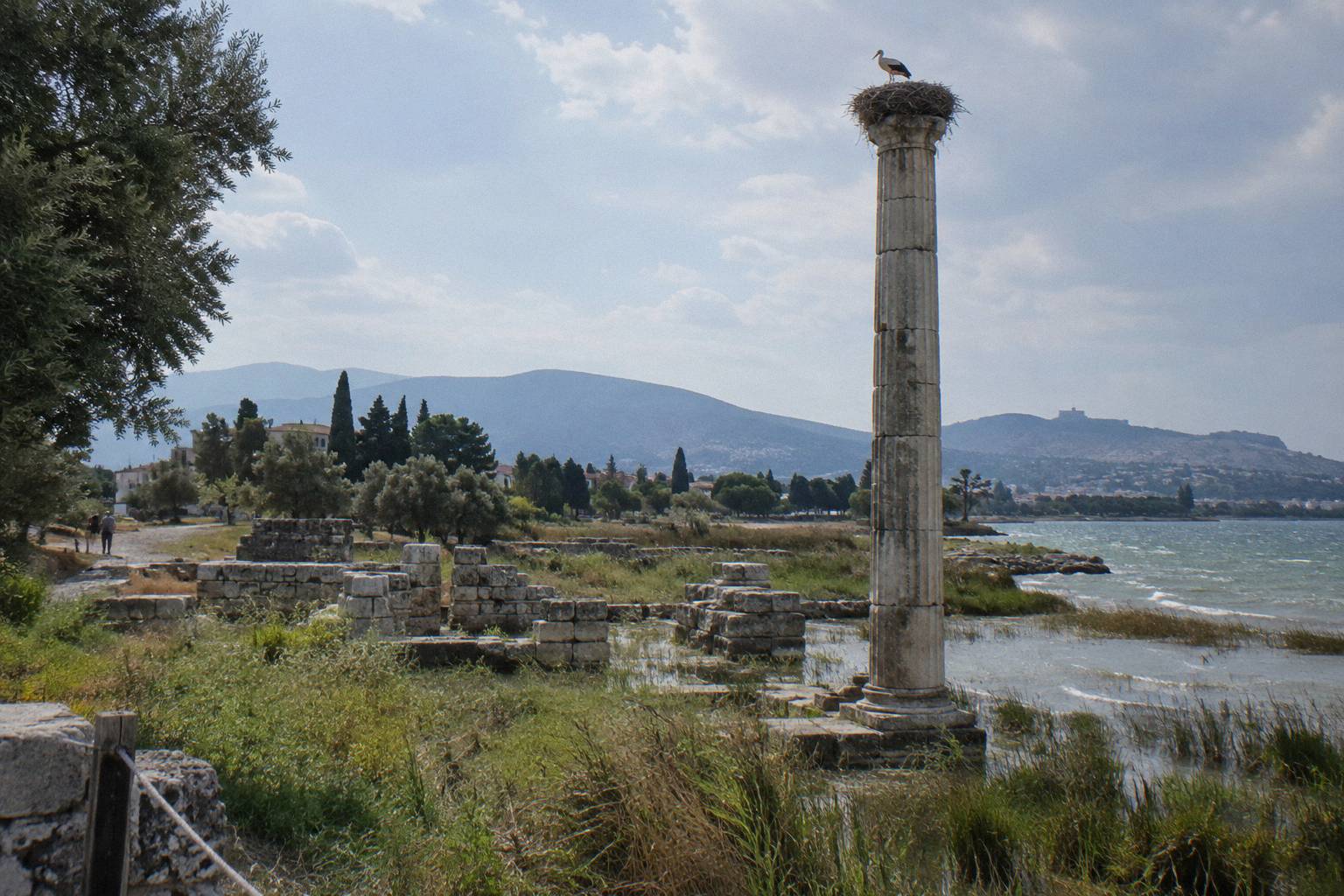
The Temple of Artemis today is one re-erected column standing among foundations on the Selçuk side road, an open site with no entry fee, one of the Seven Wonders of the Ancient World reduced to its footprint. Yet it is the economic engine of Acts 19: Demetrius and his guild made silver shrines for the pilgrim trade, and the theatre riot was their response to two years of Paul's teaching. Several of the tours here name the Temple of Artemis among their stops, including the Skip-The-Line, Guaranteed Port Return tour at 4.8 from 29 reviews, from $50 per person, whose inclusions also list a licensed guide and an on-time return for cruise guests.
Two traditions in the Paul story cannot be visited at all, whatever a brochure implies. The Grotto of St Paul is reported closed for conservation with no reopening date, and visitor guides report that the Cave of the Seven Sleepers is viewed from a path, with the chambers not entered. Both are traditions rather than confirmed sites, and only one tour line, Private 7 Hour Full Day from İzmir, even names the cave. For the full picture of what can and cannot be entered, see the Seven Sleepers and Grotto of St Paul guide.
A stop list comparison keeps the differences visible:
| Tour | Paul-era stops named on the line | Other stops named | Tickets |
|---|---|---|---|
| Bible Oriented Guide, All Inclusive | Ephesus ancient city | None itemised | Operator lists entrance fees as included |
| Lunch And Pre-Paid Tickets | Ephesus ancient city, Temple of Artemis | House of the Virgin Mary, Basilica of St John | Operator lists entrance fees as included |
| Travelshow Private, Lunch Included | Ephesus, Great Theatre, Library of Celsus, Temple of Artemis | House of the Virgin Mary, Basilica of St John | Paid separately |
| Skip-The-Line, Guaranteed Port Return | Ephesus, Great Theatre, Library of Celsus, Temple of Artemis | House of the Virgin Mary, Basilica of St John | Paid separately |
What Does A Paul-Focused Day Cost Once Tickets Are Added?
Tours that exclude entrance tickets look cheaper per person but shift the published Ministry fees onto you at the gate: EUR 40 for Ephesus, EUR 6 for the Basilica of St John, EUR 15 for the Terrace Houses as a separate ticket. Tours that list entrance fees as included remove that arithmetic entirely. Both models are legitimate, and comparing them is the point of the table below.
The Ministry publishes its fees for non-Turkish adults in EUR, and they change yearly, so check before going. The Ephesus Archaeological Site ticket is EUR 40 and includes the Ephesus Experience Museum on the site. The Terrace Houses are EUR 15 as a separate ticket, not covered by the Museum Pass. The Basilica of St John is EUR 6. A House of the Virgin Mary ticket, where a tour's exclusions list it, is a separate fee paid at the gate. The Museum Pass Türkiye, at EUR 165, covers the main site, the Ephesus Museum and the Basilica over 15 days; the full breakdown is in the guide to Ephesus entrance fees and Museum Pass Türkiye.
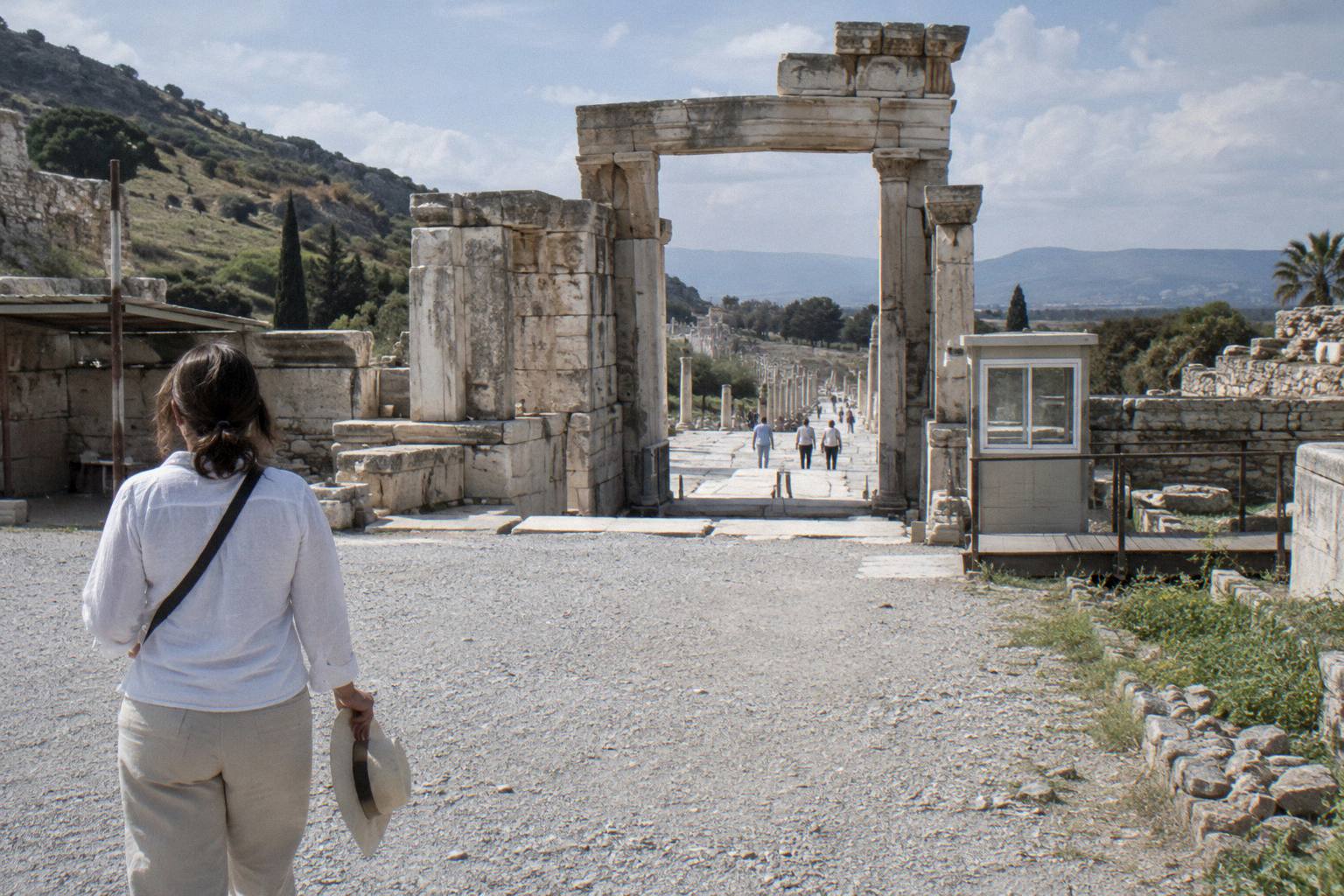
Set against those fees, the per-person starting prices read like this:
| Tour | Starting price | Tickets | Rating |
|---|---|---|---|
| Guide Of Ephesus Private | from $22.73 per person | Paid separately; the guide arranges tickets, fee paid in cash | 5.0 from 164 reviews |
| Private Skip-The-Line Access | from $49 per person | Paid separately | 4.9 from 590 reviews |
| Crowded House, Lunch Included | from $120.48 per person | Operator lists entrance fees as included (Terrace Houses extra) | 4.9 from 381 reviews |
| No Hidden Fees, Lunch Included | from $127.20 per person | Operator lists entrance fees as included | 5.0 from 25 reviews |
| Bible Oriented Guide, All Inclusive | from $143.20 per person | Operator lists entrance fees as included | 5.0 from 646 reviews |
For cruise passengers the arithmetic includes time as well as money. Kuşadası port sits roughly 20 to 35 minutes from the ruins by road, calls typically run 8 to 11 hours, and a walk through the site takes roughly 2 to 3 hours, so a Paul-focused day with a guide fits comfortably inside a call; the timing detail is covered in the Kuşadası shore excursion timing guide. From İzmir the drive is longer, about 80 km and 1 to 1.5 hours from the Alsancak port.
The Guide Of Ephesus Private tour is the value end of the licensed-guide options: 5.0 from 164 reviews, from $22.73 per person, with a countryside lunch, all parking fees and cruise port pick-up and drop-off listed, the guide arranging tickets for a fee paid in cash. Its line lists skip-the-line ticket arrangement and an on-time return for cruise guests, with the ship's all-aboard time governing.
For travellers who want the whole Revelation landscape rather than a single day, the multi-day options extend the Paul thread into the seven churches. The 5 Day Mini Group tour, from $989 per person at 5.0 from 39 reviews, lists a Professional Bible-Oriented Licenced Tour guide, four nights in 4 star hotels and pre-paid entrance tickets over five days from İzmir. It names an Acropolis and a Temple of Apollo on its description without naming the site they belong to, so read the day-by-day itinerary before booking.
What Should You Read Before Walking The Site?
Read Acts 18:19 through Acts 20:35 as one continuous story, then 1 Corinthians 15 and 16 for Paul's own voice from the city, then Revelation 2:1-7 for the church he left behind. The Letter to the Ephesians is best read with its authorship questions in view rather than treated as a letter posted from the site you are standing in.
Revelation 2 belongs in the reading because it closes the arc Acts opens. "Unto the angel of the church of Ephesus write..." begins the first of the seven letters, praising the church's works, labour and patience, then adding the rebuke every visitor to the ruins remembers: "Nevertheless I have somewhat against thee, because thou hast left thy first love." The promise that follows, Revelation 2:7, is "To him that overcometh will I give to eat of the tree of life, which is in the midst of the paradise of God." Standing where that church met, somewhere in this city, is the payoff of reading the chapters in order; the guide to the Revelation letter to Ephesus walks through each verse against the ruins.
For the epistle itself, Ephesians 1:1 addresses the saints "at Ephesus" in most manuscripts but not all, and the letter's authorship and place of writing are debated among scholars. Nothing in the text says it was written there, and the safest framing on site is that 1 Corinthians is the letter Paul actually sent from Ephesus. The background is gathered in the guide to reading the Letter to the Ephesians before booking.
A short reading plan that fits the walk itself:
| Reading | Length | Where it lands on site |
|---|---|---|
| Acts 18:19 and 18:24 | The first visit, Apollos | Approach to the site |
| Acts 19:1 and 19:10 | Two years of teaching | Curetes Street |
| Acts 19:24-28 and 19:29 | The riot | The Great Theatre |
| 1 Corinthians 15:32, 16:8-9 | Paul's own words from Ephesus | Anywhere quiet |
| Acts 20:17 and 20:31 | The farewell to the elders | The exit road |
| Revelation 2:1-7 | The letter to the church | The last view back |
The difference between a good Paul-focused day and a thin one is almost always the guide's grip on these texts. The operators who write Bible-oriented or biblical expertise into their inclusions have told you in advance that this is the conversation they are prepared for. The Bible Oriented Guide, All Inclusive tour, from $143.20 per person at 5.0 from 646 reviews, is the strongest-reviewed of them, with lunch and entrance fees listed and the operator listing an on-time return for cruise guests.
Common Questions About Paul In Ephesus
Did St Paul Spend Time In Ephesus?
Yes. Acts records a brief first visit (18:19), a main ministry of two to three years (19:1-20:31), and a farewell to the elders from Miletus (20:17). The Ministry of Culture and Tourism calls Ephesus the city from which St Paul launched many of his missions.
How Long Did Paul Stay In Ephesus?
Two to three years. Acts 19:10 gives two years of daily teaching and Acts 20:31 gives three years; the two verses are never reconciled into one figure.
Did Paul Write The Letter To The Ephesians In Ephesus?
No text says so, and the claim is never made. Some early manuscripts of Ephesians 1:1 omit "at Ephesus", and both authorship and place of writing are debated. 1 Corinthians is the letter that names Ephesus as its writing place (16:8).
Can You Visit The Theatre Where The Riot In Acts 19 Happened?
Yes. The Great Theatre at Ephesus still stands, and Acts 19:29 records that the crowd "rushed with one accord into the theatre". Every tour naming the Great Theatre among its stops passes it. The synagogue and the school of Tyrannus are not identified.
Which Tours Have A Bible-Oriented Guide?
Several lines list one, including Bible Oriented Guide, All Inclusive (from $143.20 per person), Lunch And Pre-Paid Tickets (from $143.20 per person), No Hidden Fees, Lunch Included (from $127.20 per person) and Travelshow Private, Lunch Included, which lists a guide with biblical expertise from $39.04 per person. Other tours list professional or licensed guides without Bible wording.
Is The Grotto Of St Paul Open?
It is reported closed for conservation with no reopening date, and no tour here promises it as a stop. Treat it, like the Cave of the Seven Sleepers, as a tradition you read about rather than a chamber you enter.