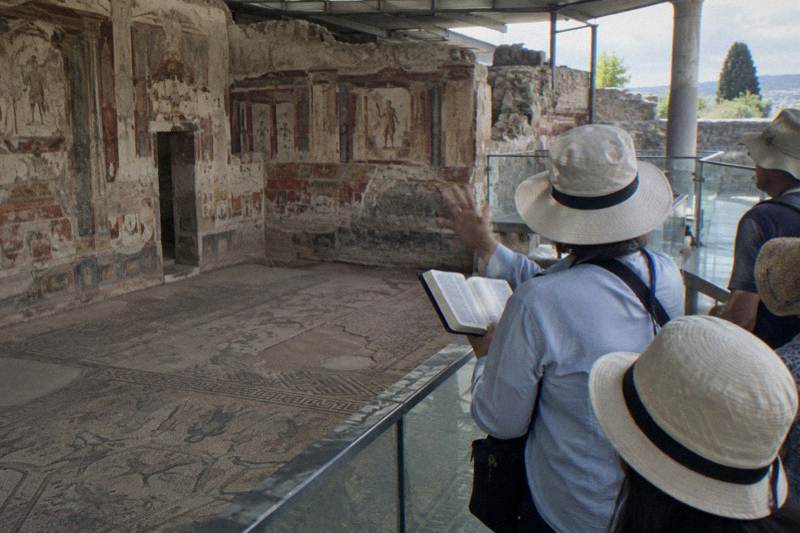
Cave Of The Seven Sleepers And Grotto Of St Paul: Can A Tour Visit Them
Two minor biblical sites near Ephesus, the Cave of the Seven Sleepers and the Grotto of St Paul, appear in tour descriptions more often than they can actually be visited. Here is what visitor guides report about each, which of the tours covered here names one, and the questions worth asking before booking.
Short answer
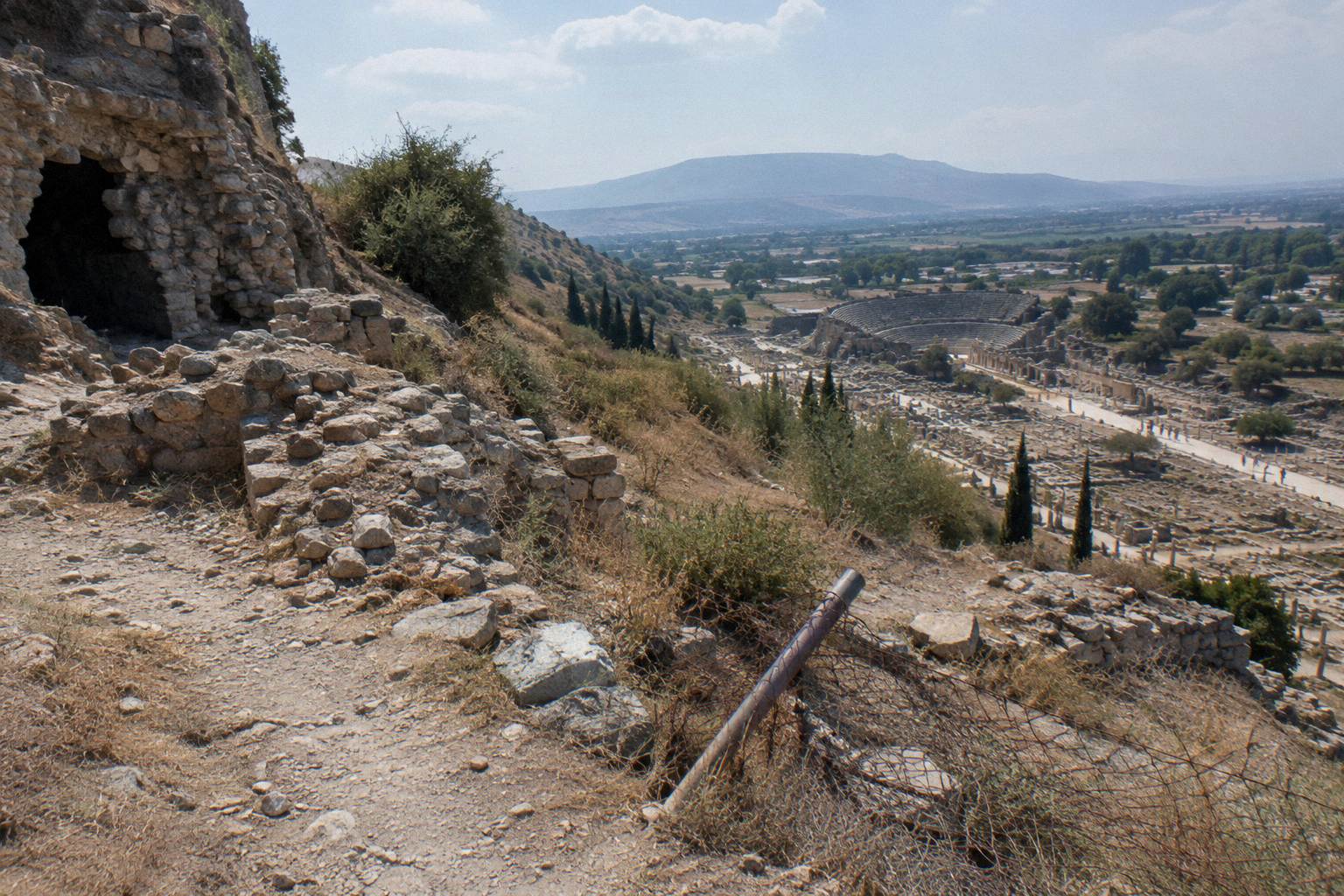
The Grotto of St Paul is reported closed for conservation with no reopening date, and at the Cave of the Seven Sleepers the ruins are reportedly seen from a viewing path, with the chambers not entered. One tour covered here, Private 7 Hour Full Day from İzmir (from $450 per person, 7 hours), names the cave on its itinerary.
Two names surface again and again in Ephesus tour descriptions: the Cave of the Seven Sleepers and the Grotto of St Paul. Both sit outside the main archaeological site, both are tied to Christian tradition rather than to the marble streets everyone photographs, and both are, by current reports, harder to actually stand inside than a brochure suggests. The Ministry of Culture and Tourism describes Ephesus as a key city in the expansion of Christianity, but its published pages for the site name the Great Theatre, the Odeum, the Library of Celsus, the bathhouses and the Agora, and neither the cave nor the grotto appears among them. That silence matters: everything known about visiting these two places comes from secondary visitor reports and tradition, not from an official statement.
What Is The Cave Of The Seven Sleepers?
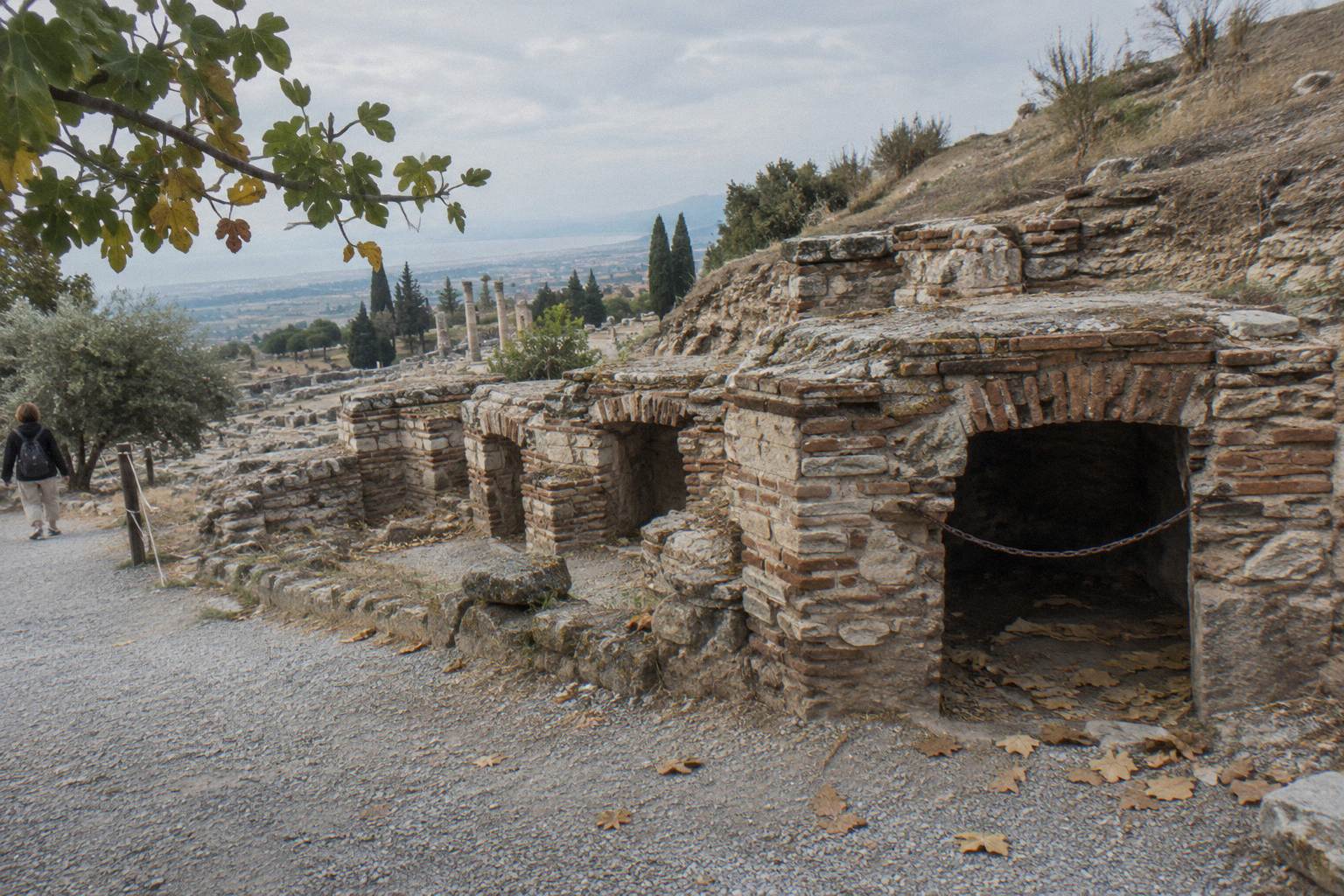
The Cave of the Seven Sleepers is a traditional site on the slopes near Ephesus, linked to a legend of seven Christians who slept for centuries in a cave to escape persecution. Visitor guides report that the ruins are seen from a viewing path and that the chambers are not entered, so no tour can promise a walk inside. It is a tradition, not an excavated Ministry site with its own page.
The story attached to the cave belongs to a wide family of legends told in both Christian and Muslim tradition, with Ephesus as the place most versions anchor to. The broad outline: seven young men hide in a cave during a persecution, fall asleep, and wake what feels like a night later but is in fact generations on, their revival taken as a sign of resurrection. Versions of the tale circulated across the eastern Mediterranean for centuries, and the Ephesus association hardened into local tradition. No Ministry page describes the site, and no official statement confirms what the surviving chambers once were. Every claim about the cave therefore carries the words "reported" and "tradition", and any tour that mentions it should be read in that light.
What visitors actually encounter, as secondary reports describe it, is modest. A viewing path passes the remains; the interior chambers are not entered. That puts the cave in a different category from the Library of Celsus or the Great Theatre, where the walk itself is the experience. If a listing shows the Seven Sleepers among its stops, the realistic expectation is a brief roadside pause and a story from the guide, not an archaeological visit with a ticket gate. There is no published Ministry fee for the cave, and no published hours, because it is not presented as a ticketed Ministry attraction at all.
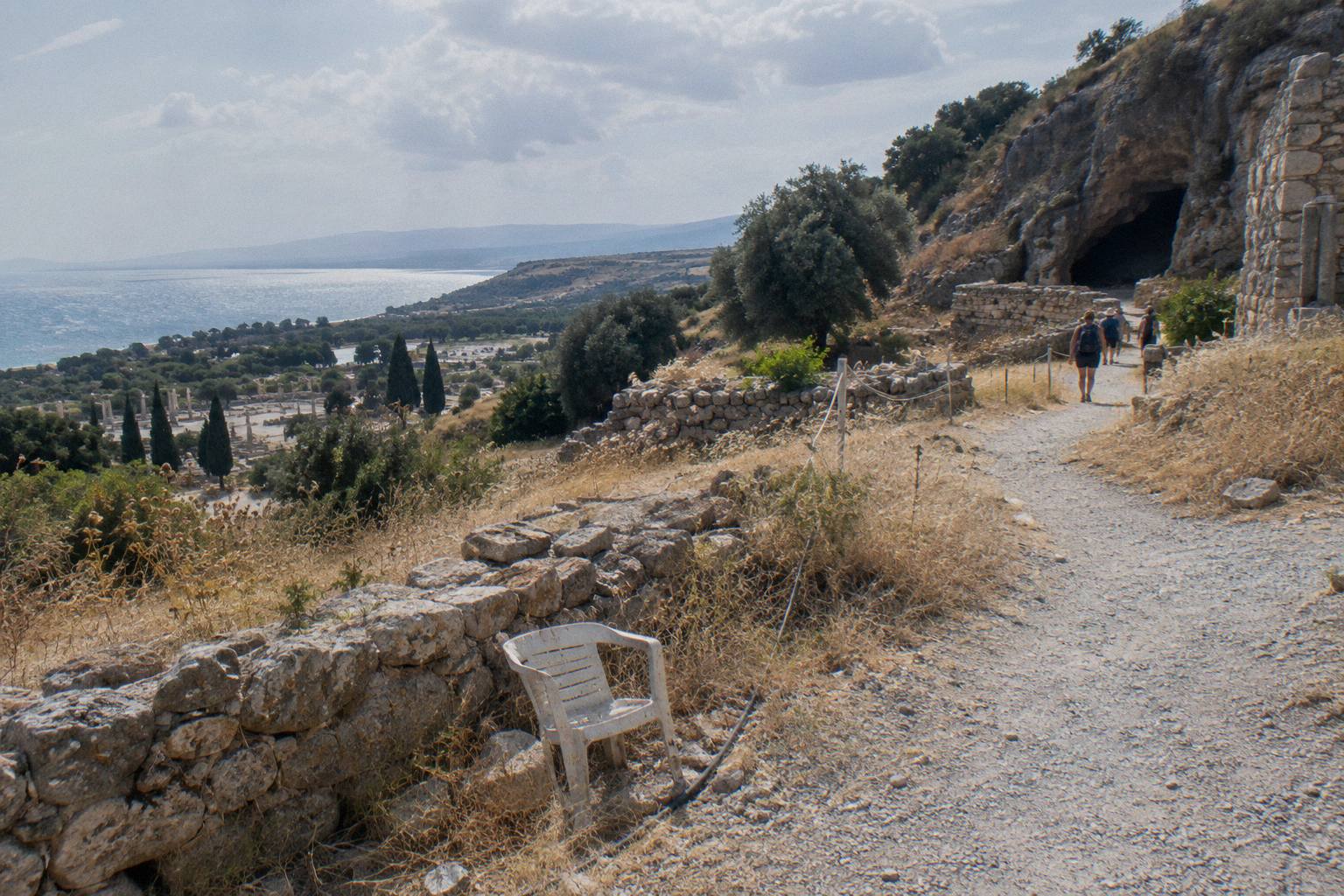
For a reader deciding whether the cave justifies choosing one tour over another, the practical answer is that it works as a stop only in the loose sense. The site's pull is narrative: it lets a guide tell the sleepers legend at the place tradition assigns to it. Anyone who wants depth at Ephesus itself will get far more from the main site, which a visit takes roughly 2 to 3 hours to walk. The cave adds colour, not substance, and it should never be the deciding factor between two otherwise similar tours.
What Is The Grotto Of St Paul?
The Grotto of St Paul is a traditional site associated with the apostle's ministry in and around Ephesus, reported closed for conservation with no reopening date. No Ministry statement covers it, no fee or hours are published, and no tour covered here names it as a stop. Treat any promise of a grotto visit as a question to put to the operator.
The grotto's claim rests on Paul's long Ephesus ministry. Acts 19:10 records that Paul's teaching "continued by the space of two years; so that all they which dwelt in Asia heard the word of the Lord Jesus, both Jews and Greeks", and Acts 20:31 gives "by the space of three years I ceased not to warn every one night and day with tears". Write that as two to three years; the two figures are never reconciled. Tradition fills the map around that ministry with sites, and the grotto is one of them: a cave linked by local tradition to Paul's preaching. The association is old, but it is tradition, and the reports that matter for a traveller are recent and discouraging: the site is reported closed for conservation, with no reopening date given.
That closure changes the arithmetic for tour planning. A closed site with no reopening date cannot be scheduled, and an operator who names it is either out of date or optimistic. None of the twenty-eight tours covered here lists the Grotto of St Paul among its stops, so there is no trip on this site that even claims it. The right posture is simple: if a description elsewhere promises the grotto, ask the operator in writing whether the site is open on your date and what happens if it is not. A free-cancellation term, which each tour states on its own line, is the practical protection here.
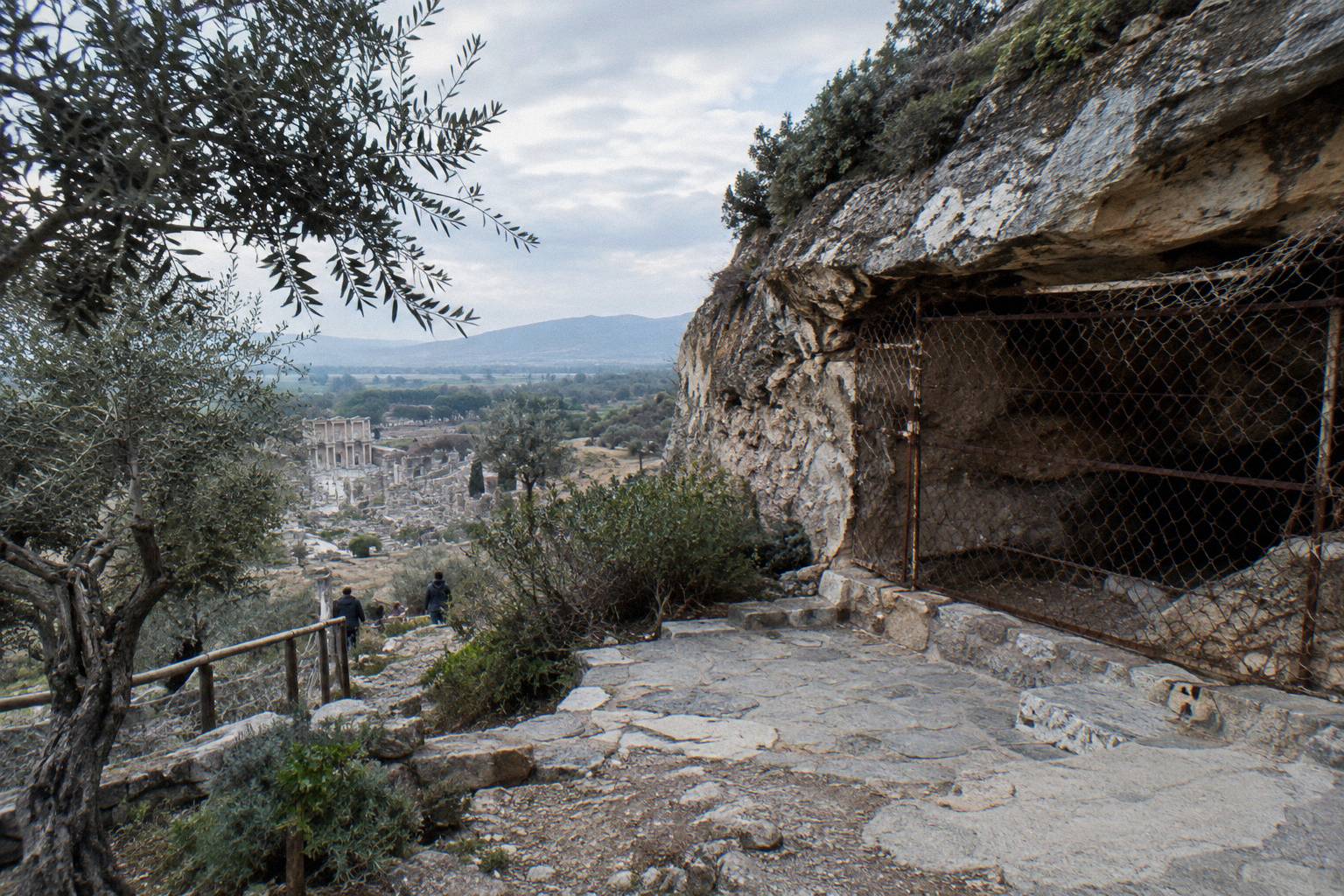
The contrast with the cave next door in the itineraries is worth stating plainly. The Cave of the Seven Sleepers appears on one tour line; the Grotto of St Paul appears on none. One is viewable from a path by report; the other is reported shut. Neither is promised, and neither should be. What a good tour does with both is tell the traditions at the places where they attach, and spend its walking hours where the archaeology is real and open: the ancient city, the Basilica of St John with its traditional tomb, the Temple of Artemis where one re-erected column stands among foundations.
Can A Tour Visit The Cave Of The Seven Sleepers?
Yes, in a limited sense: Private 7 Hour Full Day from İzmir (from $450 per person) is the one tour covered here whose line names the Cave of the Seven Sleepers among its stops. Even there, visitor guides report the ruins are seen from a viewing path and the chambers are not entered, so the visit is an exterior stop, and the private per-person price falls as the group grows.
That İzmir tour is worth examining because it is the only one making the claim. Its line names six stops: the Ephesus ancient city, the Temple of Artemis, the Library of Celsus, the Great Theatre, the House of the Virgin Mary (by tradition the place where Mary is believed to have spent her last years) and the Cave of the Seven Sleepers. It runs 7 hours, starts from İzmir's airport, cruise port or hotels with round-trip transport included, carries free cancellation up to 24 hours before the start, and lists a professional, private, licensed tour guide. Lunch is listed under its exclusions, so no meal should be expected. Its review standing is thin: fewer than 20 reviews, so the reported experience of other guests carries little weight and the itinerary text is the best evidence available. The full Private 7 Hour Full Day from İzmir page shows the stop list as the operator wrote it, or check availability for your date.
Since only one trip names the cave, most visitors to Ephesus will not see it at all, and that is fine. The alternative is not a lesser tour; it is a tour that spends its hours on open archaeology. Compare what each actually lists before letting a single minor stop decide the matter.
Two points about the other İzmir trips shown there. Crowded House Izmir Day Tour runs 5 hours to 9 hours from İzmir at from $150.60 per person, rates 4.9 from 195 reviews, and lists entrance fees for the House of the Virgin Mary and the Ephesus ancient site as included, with lunch; the Terrace Houses ticket is separate and extra. Guide Of Ephesus From Izmir runs 6 hours to 7 hours at from $167.33 per person, lists lunch in the countryside and a licensed local guide, and lists the Ephesus and House of Virgin Mary entrance fees as excluded, paid in cash to the guide, so those tickets follow the published Ministry fees in EUR, which change yearly and should be checked before going. Neither names the cave or the grotto. The longer Crowded House Izmir day tour covers the most ground of the three, and you can Check availability alongside it.
Which Tour Should You Choose If The Cave Matters?
Pick Private 7 Hour Full Day from İzmir if the Cave of the Seven Sleepers genuinely matters to you, because it is the only tour covered here that names it, then confirm with the operator that the stop still runs on your date. If the cave is a nice-to-have, the İzmir alternatives with larger review pools and included lunch offer more verified value per hour.
A decision like this comes down to how much weight a single tradition site deserves against everything else in the day. The full day that names the cave runs 7 hours, lists a licensed private guide and round-trip transport from Adnan Menderes Airport, the İzmir cruise port or an İzmir hotel, and says nothing either way about whether entrance fees are included, so that is a question for the operator. The İzmir port sits about 80 km from Ephesus, roughly 1 to 1.5 hours by road, which means any İzmir day tour spends a meaningful share of its hours in transit before the first stop.
Against that, the alternatives bring more certainty. The Crowded House İzmir tour pairs the ancient city with the House of the Virgin Mary and the Temple of Artemis, includes the two main entrance fees and lunch, and carries 4.9 from 195 reviews, a review pool deep enough to trust the pattern. The Guide of Ephesus İzmir trip includes a countryside lunch and parking fees, and its ticket arrangement (paid in cash to the guide, who arranges them to skip the ticket lines, as the operator describes it) keeps the entries simple. The published fees those cash payments follow: Ephesus EUR 40, the Basilica of St John EUR 6, both Ministry figures that change yearly, and the House of the Virgin Mary's fee is paid at its own gate.
There is a middle path worth naming. Choose the tour for its core, the ancient city and the open sites, and treat the cave as a bonus you confirmed in advance. Ask the operator one direct question: does the Seven Sleepers stop run on your date, and roughly how long does the vehicle pause there? The answer tells you whether the stop is real or a line in a description. With free cancellation up to 24 hours before the start on every trip discussed here, there is room to book, ask, and cancel if the answer disappoints.
What Should You Ask The Operator Before Booking?
Ask three things in writing: whether the Seven Sleepers stop runs on your date, whether the Grotto of St Paul is open at all, and what the tour substitutes if either is unavailable. Keep the reply, because both sites are tradition-based and reported in flux, and the cancellation terms only help if you use them before the deadline.
The first question is the essential one for the İzmir full day. "Does the Cave of the Seven Sleepers stop run on this date, and is it a viewing stop or a walk inside?" A truthful operator will say it is a viewing stop, because the chambers are reported not to be entered. If the answer promises entry, that promise should raise a flag. The second question, about the grotto, is mostly a filter: since no tour here names it, an operator who volunteers a grotto visit should be asked where that promise comes from, given the reported conservation closure with no reopening date.
The third question protects the value of the day. Every tour discussed here carries free cancellation up to 24 hours before the start, so a disappointing answer received two days out costs nothing. A useful habit is to ask all three questions before booking rather than after: operators answer pre-sale questions faster, and the answer becomes part of the record. Where entrance fees are involved, the same message can confirm which tickets the operator lists as included and which are paid separately, since the Ministry's published EUR fees change yearly.
| Question | Why it matters | What a good answer looks like |
|---|---|---|
| Does the Seven Sleepers stop run on my date? | The site is reported viewable only, and one tour's line names it | A clear yes or no, describing an exterior viewing stop |
| Is the Grotto of St Paul open? | Reported closed for conservation, no reopening date | "No" or "not on this tour"; a promise here is a warning sign |
| What is substituted if a stop is unavailable? | Traditions and closures change | A named alternative, not a shrug |
| Which entrance fees are included? | Fees are EUR figures that change yearly | The operator's own inclusion list, itemised |
How Do These Traditions Fit The Biblical Record?
Neither the cave nor the grotto appears in scripture itself: the sleepers legend grew after the biblical period, and the grotto is a traditional marker for Paul's Ephesus years rather than a named place in Acts. What Acts does anchor in Ephesus is Paul's two-to-three-year ministry, the synagogue disputes and the silversmiths' riot.
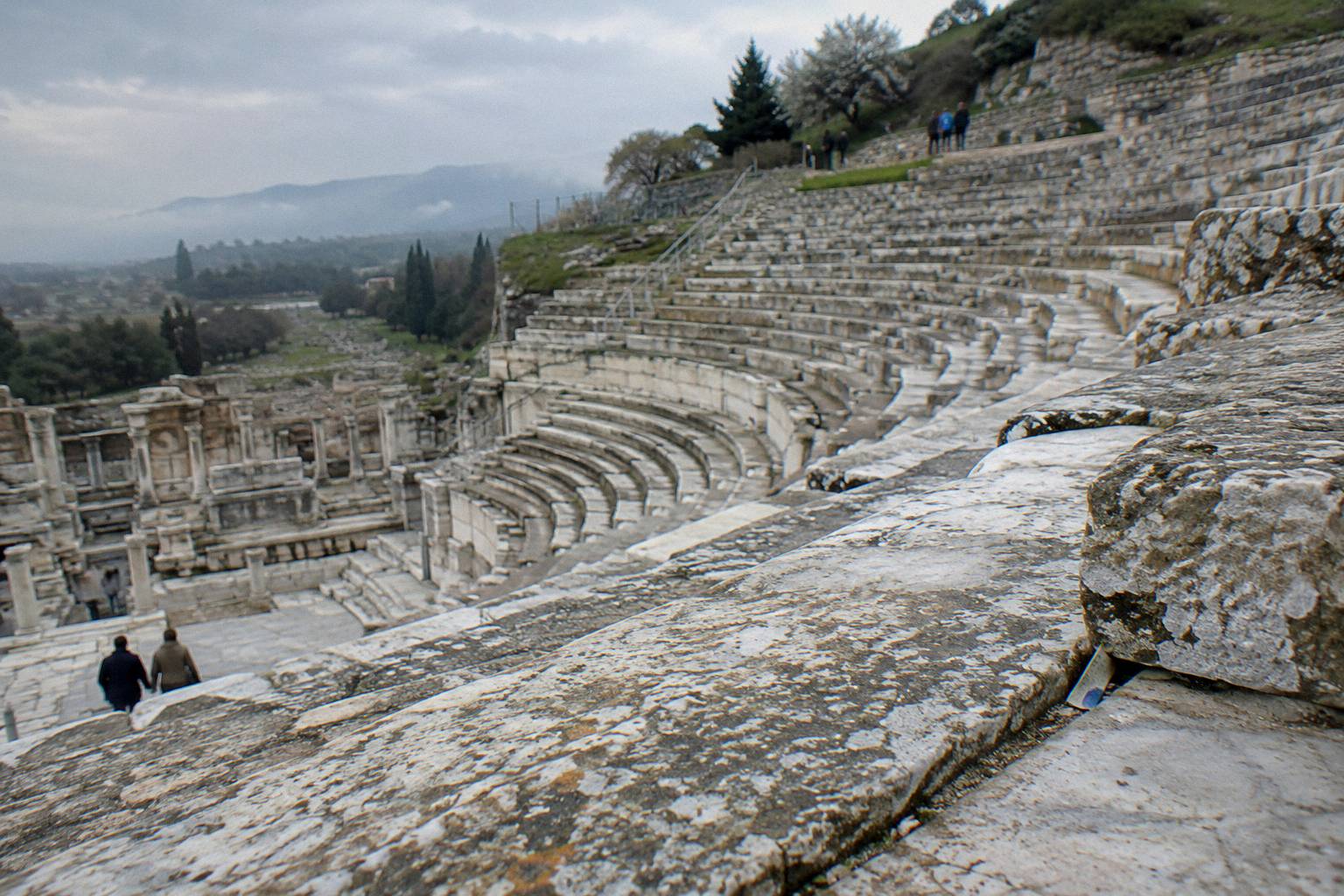
Paul's Ephesus is the best-documented stretch of his career. Acts 18:19 gives the first visit: "And he came to Ephesus, and left them there: but he himself entered into the synagogue, and reasoned with the Jews." He returned, and Acts 19:8 records that "he went into the synagogue, and spake boldly for the space of three months", before moving to the school of Tyrannus, from which the two-year teaching of Acts 19:10 reached "all they which dwelt in Asia". The riot follows: Demetrius the silversmith, who "made silver shrines for Diana", rouses the city, and the crowd "rushed with one accord into the theatre" (Acts 19:29), the same Great Theatre whose roughly 25,000 seats stand open to visitors today.
The traditions fill in the blanks that scripture leaves. Where Paul taught day to day, where he is said to have been imprisoned or beaten, tradition assigned sites over the centuries, and the grotto belongs to that family of markers. The Seven Sleepers legend goes further still: it attaches to Ephesus but not to any biblical text, circulating instead in later Christian and Muslim storytelling. Neither is confirmed by archaeology in the way the Ministry confirms the theatre or the Library. A guide who tells these stories at the right places adds real value; a description that presents them as settled fact overreaches.
| Reference | What it records | Where it stands in Ephesus today |
|---|---|---|
| Acts 18:19 | Paul's first visit, reasoning in the synagogue | A first visit; no site is marked |
| Acts 19:8-10 | Three months in the synagogue, then two years of teaching | The two-to-three-year ministry, never reconciled with Acts 20:31 |
| Acts 19:29 | The crowd rushed into the theatre | The Great Theatre, roughly 25,000 seats, open to visitors |
| Revelation 2:1-7 | The letter to the church of Ephesus | Read at the ancient city; no single marker |
| 1 Corinthians 16:8-9 | "I will tarry at Ephesus until Pentecost" | The letter that names Ephesus as its writing place |
The letters complicate the picture further, in a way worth knowing before a tour frames them. Ephesians 1:1 addresses "the saints which are at Ephesus", but some early manuscripts omit "at Ephesus", and the letter's place of writing is debated; it should never be said that Paul wrote Ephesians in Ephesus. The letter that does name Ephesus as its writing place is 1 Corinthians: "But I will tarry at Ephesus until Pentecost. For a great door and effectual is opened unto me, and there are many adversaries" (1 Corinthians 16:8-9). Reading those verses before a visit does more for the walk than either minor cave can. The fuller context of his time in the city is covered in the guide to following Paul's steps through Ephesus, and the background to the letter itself in reading Ephesians before booking.
What Can You Actually Visit Nearby Instead?
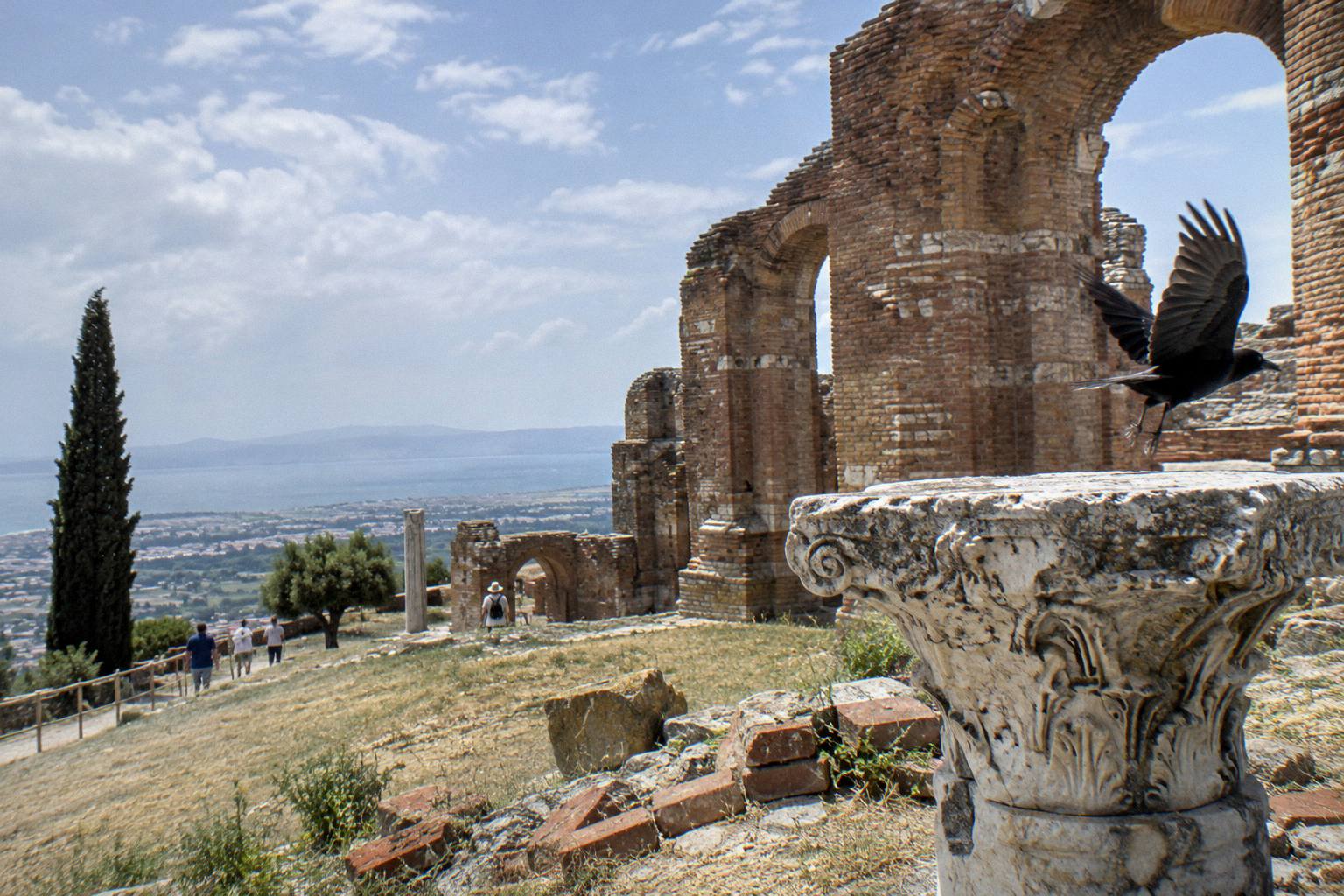
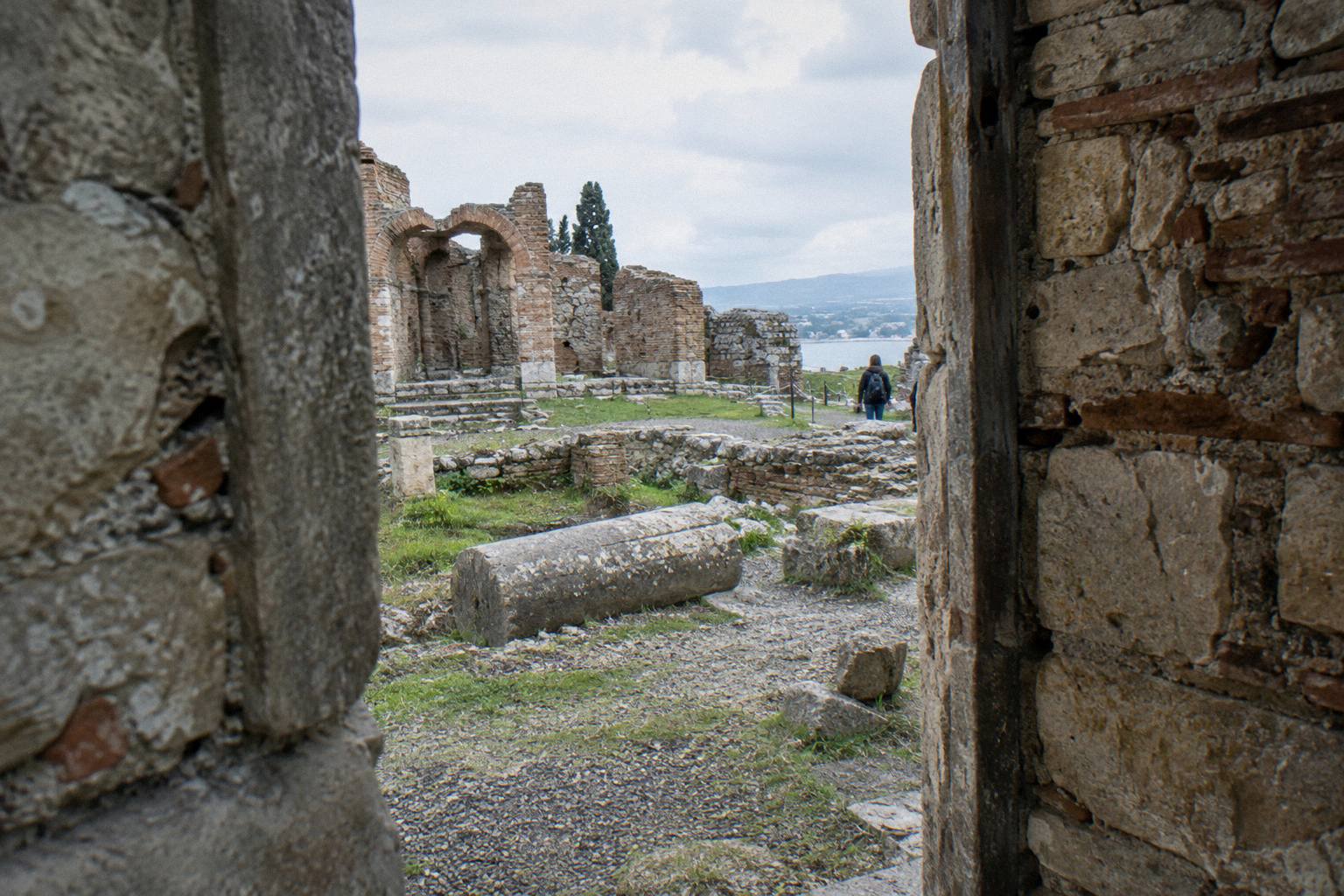
The sites that reliably reward a tour day around Ephesus are the open ones: the ancient city with its Marble Road and Great Theatre, the Basilica of St John over the traditional tomb, the Temple of Artemis where one re-erected column stands, and, by tradition, the House of the Virgin Mary on Bulbul Mountain. All are reachable, and three of the four carry published Ministry fees.
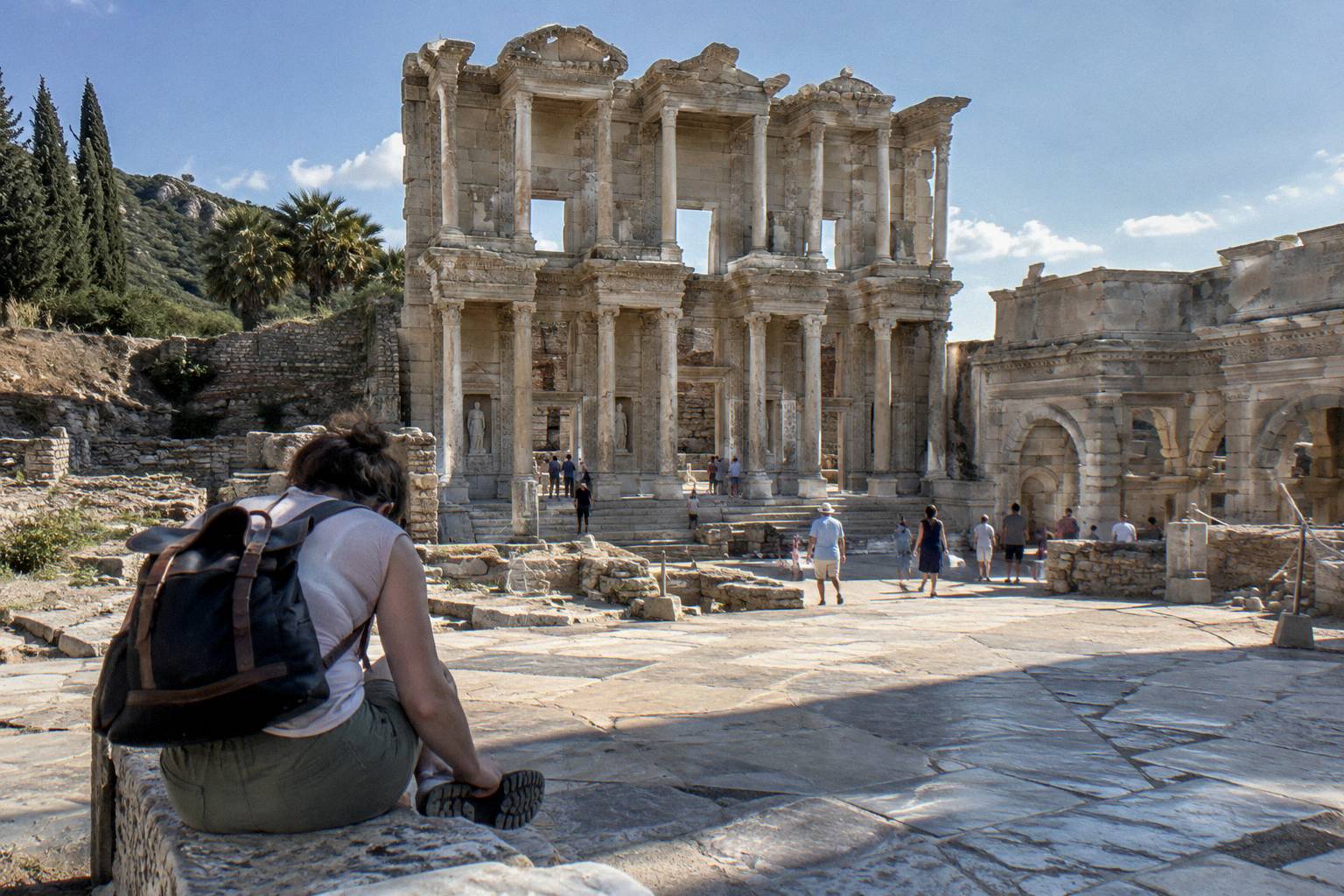
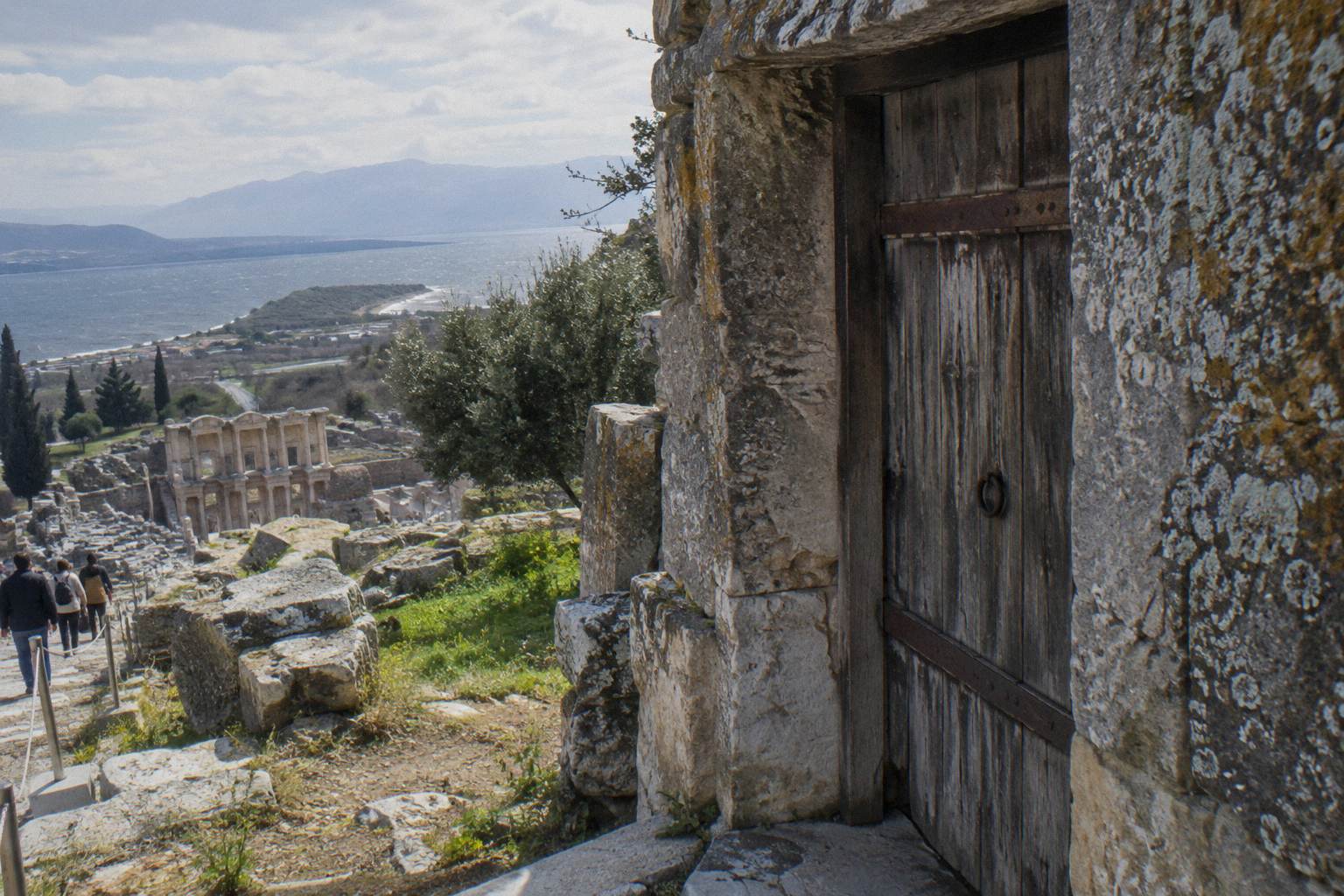
The ancient city is the anchor. It sits in Selçuk, open daily (check the Ministry page on the day, hours shift by season), published fee EUR 40, and the ticket includes the Ephesus Experience Museum on the site. The route runs about 1.5 km one way downhill from the upper Magnesian gate to the lower Harbour gate, over worn, uneven marble; the lower gate gives the flatter approach to the Library of Celsus and the theatre. Since 2015 the whole property has been on the UNESCO World Heritage List as a serial site that also includes Ayasuluk Hill, which is where the Basilica of St John stands.
| Place | Status as reported | Ticket |
|---|---|---|
| Cave of the Seven Sleepers | Ruins seen from a viewing path; chambers not entered (visitor-guide reports) | No Ministry fee published |
| Grotto of St Paul | Reported closed for conservation, no reopening date | No Ministry fee published |
| Ephesus ancient city | Open daily; Ministry site | EUR 40, published fee, changes yearly |
| Basilica of St John | Open daily; traditional tomb of John | EUR 6, published fee, changes yearly |
| Temple of Artemis | Open ground; one re-erected column among foundations | No entry fee |
The Basilica of St John is the strongest biblical-adjacent stop after Ephesus itself. The 6th-century basilica was rebuilt under Justinian over an earlier shrine marking the traditional tomb of the apostle, and the Ministry text says John is "believed to have written" the Gospel of John in Ephesus; no archaeological confirmation of remains exists, so it is always the traditional tomb. The House of the Virgin Mary, about 7 km from Ephesus, is venerated as the place where Mary is believed to have spent her last years, a tradition dating to an 1891 search by Lazarist priests from Smyrna; the Church has never formally ruled on its authenticity. It is not a Ministry site and is not covered by the Museum Pass Türkiye (EUR 165), which does cover the main Ephesus site, the Ephesus Museum and the Basilica. The decisions around that particular stop are worked through in the guide to the House of the Virgin Mary on a tour.
Which Other Tours Fit A Tradition-Focused Day?
Crowded House Izmir Day Tour runs 5 hours to 9 hours from İzmir at from $150.60 per person. Its line lists the House of the Virgin Mary and Ephesus ancient site entrance fees as included, along with lunch and an air-conditioned vehicle; the Terrace Houses fee is excluded, a separate EUR 15 ticket that the Museum Pass does not cover. Its stops name the Temple of Artemis and the Library of Celsus alongside the two main entries. With 4.9 from 195 reviews it has the deepest review pool of any İzmir day tour discussed here, and the included-fee structure means no cash envelope at the gates.
Guide Of Ephesus From Izmir runs 6 hours to 7 hours at from $167.33 per person and takes a different approach. Its line lists lunch in the countryside, all parking fees, private transportation with a separate driver, and a licensed local tour guide; the inclusions list an on-time return for cruise guests, though the ship's own all-aboard time always governs. The Ephesus and House of Virgin Mary entry fees sit in its exclusions: the guide arranges the tickets, paid in cash, which the operator describes as skipping the ticket lines. Fewer than 20 reviews means its record is thin; weigh the itinerary text, not the stars. The full stop list is on the Guide Of Ephesus İzmir tour page, or Check availability directly.
For travellers arriving by ship rather than staying in İzmir, the picture changes: Kuşadası sits roughly 20 to 35 minutes from the ruins, against 1 to 1.5 hours from the İzmir port, so a Kuşadası day buys back transit time. The port-side options, timings and back-to-ship arithmetic are covered in the guide to Ephesus shore excursions from Kuşadası. None of the Kuşadası tours names the cave or the grotto either; the full day from İzmir remains the only trip here that does.
| Tour | Price | Duration | Cave Or Grotto Named | Rating |
|---|---|---|---|---|
| Private 7 Hour Full Day | From $450 per person | 7 hours | Cave of the Seven Sleepers | Fewer than 20 reviews |
| Crowded House Izmir Day Tour | From $150.60 per person | 5 hours to 9 hours | Neither | 4.9 from 195 reviews |
| Guide Of Ephesus From Izmir | From $167.33 per person | 6 hours to 7 hours | Neither | Fewer than 20 reviews |
Common Questions About The Cave And Grotto
Can A Tour Visit The Cave Of The Seven Sleepers And The Grotto Of St Paul?
The cave, in a limited sense: Private 7 Hour Full Day from İzmir names it, and visitor guides report the ruins are seen from a viewing path with the chambers not entered. The Grotto of St Paul is reported closed for conservation with no reopening date, and no tour covered here names it.
Is The Cave Of The Seven Sleepers In The Bible?
No. The sleepers legend is a later Christian and Muslim tradition attached to Ephesus; it appears in no biblical text. What scripture anchors at Ephesus is Paul's two-to-three-year ministry in Acts 19 and the letter to the church in Revelation 2:1-7.
Is There An Entrance Fee For Either Site?
No Ministry fee is published for either place; the Ministry lists fees only for its own sites, such as Ephesus at EUR 40 and the Basilica of St John at EUR 6, published fees that change yearly. For the cave or grotto, nothing is listed, and nothing should be assumed.
Which Tour Names The Cave Of The Seven Sleepers?
One tour covered here: Private 7 Hour Full Day from İzmir, from $450 per person, 7 hours, with round-trip transport from the İzmir airport, cruise port or hotels. It lists lunch as excluded and carries free cancellation up to 24 hours before the start.
What Should I Do If A Tour Promises The Grotto Of St Paul?
Ask the operator in writing whether the grotto is open on your date, given its reported conservation closure with no reopening date, and what the tour substitutes if it is not. Book with the free-cancellation window in mind so a poor answer can still be cancelled at no cost.
What Can I Visit Instead Near Ephesus?
The open sites: the ancient city (EUR 40, including the Ephesus Experience Museum), the Basilica of St John over the traditional tomb (EUR 6), the Temple of Artemis with its one re-erected column (no fee), and the House of the Virgin Mary by tradition, a separate fee paid at its gate. All fees change yearly; check before going.
The underlying question, whether the cave and grotto can anchor a tour day, has a settled answer: they cannot, but they can decorate one if the operator confirms them and the day is built on the open sites. The full day from İzmir at Biblical Ephesus Tour is the only trip here that names the cave, and even it should be asked to confirm the stop before you book.