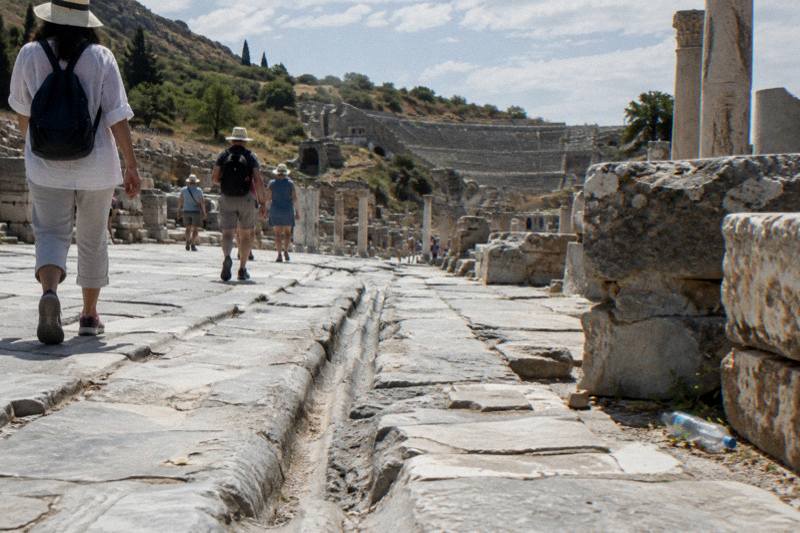
House Of The Virgin Mary Ephesus Tour: Visiting Meryem Ana Evi
A small stone chapel on Bulbul Mountain, about 7 km from the Ephesus ruins, draws Catholic and Muslim pilgrims to a place where Mary is believed by tradition to have spent her last years.
Short answer
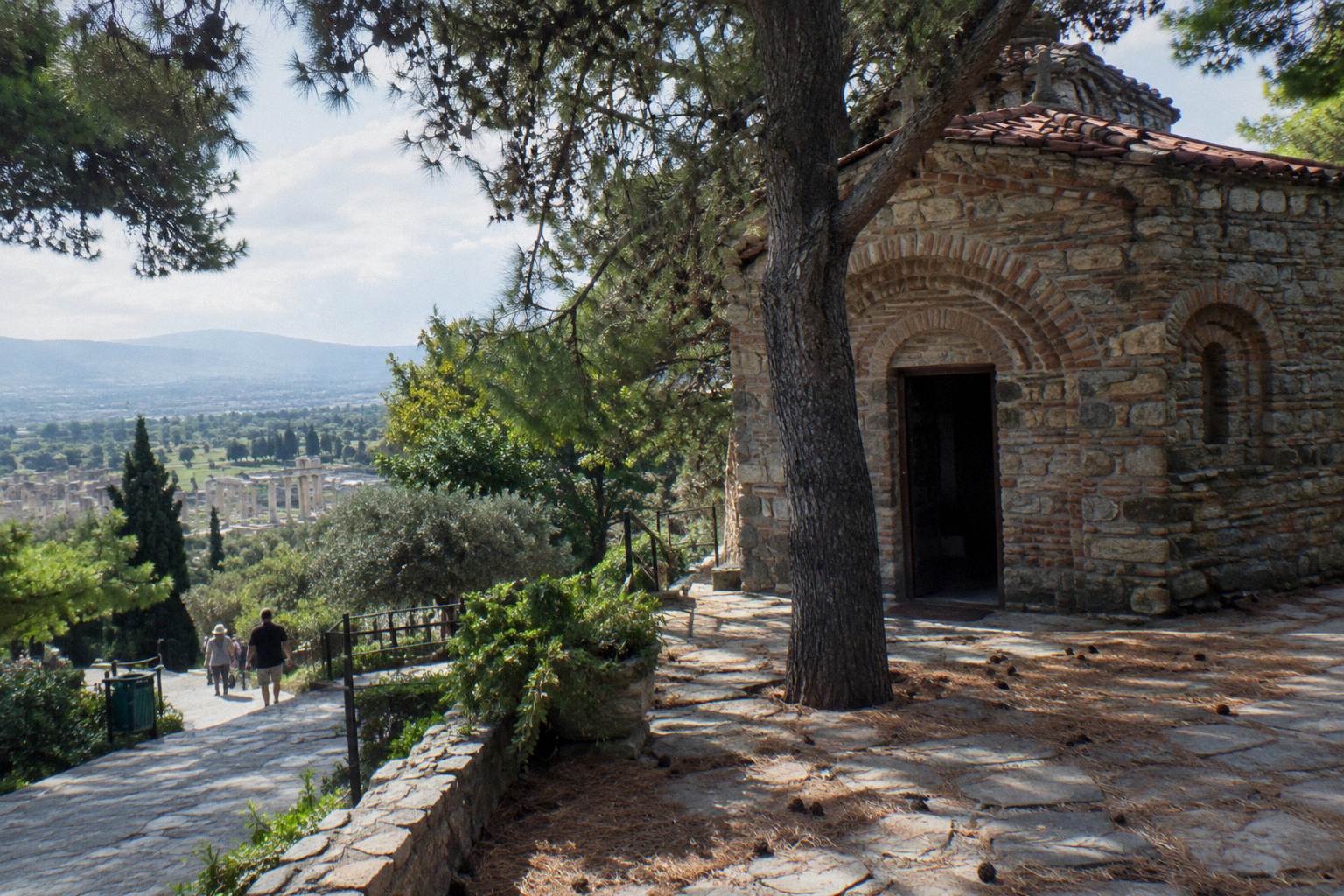
The House of the Virgin Mary (Meryem Ana Evi) is a small stone chapel about 7 km from Ephesus, venerated by tradition as the place where Mary is believed to have spent her last years. Many tours name it as a stop. On most of them the ticket is paid separately at the gate; a few list entrance fees as included.
The House of the Virgin Mary sits on Bulbul Mountain in the Mount Koressos area, about 7 km uphill from the Ephesus ruins near Selçuk. Catholic and Muslim pilgrims venerate the small stone house chapel as the place where Mary is believed, by tradition, to have spent her last years, and three popes have visited it since 1967. The routes that pair it with Ephesus, the Basilica of St John and the Temple of Artemis are the backbone of Biblical Ephesus Tour, and the house is the one stop on them that is a living pilgrimage site rather than an archaeological ruin.
That distinction shapes everything about the visit. The shrine is not run by the Ministry of Culture and Tourism: it is operated by an association with a Capuchin community, so the Museum Pass does not cover it and no Ministry fee schedule applies. What a tour contributes is the transport up the mountain, the timing, and a guide who can explain why a 19th-century search, a German mystic's visions and two papal visits turned a ruined stone house into one of the most visited Christian sites in Türkiye.
What Is The House Of The Virgin Mary?
The House of the Virgin Mary, Meryem Ana Evi, is a small stone chapel on Bulbul Mountain about 7 km from the Ephesus ruins, venerated by tradition as the place where Mary is believed to have spent her last years. Catholic and Muslim pilgrims visit it, and no Church ruling has confirmed the identification.
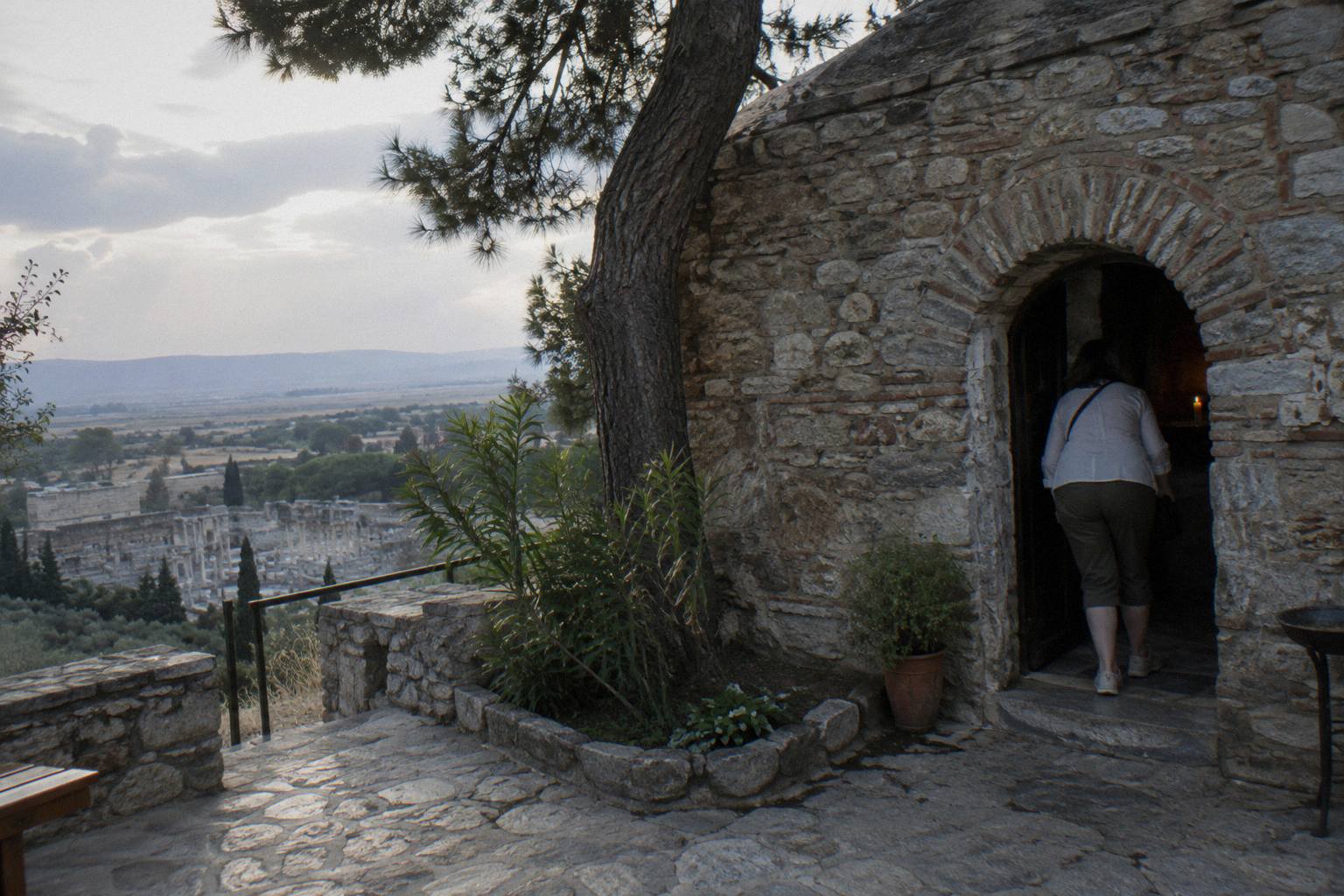
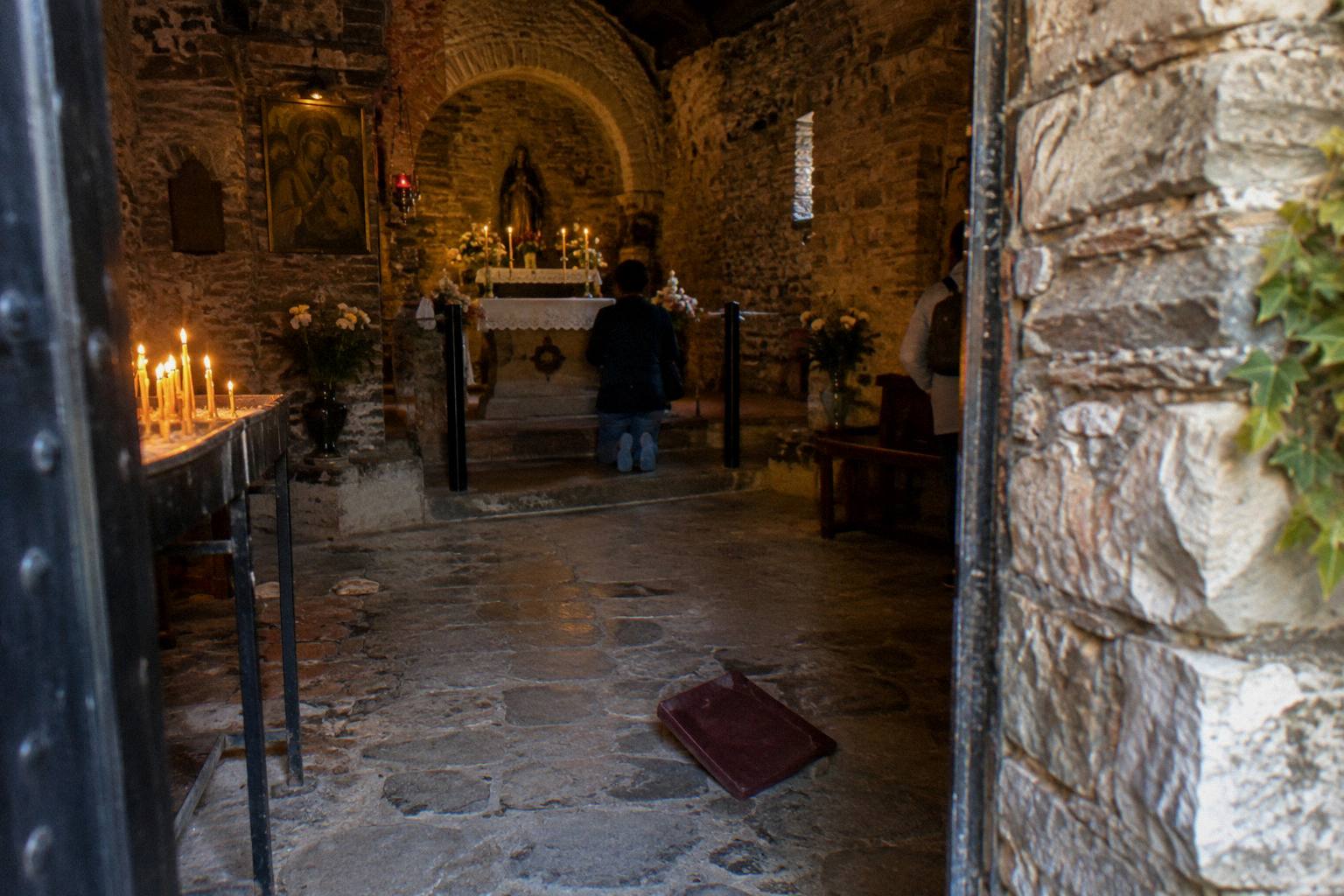
The building itself is modest: a low stone house, partly restored, with a small altar where Mass is celebrated. What makes it remarkable is not the architecture but the claim attached to it and the range of people who honour that claim. The shrine's own site describes a place of prayer run by a Capuchin community under an association, and the site is sacred to Christians and Muslims alike: the Qur'an names Mary, and Muslim visitors come to the house alongside Catholic and Orthodox pilgrims. Tour guides from every background bring groups here, which is why the stop appears on secular Ephesus tours as well as explicitly Christian ones.
UNESCO's World Heritage listing for Ephesus, inscribed in 2015, covers the ancient city, Ayasuluk Hill and Çukuriçi Mound, and it describes the House of the Virgin Mary as a pilgrimage site without making it an inscribed component, as the World Heritage Centre's entry shows. That is a useful distinction for a visitor: the chapel next door to the ruins is a living shrine, not a numbered monument, and the atmosphere reflects it. Visitors speak in low voices, candles burn near the altar, and many people stay to pray rather than photograph.
The traditional background is scriptural and local rather than archaeological. The Ministry's page for the Basilica of St John says John is said to have taken the Virgin Mary to Ephesus, and John is believed to have written his Gospel in the city. From that tradition grew the idea that Mary lived out her life in the hills above Ephesus, in the care of the apostle. Nothing in the New Testament places her there, and no excavation has confirmed it, which is why every careful description of the house uses the word tradition. For a fuller treatment of that question, the article on whether the House of the Virgin Mary is real sets out the evidence and the devotional meaning side by side.
Which Tours Name Meryem Ana Evi As A Stop?
Many tours from Kuşadası and İzmir name the House of the Virgin Mary as a stop, and several multi-day Seven Churches trips do too, while a few tours leave it out. Whether the house's ticket is included depends on each operator: some list entrance fees as included, and others have tickets paid at the gate.
The stop is near-universal on the private day tours that run from the Kuşadası cruise port, roughly 20 to 35 minutes from the Ephesus ruins by road. Among them, the Travelshow private tour from Kuşadası port lists the house, Ephesus, the Temple of Artemis and the Basilica of St John, with lunch, parking, a private vehicle, skip-the-lines arrangements and a guide with biblical expertise all in its inclusions, from $39.04 per person with a rating of 4.9 from 918 reviews; its exclusions list the three entrance tickets as paid separately. You can read the full Travelshow private tour from the port here, or check availability if the inclusions match what you want.
The cheapest option that names the house is the Best-Seller Cruise Tour with Ticket Option, from $15 per person with a rating of 4.9 from 1,190 reviews; entry tickets are only included through its "Entry Tickets Included" option, and the port or hotel pickup and drop-off covers Kuşadası. See the Best-Seller Cruise Tour with ticket option for how that option works.
The table below collects a representative spread of the tours that name the house as a stop. Prices are per person as each operator publishes them; on the private tours, the per-person figure falls as the group grows.
| Tour | Price | Rating | House Of Mary Ticket |
|---|---|---|---|
| Best-Seller Cruise Tour, Ticket Option | from $15 per person | 4.9 from 1,190 reviews | Paid separately unless the ticket option is added |
| Travelshow Private, Lunch Included | from $39.04 per person | 4.9 from 918 reviews | Paid separately (listed under exclusions) |
| Private Skip-The-Line Access | from $49 per person | 4.9 from 590 reviews | Paid separately (listed under exclusions) |
| Guide Of Ephesus Private | from $22.73 per person | 5.0 from 164 reviews | Paid separately; the guide arranges tickets, fee paid in cash |
| All Inclusive Private, Lunch | from $151.20 per person | 5.0 from 1,137 reviews | The operator lists entrance fees as included |
| No Hidden Fees, St John Basilica | from $127.20 per person | 5.0 from 83 reviews | The operator lists entrance fees as included |
| Crowded House, Lunch Included | from $120.48 per person | 4.9 from 381 reviews | The operator lists entrance fees as included |
| 3 Day, Private Or Group (Seven Churches) | from $1,190 per person | Fewer than 20 reviews | Paid separately (entry tickets listed under exclusions) |
Note which tours do not name the house. The Bible Oriented Guide all-inclusive trip itemises only the Ephesus ancient city as a stop, and the 4 Day Private Seven Churches tour itemises no sites at all, so neither can be described as visiting the house regardless of what its description implies. If the house matters to you, choose a tour whose stops list names it explicitly. The same logic applies to St John: the article on which tours include the House of Mary and St John's Basilica walks through that pairing in more detail.
Do You Pay Separately For The House Of Mary Ticket?
On many tours the House of Mary ticket is not included: the ticket is paid separately at the gate, and no Ministry fee applies because the shrine is run by an association with a Capuchin community rather than the Ministry. A few tours list entrance fees as included, so the operator covers the sites named.
This is the single most common surprise on the day. A tour that costs less up front typically passes the entrance fees to the guest, and the House of Mary is one of three or four tickets involved in a standard day. The Ministry's published fees for non-Turkish adults cover the sites it manages; they change yearly, so check before going, and the shrine itself is not among them. Where a tour's exclusions list the House of Mary ticket, a separate fee is paid at the gate and nothing more can be said about it.
| Site | Published Fee (EUR) | Notes |
|---|---|---|
| Ephesus Archaeological Site | EUR 40 | Includes the Ephesus Experience Museum on the site |
| Terrace Houses | EUR 15 | A separate ticket, not covered by the Museum Pass |
| Ephesus Museum in Selçuk | EUR 10 | Ministry museum in the town centre |
| Basilica of St John | EUR 6 | On Ayasuluk Hill in Selçuk |
| Museum Pass Türkiye | EUR 165 | Valid 15 days, one entry per museum; covers the main Ephesus site, the Ephesus Museum and the Basilica of St John, not the Terrace Houses and not the House of Mary |
| House of the Virgin Mary | Paid separately at the gate | Not a Ministry site; no published Ministry fee |
The Museum Pass row is where planning pays off. As the Ministry describes the pass, it covers more than 350 museums and sites over 15 days, including the three Selçuk sites a bible-minded visitor cares about, but it does not cover the Terrace Houses and it does not cover the House of the Virgin Mary, because the shrine is not a Ministry site. The Ministry's Ephesus page carries the current fee structure. If your tour sells tickets separately, the pass may still make sense across a longer trip; if your tour lists entrance fees as included, the question is settled before you leave the port.
Which kind of tour suits you depends on how you like to pay. The all-inclusive lines, such as the All Inclusive Private with Lunch from $151.20 per person or the Crowded House daily tour from $120.48 per person, carry the fees inside the price, and both hold ratings of 5.0 from 1,137 reviews and 4.9 from 381 reviews respectively. The lower-priced lines keep the headline figure small and hand you the ticket queue; the Guide Of Ephesus private tour, from $22.73 per person, sits in between by having its guide arrange the tickets while you pay the fee in cash on the day. The guide on Ephesus entrance fees and the Museum Pass on a guided tour runs the full arithmetic for a whole day's sites.
One reassurance worth holding onto: free cancellation up to 24 hours before the start applies across the tours in the table, and on the multi-day lines the window widens to 72 or even 144 hours. That means you can compare an all-inclusive line against a tickets-separate line, book one, and still change your mind once your cruise schedule or your travelling party settles.
Is The Stop Worth The Time On A Cruise Day?
A stop at Meryem Ana Evi fits inside a half-day tour because the chapel sits about 7 km from Ephesus on Bulbul Mountain, and the visit is short. For a Catholic or Orthodox visitor the stop is the devotional heart of the day, while a visitor focused on archaeology may prefer Ephesus and St John.
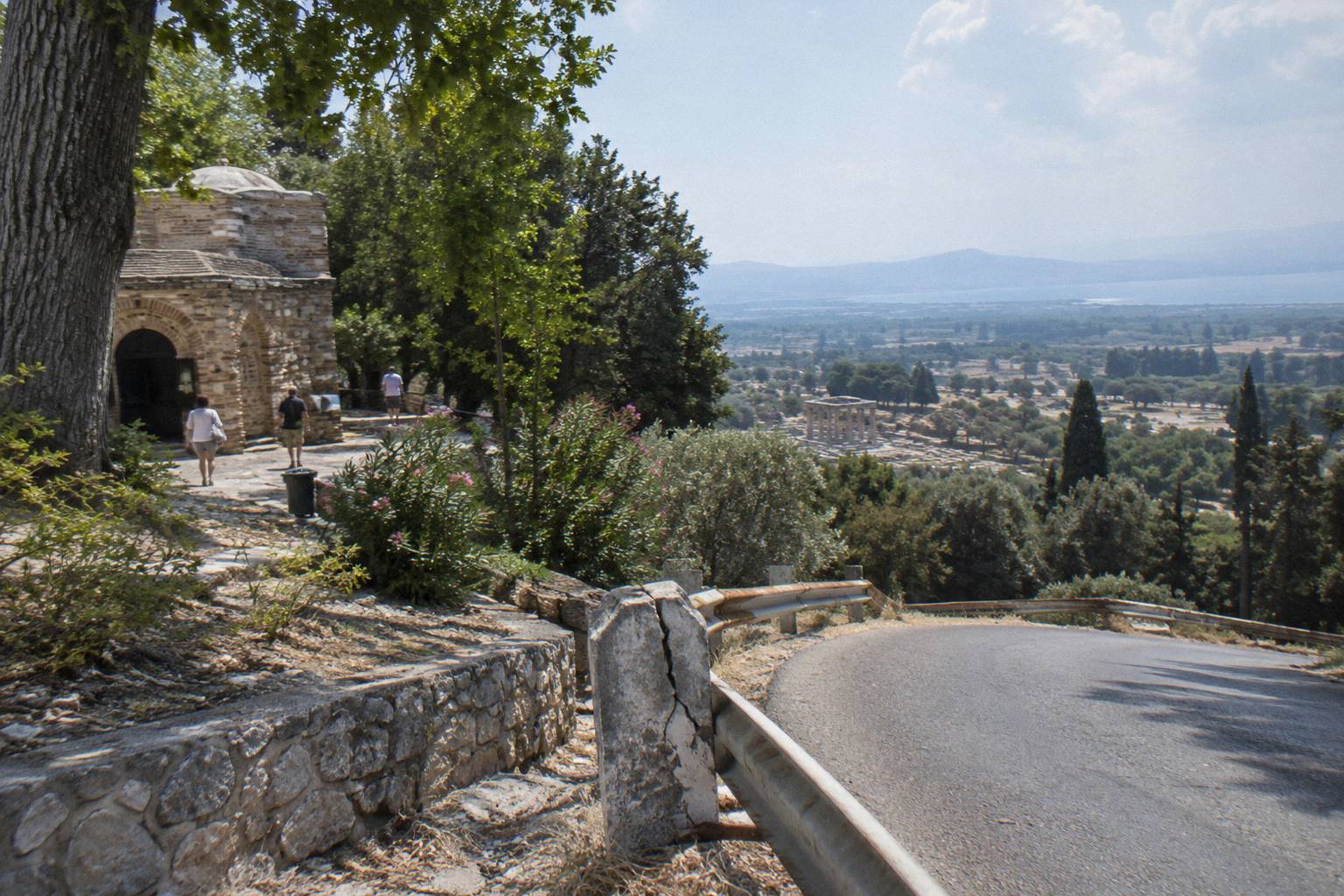
Cruise calls at Kuşadası typically last 8 to 11 hours, and the ship's own all-aboard time governs everything. In that window a private tour can cover the house, Ephesus and the Basilica of St John comfortably: the standard day tours run 4 to 6 hours, and the port is roughly 20 to 35 minutes from the ruins by road. The house is usually placed first or last in the itinerary because it is the highest and quietest point of the day, and its small size keeps the stop compact even when several vehicles arrive together.
The value question has a denominational edge. For a pilgrim, the chance to attend or witness Mass at a site three popes have visited, to drink from the holy-water spring and to tie a wish on the wall is the reason to take a tour rather than walk the ruins alone. For a traveller who comes for the archaeology, the house is a 19th-century restoration on a beautiful slope, and the richer material is downhill: the Library of Celsus, the Great Theatre of roughly 25,000 seats, the Terrace Houses with their mosaics and underfloor heating. Both judgements are reasonable, which is why the tours differ so little on the itinerary and so much on the guiding.
If the visit is short, the choice of tour matters more than the choice of stops. The Guide Of Ephesus private cruiser tour, from $22.73 per person with a rating of 5.0 from 164 reviews, runs 4 to 6 hours, includes lunch in the countryside and lists a professional licensed local guide, cruise port pick-up and drop-off, all parking fees and an on-time return for cruise passengers; the ship's own all-aboard time governs regardless. Its exclusions list the entrance fees, which the guide arranges for cash. A shorter day with that structure leaves room for a real pause at the house instead of a photo stop.
Timing within the day is the other lever. Mass at the shrine is held daily in the warm months and on Sundays through the winter; confirm the current schedule with the shrine before going, since no clock time is published here. A tour that reaches the house around a service lets a Catholic visitor attend, and private tours can usually shape the order of stops to make that work. Whether the schedule aligns with your call is worth asking the operator when you book, and the guide to timing a shore excursion from Kuşadası and getting back to the ship covers the wider day.
What Do You See And Do At The Shrine?
The shrine is a small stone house chapel, and around it stand a holy-water spring, a wall where visitors tie wishes on paper, and grounds that Catholic and Muslim pilgrims share. Mass is held daily in the warm months and on Sundays through the winter, so confirm the schedule with the shrine before going.
The house itself takes only minutes to walk through. Inside, a simple altar and a small worship space replace whatever domestic rooms the stone walls once held; the plan is that of a modest dwelling, and that domestic scale is part of the site's emotional pull. Pilgrims queue quietly at the door, many remove hats, and photography tends to happen outside rather than in. Guides typically gather their groups on the terrace below the house for the historical explanation and let people enter singly.
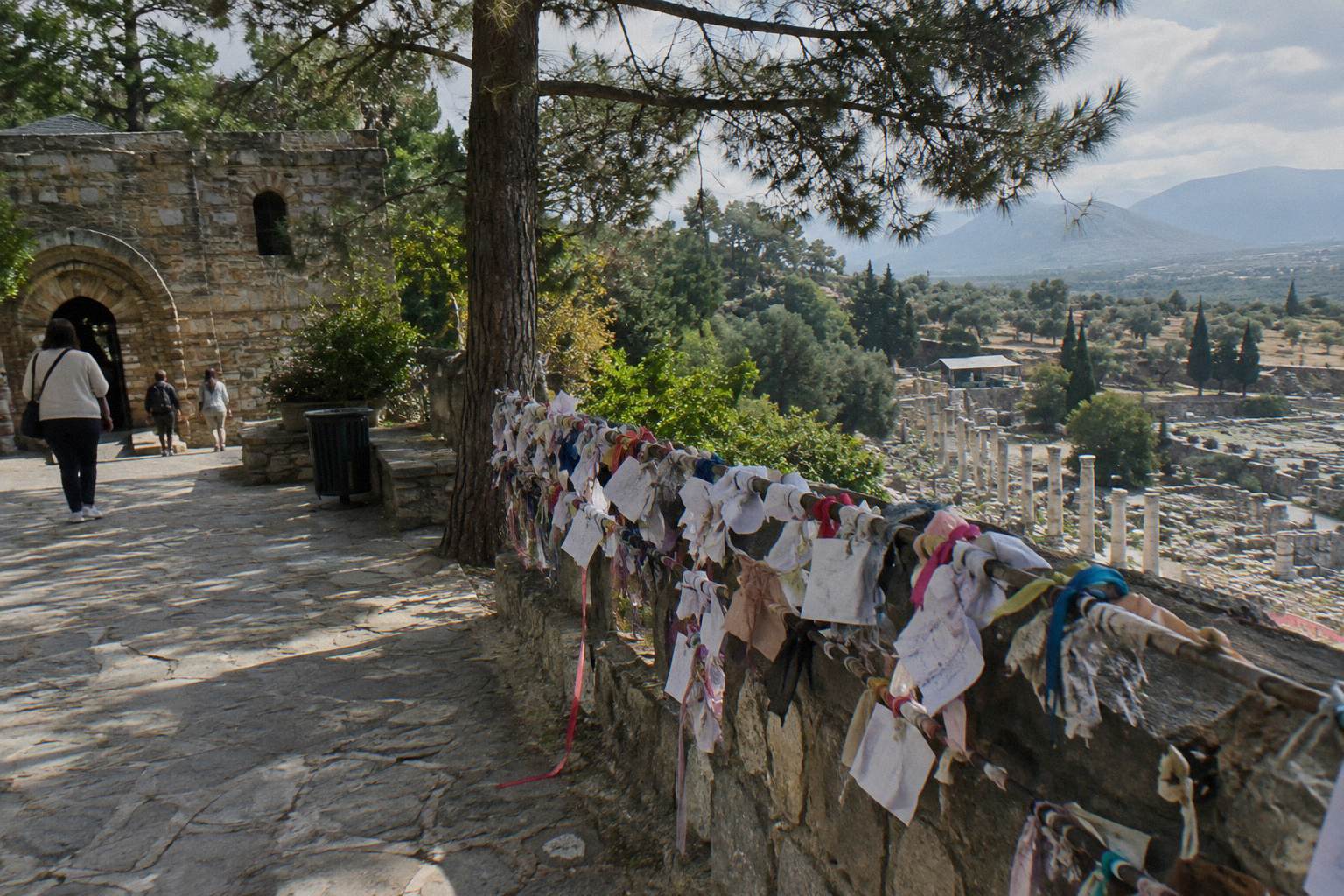
Two features draw the longest lines. The holy-water spring runs below the chapel, and visitors fill bottles or touch the water; three taps traditionally labelled for health, wealth and love are reported by visitor guides, though the site itself does not promise anything. The wishes wall is a stretch of fence and netting where visitors tie paper, ribbons and cloth, a custom shared across the region's sacred sites. Both customs belong to the living pilgrimage rather than to any official liturgy, and guides present them as such.
| Feature | What It Is | How Tours Handle It |
|---|---|---|
| The chapel | A small stone house with an altar, the traditional house of Mary | Short guided entry; quiet dress and voice expected |
| Holy-water spring | A spring below the chapel with taps for pilgrims | Free time to fill bottles; no fee mentioned |
| Wishes wall | A wall and netting where visitors tie paper and ribbon | Free time; ribbons sometimes available on site |
| Mass | Daily in the warm months and Sundays in winter; confirm with the shrine | Private tours can time the stop around a service; ask the operator |
| Dress code | Shoulders and knees covered; signs at the entrance | Guides remind groups before arrival |
Dress is the one rule that can stop you at the door. The shrine is an active chapel, and signs at the entrance, as visitor guides report, ask that shoulders and knees be covered. In an İzmir summer, when the mean daily maximum climbs to 33.3 °C in July, that means carrying a light scarf or a long layer for this one stop; the practical detail belongs in any packing plan, and the blog post on what to wear on a tour of Ephesus builds the whole wardrobe around it. Mass, the spring and the wall are all free of any charge a tour collects; only the gate ticket, where your tour does not include it, is paid on arrival.
The Crowded House daily tour, from $120.48 per person with a rating of 4.9 from 381 reviews, is one of the lines that folds the house into an easy 7-hour day: it lists the Ephesus and House of the Virgin Mary entrance fees as included, along with lunch and an air-conditioned vehicle, with the Terrace Houses fee excluded. For a visitor who wants the devotional stop handled without cash changing hands at the gate, that structure is the cleanest of the mid-priced options.
How Does The House Connect To St John And Ephesus?
The Ministry's page for the Basilica of St John says John is said to have taken the Virgin Mary to Ephesus, which is the biblical thread tours use to link the house, the basilica and the ancient city. The 6th-century basilica on Ayasuluk Hill was rebuilt under Justinian over the traditional tomb of the apostle.
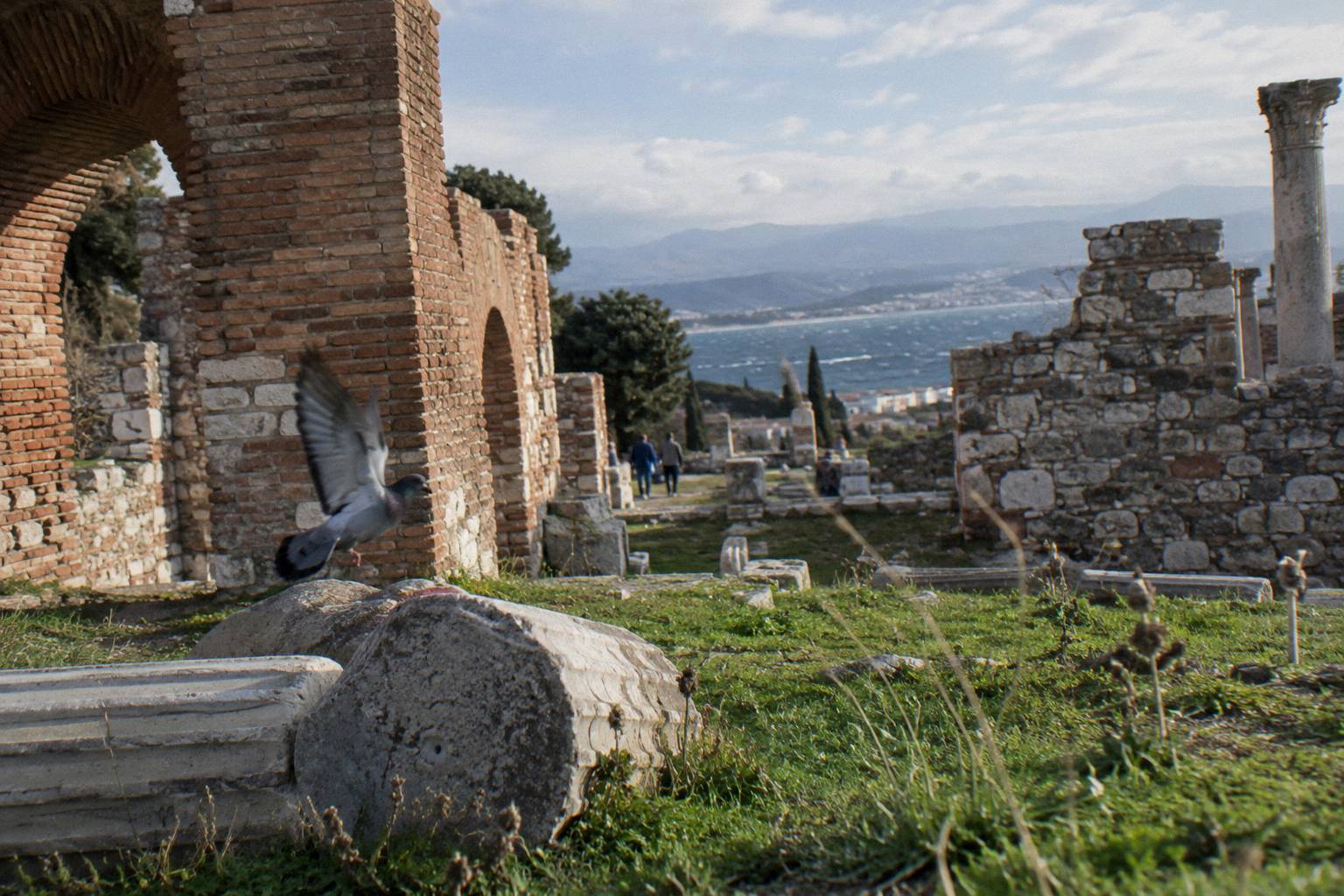
The traditional story runs in a line across the landscape. John is believed to have written his Gospel in Ephesus, and the Ministry text says he took Mary to the city; the house on Bulbul Mountain is where she is believed to have spent her last years, and the Basilica of St John in Selçuk stands over his traditional tomb, as the Ministry's page for the basilica describes. A tour that names all three stops, the house, Ephesus and the Basilica of St John, is walking that line in order, and most of the day tours from Kuşadası do exactly that.
The basilica deserves its place on the route. The 6th-century church was rebuilt under Justinian over an earlier shrine marking the traditional tomb of the apostle; no archaeological confirmation of remains exists, so the careful phrase is the traditional tomb. It stands on Ayasuluk Hill in Selçuk, inside the UNESCO serial property alongside the Isa Bey Mosque and the Temple of Artemis area, and its published fee is EUR 6, a figure that changes yearly, so check before going. The Ministry's Museum Pass covers it; the House of Mary it does not.
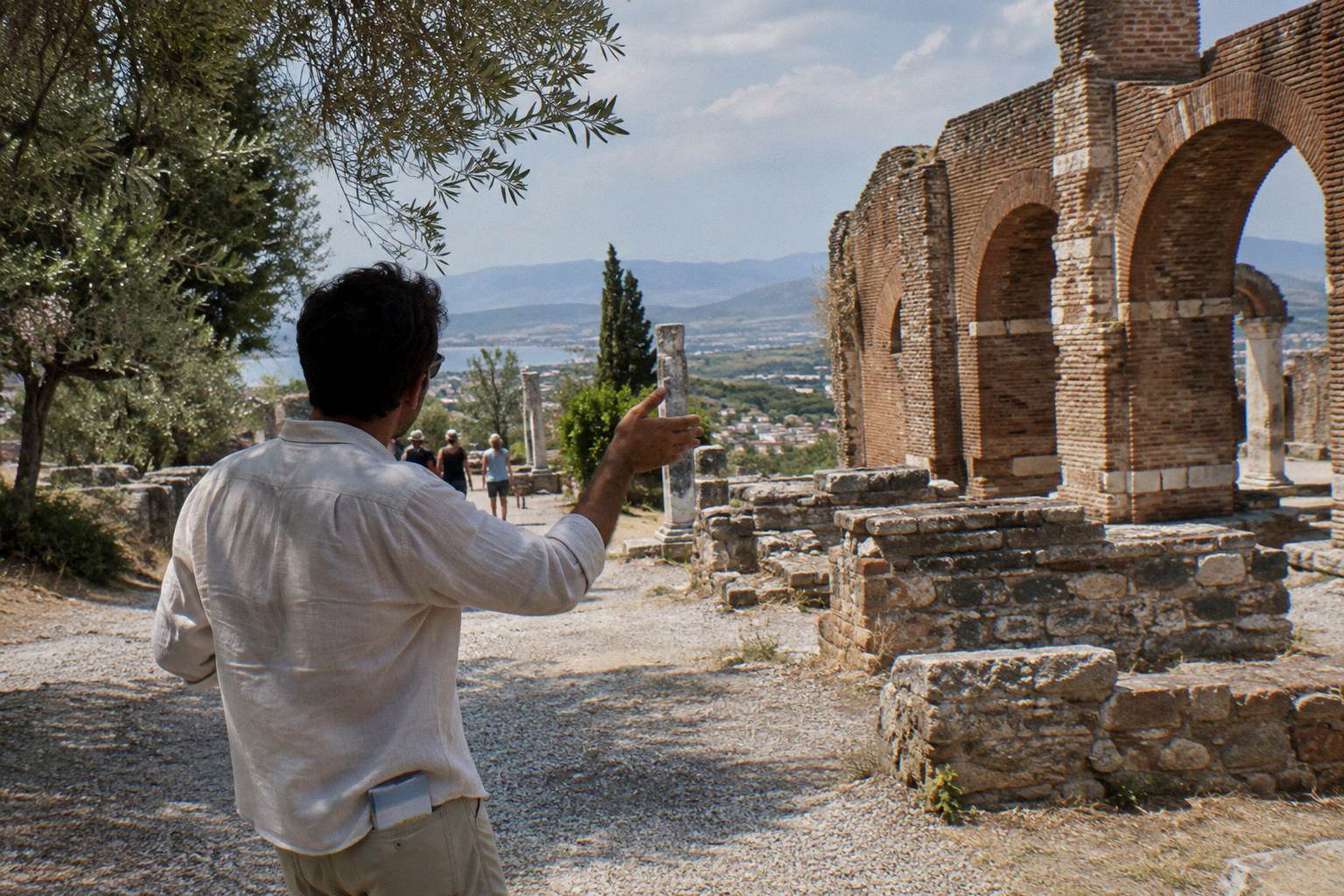
Ephesus itself closes the loop. Paul's ministry in the city ran two to three years by the accounts in Acts 19 and 20, and the city later became a key centre in the expansion of Christianity, as the Ministry's own description puts it, "from which St Paul launched many of his missions". The Council of Ephesus in 431 declared Mary Theotokos, Mother of God, in this city; the Church of Mary inside the ruins is traditionally identified as a meeting place for it, though no source confirms the council met in that exact building. For a visitor thinking about Mary, that council is the theological anchor that makes Ephesus a Marian city in history, whatever one concludes about the house on the mountain.
Where the stop list and the devotional logic diverge, read carefully. The Kusadasi Private tour with a Bible-oriented guide, from $127.20 per person with a rating of 5.0 from 25 reviews, names the Basilica of St John, the Temple of Artemis and the Terrace Houses but not the House of Mary: the operator lists entrance fees, lunch and an on-time return to port as included, yet the house is not on its itinerary. Choosing it for a Marian pilgrimage would be a mistake, and choosing one of the house-inclusive lines for a traveller with no interest in the shrine would be the mirror image.
Where Does The 1891 Search Come From?
The identification of the house dates to 1891, when Lazarist priests from Smyrna, modern İzmir, searched Bulbul Mountain guided by the visions of Anne Catherine Emmerich. The Church has never formally ruled on its authenticity, three popes have visited, and the Assumption feast on 15 August draws a pilgrimage each year.
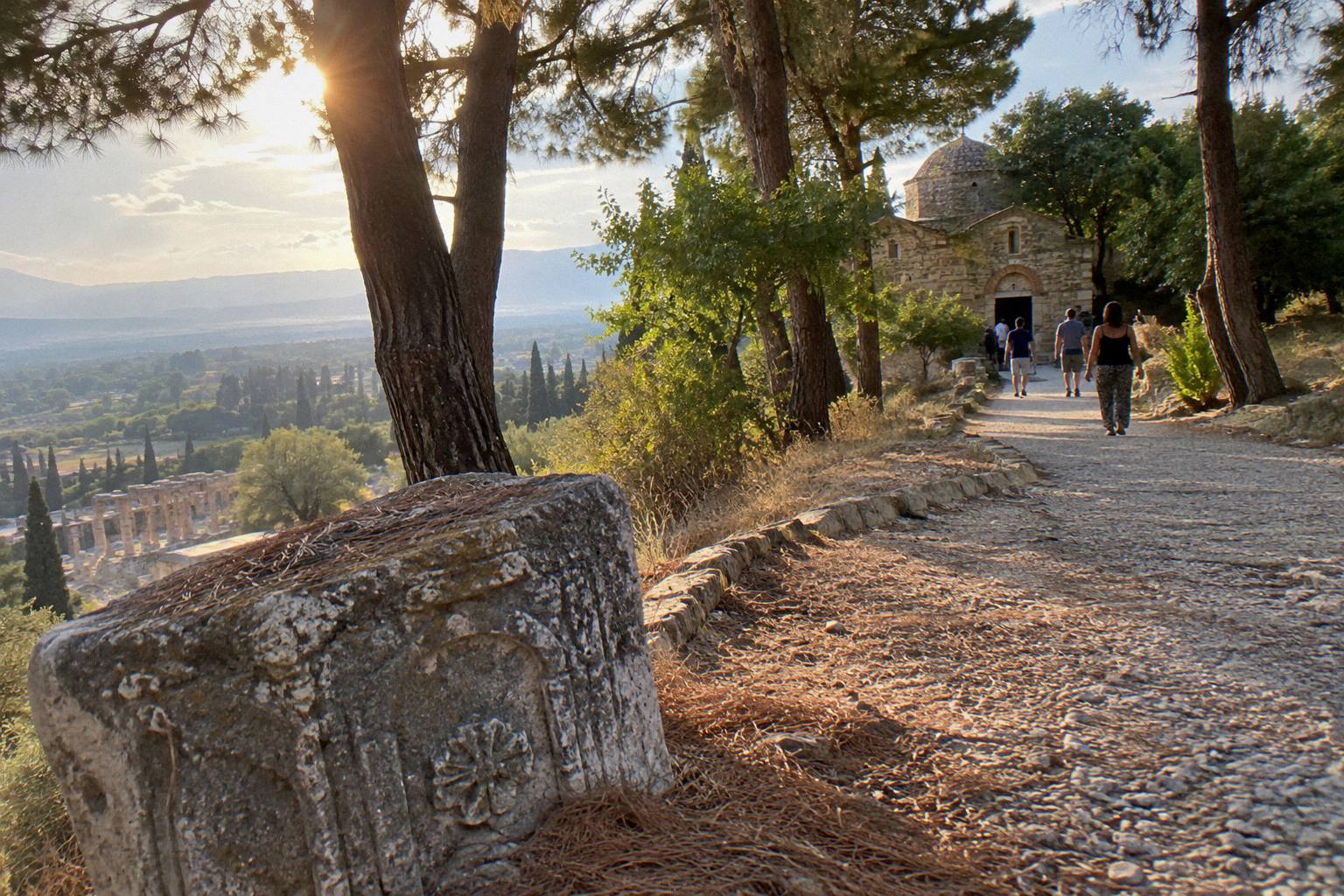
Anne Catherine Emmerich was a German nun whose recorded visions described a stone house near Ephesus where Mary lived out her life. In 1891, priests of the Lazarist order from Smyrna, guided by those descriptions, searched the slopes of Mount Koressos and found the ruins of a small house matching them. The identification spread through Catholic circles in Europe, the site was later restored as a chapel, and the pilgrimage grew from there. It is a 19th-century discovery built on a mystical text, and every serious account of the shrine begins with that fact.
The Church's position is deliberate ambiguity. No formal ruling has ever confirmed or denied the identification, which is why the site is styled a pilgrimage tradition rather than a shrine of proven provenance; the house's documented history records the same sequence. What the Church has done instead is send popes. Three visits across four decades, each a public act of prayer without a doctrinal pronouncement, gave the site a standing that no ruling could have granted so gently.
| Date | Pope | Occasion |
|---|---|---|
| 26 July 1967 | Paul VI | First papal visit to the shrine |
| 30 November 1979 | John Paul II | Papal visit during his trip to Türkiye |
| 29 November 2006 | Benedict XVI | Visit with a Eucharist celebrated at the shrine |
The Assumption feast completes the calendar. On 15 August each year, pilgrims from across the region climb to the house for Mass, and the crowd that day is the one a tour cannot schedule around easily: if your call falls on the feast, expect the stop to be busy and devotional rather than quiet and explanatory. The shrine is held in the same reverence by many Muslims, for whom Mary is honoured in the Qur'an, which is part of why the site survives as a shared sanctuary rather than a monument to one community's claim. The tradition, in short, is young by the standards of Ephesus, older than any living pilgrim by any standard, and treated with care by everyone who visits.
For the fullest version of the combined day, the All Inclusive Private with Lunch, from $151.20 per person with a rating of 5.0 from 1,137 reviews, runs 5 to 7 hours and lists the entrance fees with pre-paid tickets to skip the lines, a traditional Turkish lunch, a private professional licensed guide, private transportation and an on-time return to port for cruise guests, with the ship's own all-aboard time still governing. It names exactly two stops, Ephesus and the house, which makes it the deepest single-day pairing of the ruins and the shrine among the tours covered here.
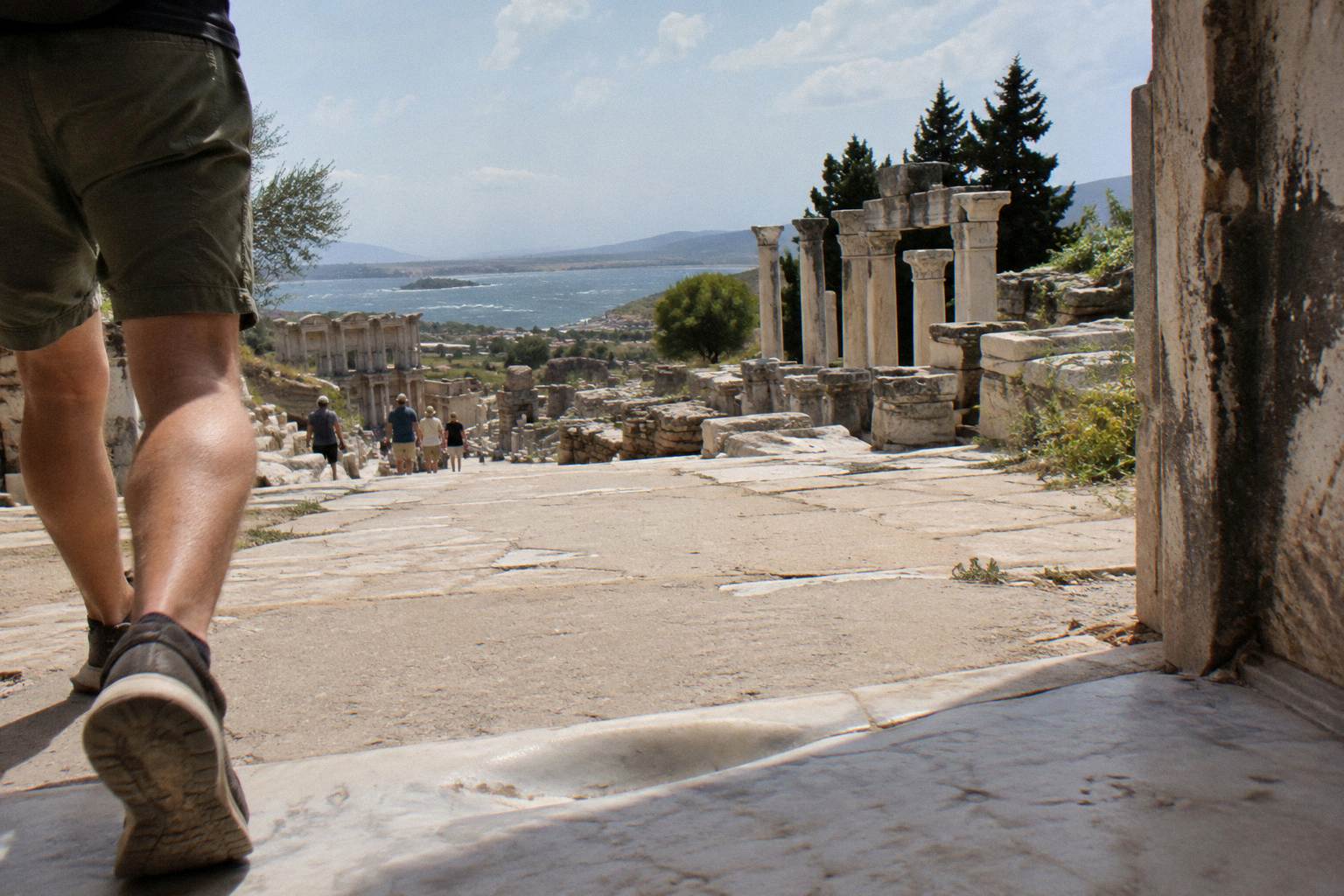
Whichever line you choose, the decisions reduce to three: confirm the stops list names the house, decide whether you want the tickets inside the price or paid at the gate, and check the Mass schedule with the shrine if attending a service is part of your reason for going. Free cancellation up to 24 hours before the start applies across these day tours, so the comparison can continue after you book.
Common Questions About Meryem Ana Evi
Is The House Of The Virgin Mary The House Where Mary Lived?
It is venerated by tradition as the place where Mary is believed to have spent her last years. The identification dates to an 1891 search guided by the visions of Anne Catherine Emmerich, and the Church has never formally ruled on it, so it is always described as a pilgrimage tradition, never as established fact.
Do Tours Include The House Of The Virgin Mary Ticket?
Some do and some do not. Where a tour's exclusions list the ticket, it is paid separately at the gate; where a tour lists entrance fees as included, the operator covers it. The shrine is not a Ministry site, so the Museum Pass does not cover it.
Can You Attend Mass At The House Of The Virgin Mary?
Mass is held daily in the warm months and on Sundays through the winter. Confirm the current schedule with the shrine before going, and note that the Assumption feast on 15 August draws a large pilgrimage each year.
What Should You Wear At The Shrine?
Shoulders and knees should be covered; the shrine is an active chapel and signs at the entrance ask for it. Carry a light scarf or long layer in the summer months, when İzmir mean daily maxima reach the low 30s C.
How Far Is The House From The Ephesus Ruins?
About 7 km, on Bulbul Mountain in the Mount Koressos area. From the Kuşadası cruise port the ruins are roughly 20 to 35 minutes by road, and the house sits a short drive uphill from there, which is why it fits easily into a 4 to 6 hour tour.
Is The House Of The Virgin Mary Part Of The UNESCO World Heritage Site?
No. The 2015 inscription covers the ancient city of Ephesus, Ayasuluk Hill and Çukuriçi Mound. The house is described as a pilgrimage site but is not an inscribed component of the UNESCO listing.