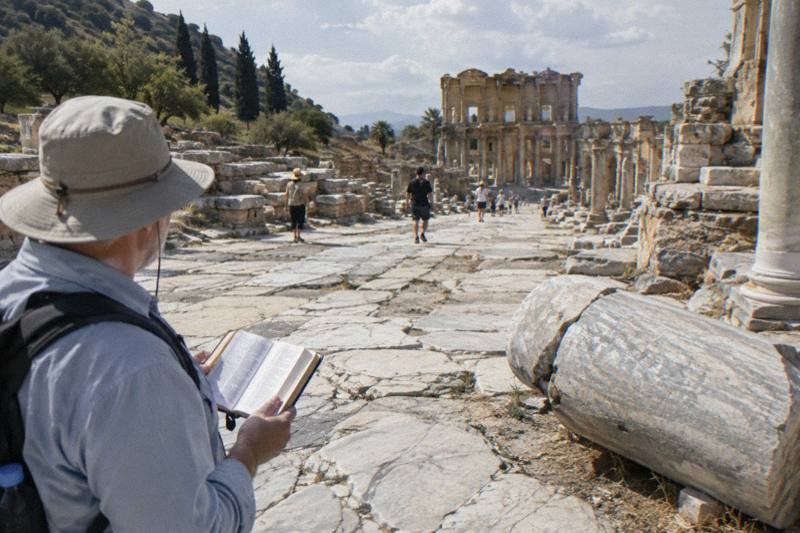
The Letter To The Ephesians: Reading It Before You Book A Bible Tour
Ephesians 1:1 addresses the saints at Ephesus, but the letter itself was probably written somewhere else. Reading it before a tour changes what you look at in the city.
Short answer
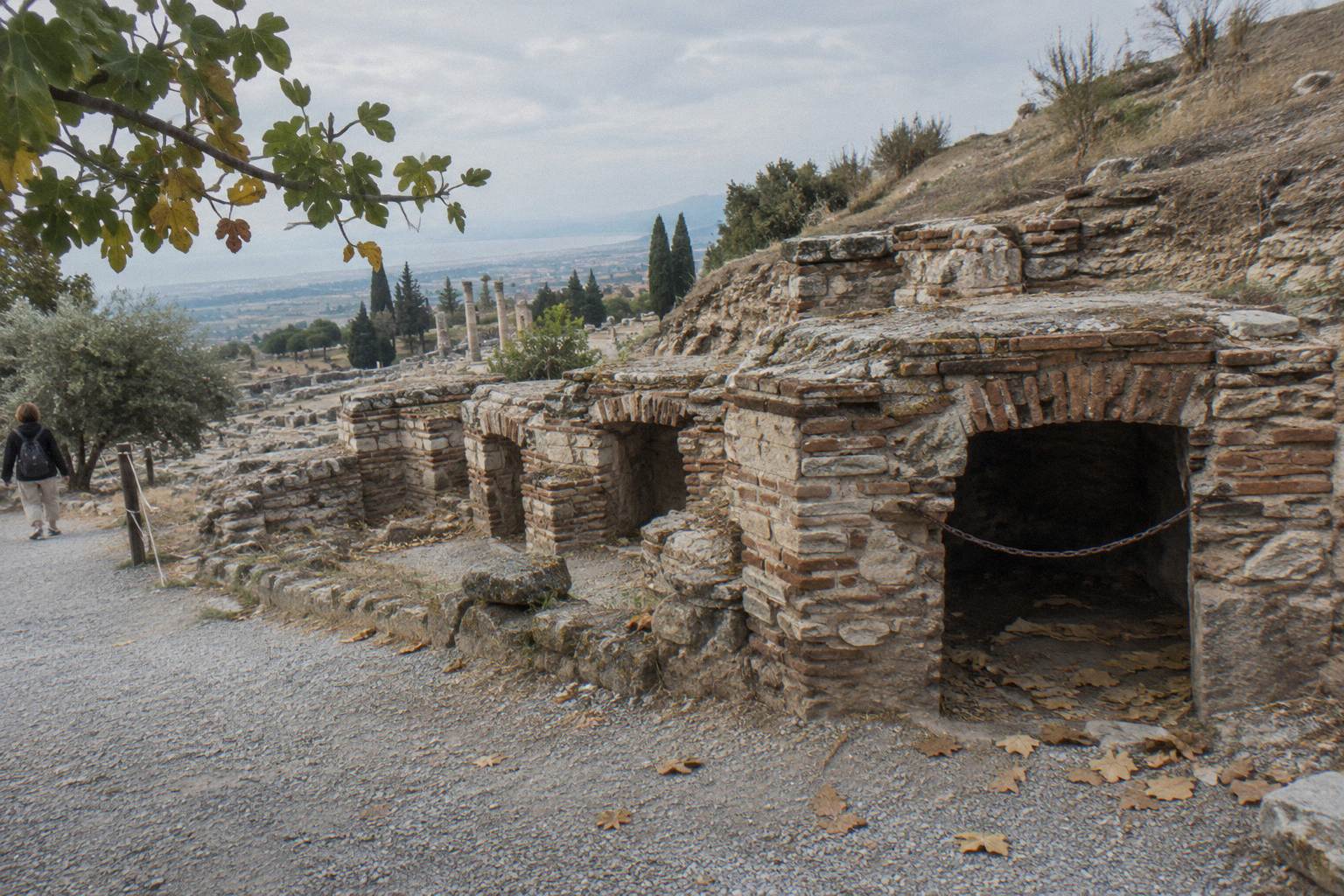
Ephesians 1:1 names the city, yet some early manuscripts omit “at Ephesus” and scholars debate where Paul wrote it. Acts gives his Ephesus ministry as two to three years, and only 1 Corinthians names Ephesus as a place of writing. Five tours covered here list a Bible-oriented guide, from $39.04 to $1,293.42 per person.
Ephesians 1:1 reads, in the King James Bible: "Paul, an apostle of Jesus Christ by the will of God, to the saints which are at Ephesus, and to the faithful in Christ Jesus". That single verse is the reason a letter written to a city can be read while standing in it. Yet the manuscript tradition is messier than the address suggests: some early copies omit the words "at Ephesus", and both the authorship question and the place of writing are debated among scholars, as the survey of the question at the overview of the Epistle to the Ephesians sets out.
The city the letter addresses was the capital of Roman Asia. The Ministry of Culture and Tourism describes Ephesus as a key city in the expansion of Christianity, from which St Paul launched many of his missions, and the site at Selçuk, inscribed by UNESCO since 2015, still carries the streets a reader of Acts can trace. This article walks through the passages worth reading first, what can and cannot be said about where the letter was written, and which tours list a guide who engages the text itself.
Did Paul Write The Letter To The Ephesians In Ephesus?
No, and that claim should never be made. Ephesians 1:1 addresses "the saints which are at Ephesus", but some early manuscripts omit "at Ephesus", and scholars debate both the authorship and the place of writing. The one letter that names Ephesus as a writing location is 1 Corinthians, not Ephesians.
The caution matters more than it might seem. Guides and travel write-ups often repeat that Paul wrote "his letter to the Ephesians" from prison in Rome, or from Ephesus itself, and the second version at least is unsupportable. The text of Ephesians never states where it was written. What the verse gives is a destination and a sender, nothing about a desk or a jail cell. When you stand on Curetes Street, the reading is that you are in the city the letter was sent to, not the city it was written in.
What Acts does supply is the length and texture of Paul's presence in the city, which is covered further down in this article. The two to three years of ministry, the synagogue disputes, the silversmiths' riot and the farewell to the elders all belong to Acts 18 and 19 and 20. The letter to the Ephesians is a separate document with a separate set of questions, and reading them together is the work of a good tour day.
For a printed outline of the wider city story, the guide to Biblical Ephesus Tour planning covers the sites themselves, and the companion piece on following Paul's steps through the city pairs each Acts passage with the ruin it points to.
Which Bible Passages Name Ephesus?
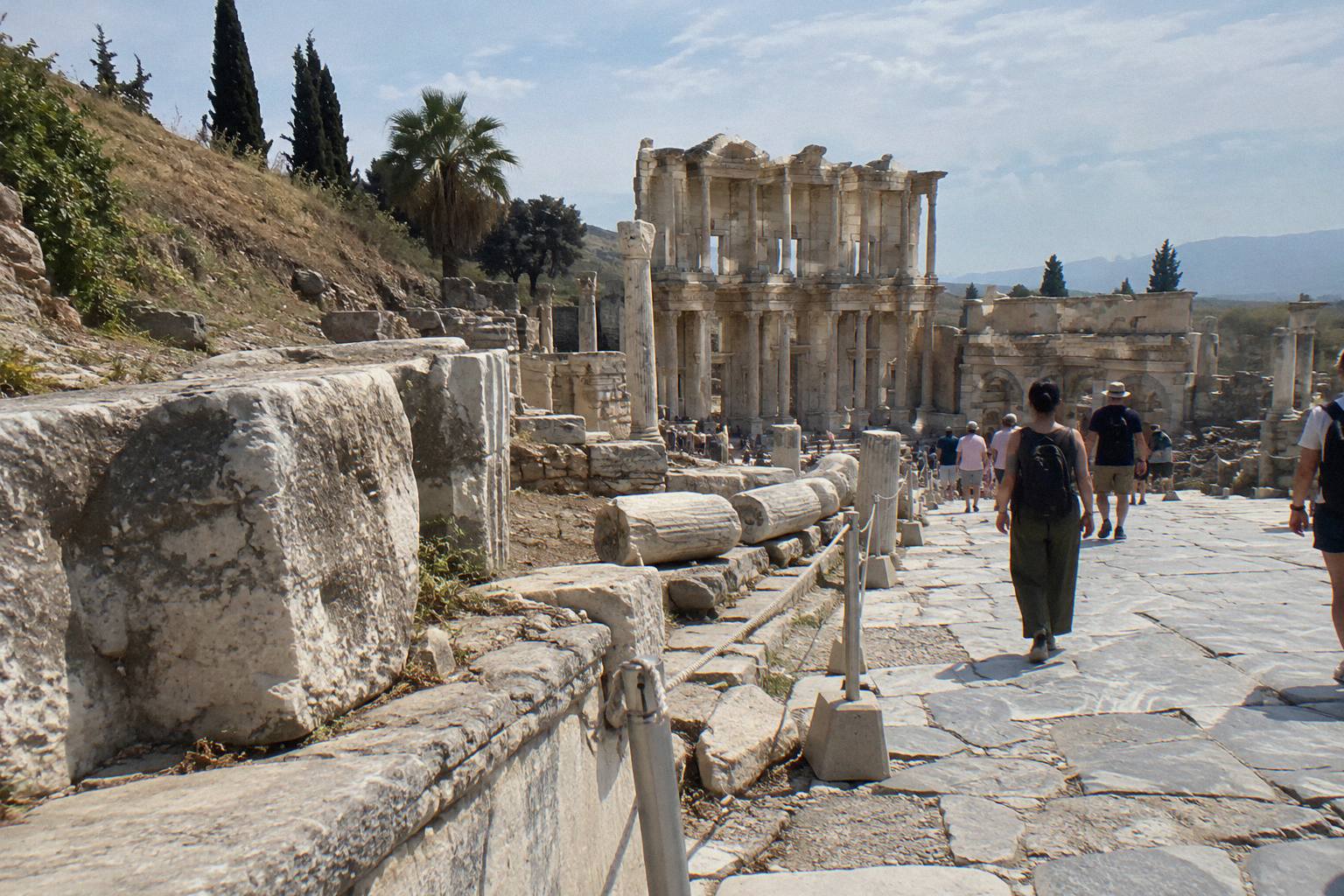
Eight passages across Acts, 1 Corinthians, Ephesians and Revelation name the city directly. Acts 18:19 gives Paul's first visit, Acts 19 gives the ministry and the riot, Acts 20 the farewell, Ephesians 1:1 the address, 1 Corinthians 16:8 the writing location, and Revelation 2:1 the letter to the church.
Reading them in order takes perhaps twenty minutes and repays far more. The table below lists every passage covered here, with the verbatim wording where the facts allow it and a note on what each one contributes to a walk through the ruins. Quotations are King James Version, public domain.
| Passage | Verbatim text or fragment | What it gives a visitor |
|---|---|---|
| Acts 18:19 | "And he came to Ephesus, and left them there: but he himself entered into the synagogue, and reasoned with the Jews." | Paul's first, brief visit; Aquila and Priscilla stay behind |
| Acts 18:24 | "And a certain Jew named Apollos, born at Alexandria, an eloquent man, and mighty in the scriptures, came to Ephesus." | Apollos teaches in the city between Paul's visits |
| Acts 19:1 | "...Paul having passed through the upper coasts came to Ephesus..." | The return and the start of the long stay |
| Acts 19:8 | "And he went into the synagogue, and spake boldly for the space of three months..." | The synagogue phase of the ministry |
| Acts 19:10 | "And this continued by the space of two years; so that all they which dwelt in Asia heard the word of the Lord Jesus, both Jews and Greeks." | The two-year figure for the ministry |
| Acts 19:24-28 | Demetrius "which made silver shrines for Diana" and the cry "Great is Diana of the Ephesians" | The riot scene, tied to the Artemis trade |
| Acts 19:29 | the crowd "rushed with one accord into the theatre" | The Great Theatre as a physical stop with a text |
| Acts 20:17, 20:31 | Paul "sent to Ephesus, and called the elders of the church"; "by the space of three years I ceased not to warn every one night and day with tears" | The farewell from Miletus; the three-year figure |
| Ephesians 1:1 | "Paul, an apostle of Jesus Christ by the will of God, to the saints which are at Ephesus, and to the faithful in Christ Jesus" | The letter's address; some manuscripts omit "at Ephesus" |
| 1 Corinthians 15:32 | "If after the manner of men I have fought with beasts at Ephesus, what advantageth it me, if the dead rise not?" | An unexplained phrase from Paul's time in the city |
| 1 Corinthians 16:8-9 | "But I will tarry at Ephesus until Pentecost. For a great door and effectual is opened unto me, and there are many adversaries." | The letter that names Ephesus as the place of writing |
| Revelation 2:1-7 | "Unto the angel of the church of Ephesus write..." and "thou hast left thy first love" | The risen Christ's letter to the Ephesian church |
Two of these repay extra attention before a tour. The theatre scene in Acts 19 is the most physical passage in the New Testament's Ephesus material: the Great Theatre still stands, holds roughly 25,000 seats by the usual estimate, and reading the clerk's speech at Acts 19:35, where he calls the city "a worshipper of the great goddess Diana, and of the image which fell down from Jupiter", while standing in the cavea is the closest a visitor gets to matching text to stone. The second is Revelation 2, treated in its own section below.
If the tour-day decision is already made, three trips fit a reader who wants the letter opened on site. Each names either a Bible-oriented guide or the full spread of sites, and each allows free cancellation up to 24 hours before the start.
Prices on all three are private pricing, meaning the per-person figure falls as the group grows. Beyond the headline figure, the differences are in what is included and who is guiding, which the next section sets out line by line.
Which Tours List A Guide With Bible Expertise?
Five tours covered here list a Bible-oriented or biblically informed guide on their inclusions. They run from $39.04 per person for the lunch-included Travelshow private trip to $1,293.42 per person for the four-day Seven Churches tour, and every one of them states the guide wording explicitly.
Everything else on the market should be read as secular archaeology guiding unless the line says otherwise. That is not a flaw, since a good archaeological guide will still take you to the synagogue ground and the theatre, but a reader who arrives with Ephesians marked in a Bible usually wants someone who will engage the text. The table separates the tours by their own guide wording.
| Tour | Price | Guide wording on the tour | Rating |
|---|---|---|---|
| Bible Oriented Guide, All Inclusive | from $143.20 per person | Bible Oriented Professional Tour Guide | 5.0 from 646 reviews |
| Lunch And Pre-Paid Tickets | from $143.20 per person | Bible Oriented Private Professional Licenced Tour guide | 5.0 from 80 reviews |
| No Hidden Fees, Lunch Included | from $127.20 per person | Bible Oriented Private Professional Tour Guide | 5.0 from 25 reviews |
| 4 Day Private Seven Churches | from $1,293.42 per person | Bible-oriented guide listed | 5.0 from 80 reviews |
| Travelshow Private, Lunch Included | from $39.04 per person | Professional Tour Guide with Biblical Expertise | 4.9 from 918 reviews |
| Guide Of Ephesus Private | from $22.73 per person | Professional, licensed local tour guide | 5.0 from 164 reviews |
| Private Skip-The-Line Access | from $49 per person | English speaking guide with archaeological background | 4.9 from 590 reviews |
The single-visit option that pairs most directly with this article is the all-inclusive private tour with a Bible-oriented guide, from $143.20 per person for 6 to 7 hours, with entrance fees, lunch and an on-time return for cruise guests all listed as included; Check availability if that profile fits. Note that its line itemises only the Ephesus ancient city as a stop, so readers hoping for the House of the Virgin Mary on the same day should look at the Ephesus Shuttle variant instead, which names it.
The budget end of the table is worth a second look for readers willing to bring the text themselves. Travelshow's private trip, from $39.04 per person with a 4.9 rating from 918 reviews, lists a guide with biblical expertise plus lunch and skip-the-lines handling, but its exclusions list the Ephesus, House of Mary and Basilica of St John tickets, so those are paid separately at the published Ministry fees. For a fuller comparison of what private pricing buys, the guide to what you pay for on a private Bible tour breaks the inclusions down.
How Long Did Paul's Ministry In Ephesus Last?
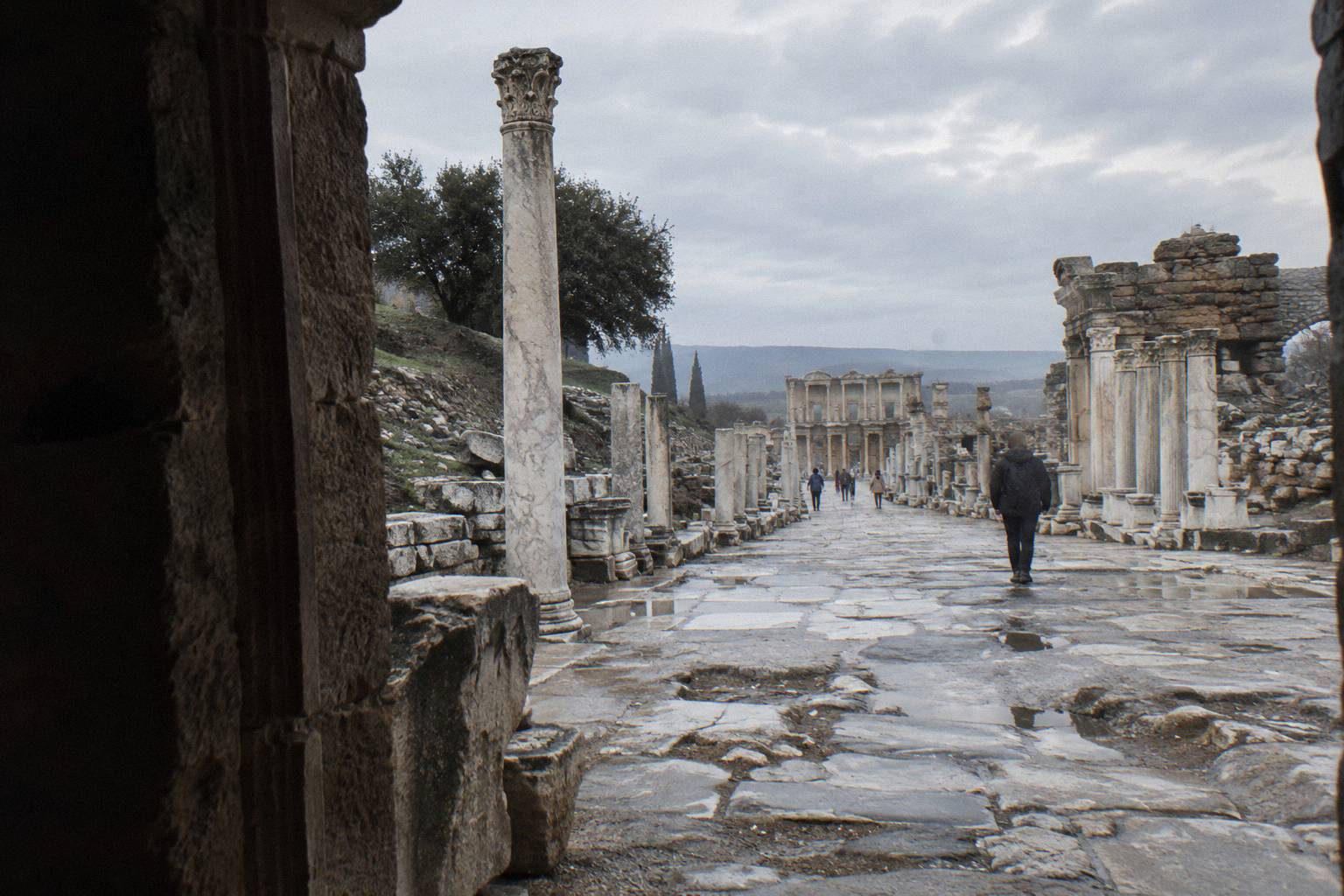
Acts gives two figures that should be printed together as two to three years, never reconciled into one. Acts 19:10 says the teaching continued "by the space of two years", while Paul's own farewell in Acts 20:31 recalls "by the space of three years I ceased not to warn every one night and day with tears".
The two-year span in Acts 19:10 likely marks the formal teaching phase in the lecture hall of Tyrannus, while the three-year recollection in Acts 20:31 counts the whole stay, first visit included. Whatever the arithmetic, the practical point for a reader is that Ephesus hosted the longest single stay of Paul's recorded ministry, longer than Corinth or Philippi by the text's own counting. A city that held a missionary for two to three years is a city where the letter's addressees were not strangers to him.
The stay also produced the only letter that names Ephesus as a place of writing, and it is not Ephesians. First Corinthians 16:8-9 reads: "But I will tarry at Ephesus until Pentecost. For a great door and effectual is opened unto me, and there are many adversaries." That is the closest the New Testament comes to a dateline from the city, and it comes from a letter written to Corinth.
The companions and successors matter too. Acts 18:19 leaves Aquila and Priscilla in the city on Paul's first pass, and Acts 18:24 introduces Apollos, "an eloquent man, and mighty in the scriptures", teaching there before Paul returns. Ephesus was therefore a taught church before the riot of Acts 19 and before any letter arrived, and reading the city as a place with a pre-Pauline Christian presence changes the tone of Revelation 2, where the church is praised for labour and patience and faulted for leaving its first love.
The phases of the stay, as Acts records them, fall into a clear sequence that a reader can carry through the ruins in order:
| Phase | Passage | Where it fits on a visit |
|---|---|---|
| First brief visit; Aquila and Priscilla stay | Acts 18:19 | Before the long stay; context for the synagogue ground |
| Apollos teaches in the city | Acts 18:24 | Between the visits; the church already taught |
| Return; synagogue teaching for three months | Acts 19:1, 19:8 | The opening phase of the ministry |
| Daily teaching in the lecture hall for two years | Acts 19:10 | The core phase, "all they which dwelt in Asia" |
| The silversmiths' riot in the theatre | Acts 19:24-29 | The Great Theatre, at the lower end of the site |
| The town clerk calms the crowd | Acts 19:35 | Same location; the Diana speech |
| Farewell to the elders from Miletus; three years recalled | Acts 20:17, 20:31 | Read at the end of the walk, leaving the site |
For the site-by-site pairing of these passages with the ruins, the guide to following Paul in Ephesus walks the route from the synagogue ground to the Great Theatre with the verses open at each stop.
What Should You Read Before Walking Curetes Street?
Read Acts 19 first, then Ephesians 1:1, then Revelation 2:1-7, in that order. Acts gives the city its drama, the address gives the letter its destination, and the Revelation letter gives the church its verdict a generation later, and each maps onto stones you will actually pass.
The order is deliberate. A reader who starts with the epistle alone gets theology without geography; a reader who starts with Acts gets a riot in a theatre they can stand in. Ephesians 1:1 then sharpens the question of who the letter was for, and Revelation 2 closes the arc with the words "thou hast left thy first love", spoken to a congregation Paul never saw again after Miletus.
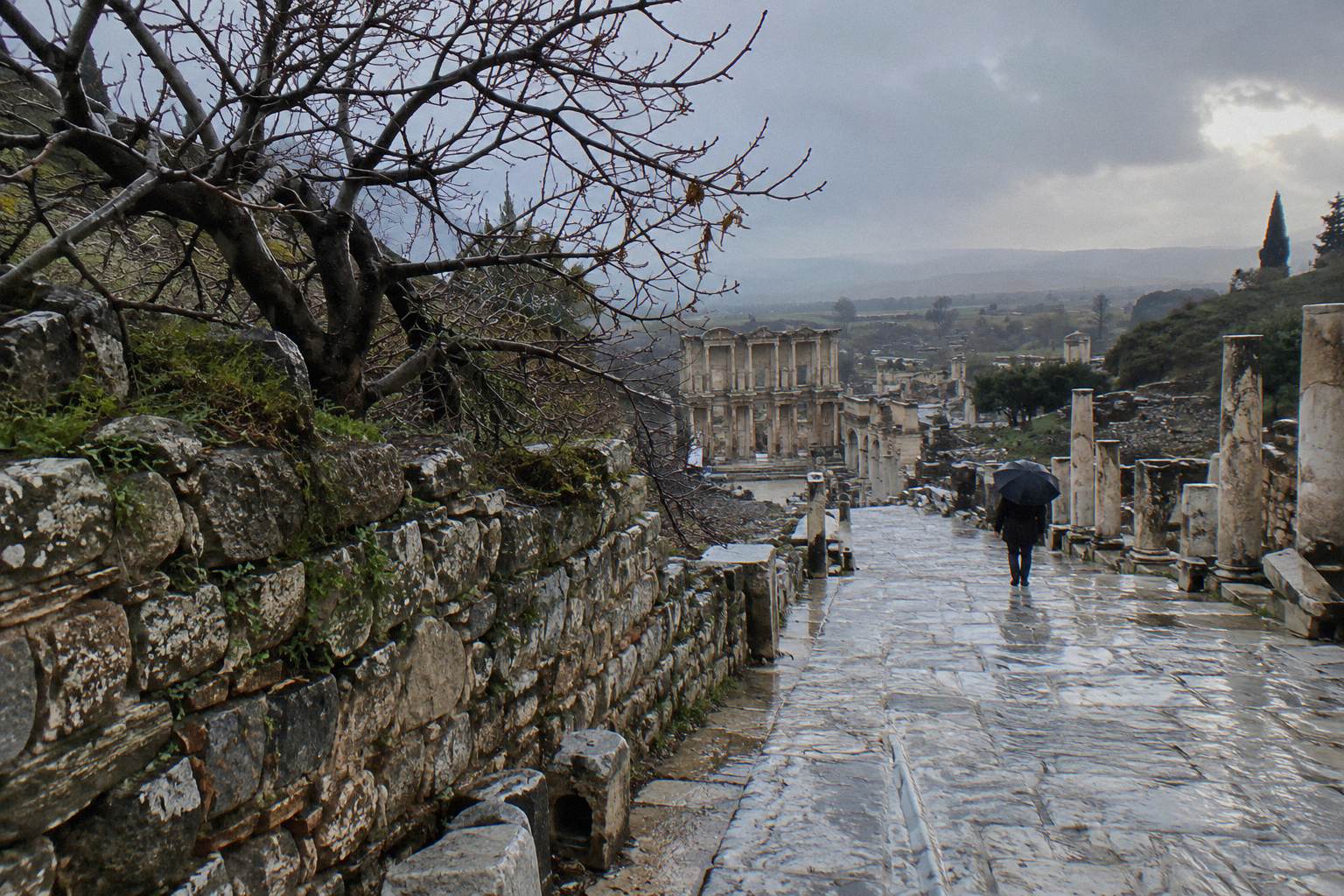
A practical reading plan for the walk itself: the passage table above fits on one printed page, and the Ministry site is open daily, with hours that shift by season, so check the Ministry page on the day. Curetes Street and the Marble Road are worn, uneven marble, and a visit takes roughly 2 to 3 hours at reading pace. The theatre passage (Acts 19:29) and the clerk's speech (Acts 19:35) belong at the lower end, near the Library of Celsus and the Great Theatre; the synagogue references belong earlier in the walk, though the synagogue's exact location is not marked for visitors.
One tour suits a reader who wants the text handled at the lowest listed price with lunch included: Travelshow's private trip from Kuşadası port, from $39.04 per person, 4 hours to 6 hours, with a guide with biblical expertise and a local lunch on the inclusions. See the private Bible tour with lunch from Kuşadası port for the full line, or Check availability for a cruise day.
The common thread between the passages and the itineraries is the theatre. Every multi-stop tour line covered here that names the Great Theatre also names the Library of Celsus and the Temple of Artemis, and those three ruins plus Curetes Street carry nearly all of the Acts 19 material. The Temple of Artemis today is one re-erected column among foundations, an open site with no entry fee, which makes it an easy final stop for the Demetrius passage even on a tight cruise day.
How Does The Revelation Letter Fit In?
Revelation 2:1-7 addresses the church in Ephesus directly: "Unto the angel of the church of Ephesus write...", praising works, labour and patience, then adding "thou hast left thy first love". It is the last New Testament word on the city, and it is read standing where the church once was.
The location of that church is itself part of the city's story. The Church of Mary, a converted Roman hall inside the archaeological site and the first church dedicated to Mary, is traditionally identified as a meeting place of the Council of Ephesus in 431, which declared Mary Theotokos against Nestorius. The identification is traditional; no visitor should be told the council certainly met in that exact building.
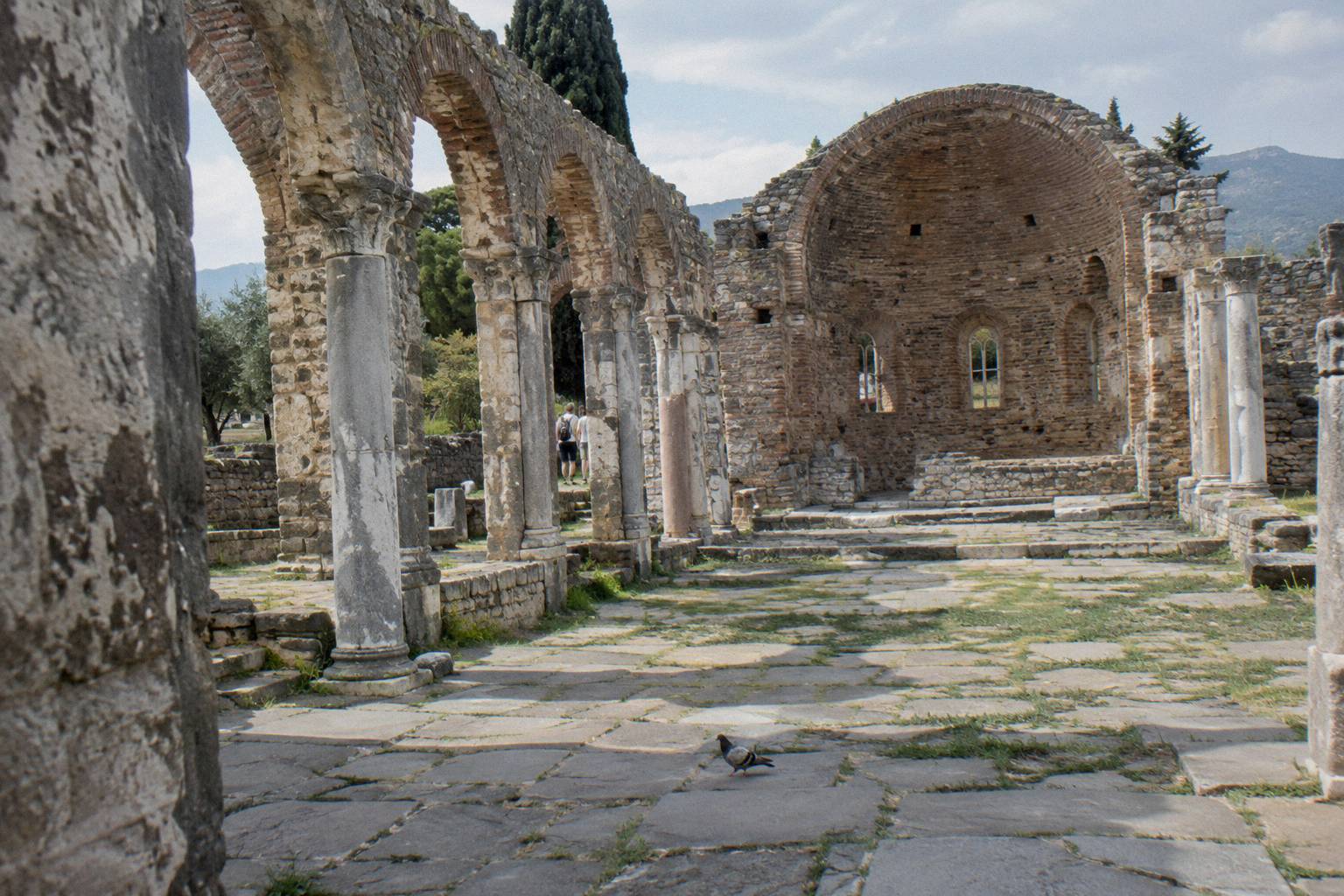
The verses themselves split cleanly between commendation and correction, and reading them that way at the site keeps the passage from blurring:
| Verse | Verbatim text or fragment | Tone |
|---|---|---|
| Revelation 2:1 | "Unto the angel of the church of Ephesus write..." | The address to the church |
| Revelation 2:2-3 | works, labour and patience mentioned | Commendation |
| Revelation 2:4 | "Nevertheless I have somewhat against thee, because thou hast left thy first love." | Correction |
| Revelation 2:5 | "Remember therefore from whence thou art fallen, and repent, and do the first works" | The call to return |
| Revelation 2:7 | "To him that overcometh will I give to eat of the tree of life, which is in the midst of the paradise of God." | The promise |
The Revelation material also opens outward toward the multi-day itineraries. The seven churches of Revelation 2 and 3 are Ephesus, Smyrna, Pergamum, Thyatira, Sardis, Philadelphia and Laodicea, all in the Aegean region of western Turkey, and the tours covering them run 3, 4 and 5 days as their lines state. For the route, distances and what each stop looks like, the Seven Churches tour route and cost guide has the planning detail.
For readers wanting the whole circuit with the letter's home city as the anchor, the four-day private Seven Churches tour, from $1,293.42 per person, 5.0 from 80 reviews, lists private transport, guiding, entrances, parking, meals and hotel choice, though its line itemises no sites; Check availability for dates. It allows free cancellation up to 72 hours before the start.
Two further options complete the spread. The 5 Day Mini Group, from $989 per person, 5.0 from 39 reviews, lists a Bible-oriented licensed guide and four nights of hotels, again with no Ephesus claim beyond its own stops. And the 3 Day Private Or Group tour from Tour Altinkum Travel, from $1,190 per person, does itemise its stops from Smyrna to Laodicea including Ephesus, the House of the Virgin Mary and the Basilica of St John, with entry tickets paid separately.
Is The Letter Connected To John And Mary?
Only by tradition, not by the text. The Ministry page says John is believed to have written the Gospel of John in Ephesus, the Basilica of St John stands over his traditional tomb on Ayasuluk Hill, and the House of the Virgin Mary is venerated, by tradition, as the place where Mary is believed to have spent her last years.
The letter to the Ephesians says nothing about John or Mary, and no tour should be sold to a reader as if it did. What the traditions do is explain why Ephesus became a Marian and Johannine pilgrimage city alongside its Pauline memory, and why the Council of 431 met here. Reading Ephesians 1:1 and then visiting the traditional sites is two distinct exercises: one textual, one traditional, and both are fair ways of spending a day.
The House of the Virgin Mary, about 7 km from Ephesus on Bulbul Mountain, is not a Ministry site and is not covered by the Museum Pass; the identification dates to an 1891 search by Lazarist priests, and the Church has not formally ruled on its authenticity. Shoulders and knees are covered at the chapel. The guide to the House of the Virgin Mary as a tour stop covers what a visit there involves.
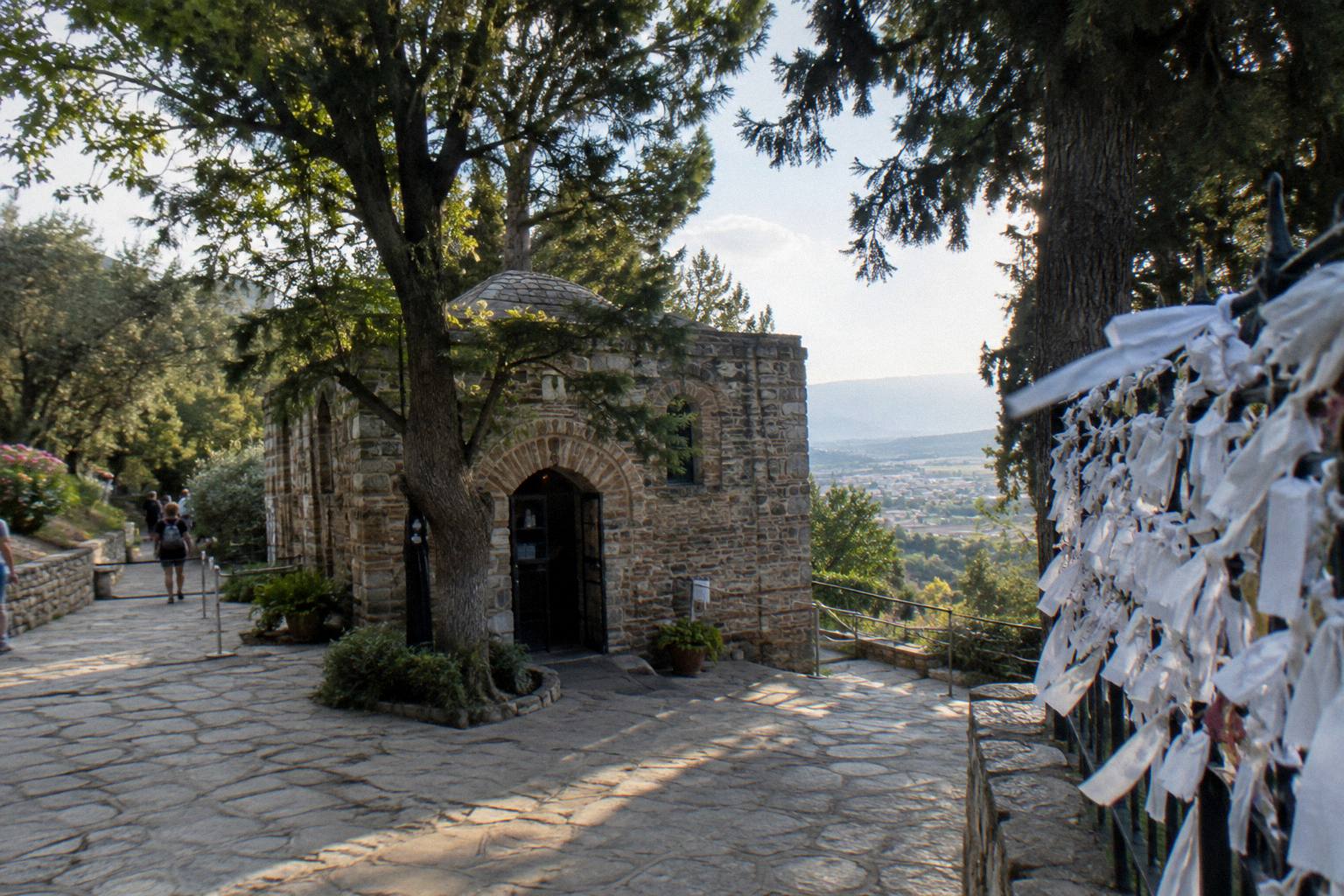
One mid-range day tour names both Marian and Johannine stops with a Bible-oriented guide: No Hidden Fees, Lunch Included, from $127.20 per person, 5.0 from 25 reviews, listing the Ephesus ancient city, the Basilica of St John, the Temple of Artemis and Terrace Houses, with entrance fees and lunch included and an on-time return for cruise guests among the inclusions.
For the 5-day circuit in a small group rather than privately, the mini-group departure keeps the same Revelation itinerary with hotels in İzmir, Kuşadası and Pamukkale, 4 breakfasts and 2 dinners, and pre-paid entrance fees per the inclusions.
By the time the reading is done, the choice between trips is mostly a choice of pace: a single day for the city and its letter, or three to five days for the seven churches the Revelation material came from. The three below cover both ends of that decision, all with free cancellation terms on their own lines.
Whichever length fits, the reading list stays the same: Acts 19, Ephesians 1:1, Revelation 2. Twenty minutes with those chapters turns a walk through marble into a walk through a correspondence, and the guides listed above are the ones whose own lines say they will open the book with you.
Common Questions About Reading Ephesians
Did Paul Write The Letter To The Ephesians While In Ephesus?
No source supports that, and it should never be claimed. Ephesians 1:1 addresses the saints at Ephesus, but the place of writing is not stated, authorship is debated, and the only letter naming Ephesus as a writing location is 1 Corinthians (16:8-9).
Which Passages Should I Read Before An Ephesus Tour?
Acts 19 for the ministry and the theatre riot, Ephesians 1:1 for the letter's address, and Revelation 2:1-7 for the church's later verdict. Acts 18:19 and Acts 20:17-31 frame the stay at each end.
How Long Did Paul Stay In Ephesus?
Two to three years. Acts 19:10 gives two years and Acts 20:31 gives three; the figures are printed together and never reconciled.
Do Any Ephesus Tours Include A Bible-Oriented Guide?
Yes, five do by their own wording: Bible Oriented Guide All Inclusive and Lunch And Pre-Paid Tickets (both from $143.20 per person), No Hidden Fees Lunch Included (from $127.20 per person), the 4 Day Private Seven Churches tour (from $1,293.42 per person), and Travelshow, which lists a guide with biblical expertise from $39.04 per person.
Is The Letter To The Ephesians Read On The Tour Itself?
Only a tour whose line lists a Bible-oriented guide or a guide with biblical expertise can be expected to engage the text, and even then the depth varies; ask the operator what the guiding covers before booking. Otherwise bring the passage table above and read at each stop.
Does The Letter Mention The Temple Of Artemis?
No. The Artemis material is in Acts 19, where Demetrius the silversmith fears for "the temple of the great goddess Diana" and the crowd cries "Great is Diana of the Ephesians". The letter to the Ephesians does not name the temple.