What To Wear On An Ephesus Tour
What to wear on an Ephesus tour: shoes for worn marble, a shoulder-and-knee cover-up for the House of the Virgin Mary chapel, and a season-by-season packing guide from published climate figures.
Ephesus rewards the traveller who packs for three different situations in one day: a long walk on ancient stone, strong summer sun, and a working chapel that asks visitors to cover shoulders and knees. Biblical Ephesus Tour covers the trips that combine these stops from Kuşadası and İzmir, and the packing questions they raise come up again and again. The good news is that the answers are concrete, drawn from the site itself, the published climate figures and the shrine's own dress expectations, not from guesswork.
Walking shoes with grip, light layered clothing, a covered shoulder and knee option for the House of the Virgin Mary, sun protection and a hands-free day bag are the core packing list. Reasons: worn uneven marble across about 1.5 km of site, summers in the Izmir figures, and an active chapel with a dress code.
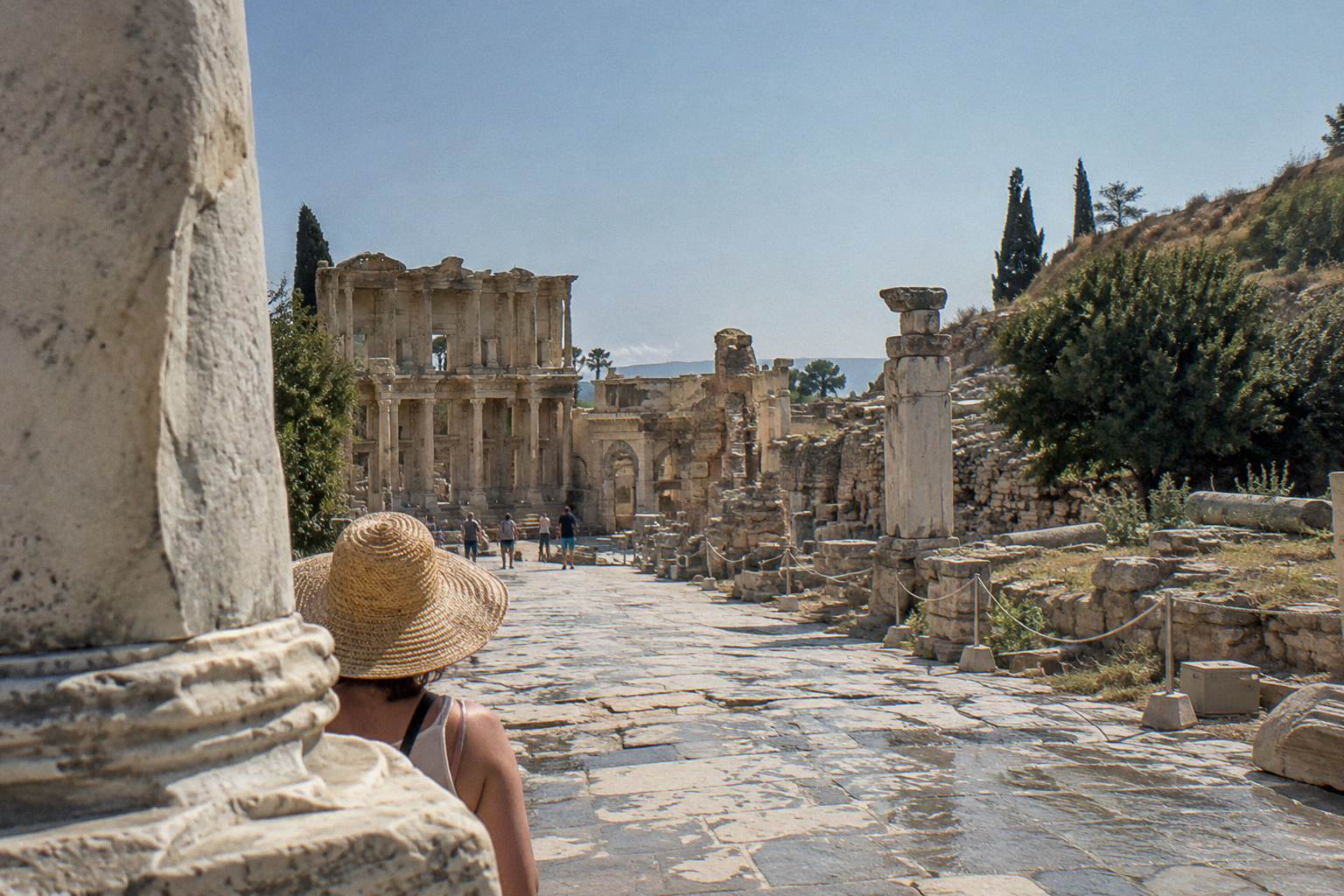
Everything on that list traces back to a physical fact about the day ahead. The Ephesus Archaeological Site sits in Selçuk, İzmir province, and is open every day, with hours that shift by season, so check the Ministry page on the day you go. The Ministry of Culture and Tourism describes Ephesus as a major Mediterranean city, later the capital of Roman Asia, and "a key city in the expansion of Christianity, from which St Paul launched many of his missions" (the Ministry's Ephesus page). Its named monuments, the Great Theatre, the Odeum, the Library of Celsus, the bathhouses and the Agora, are connected by original ancient paving, and that paving dictates your footwear more than anything else.
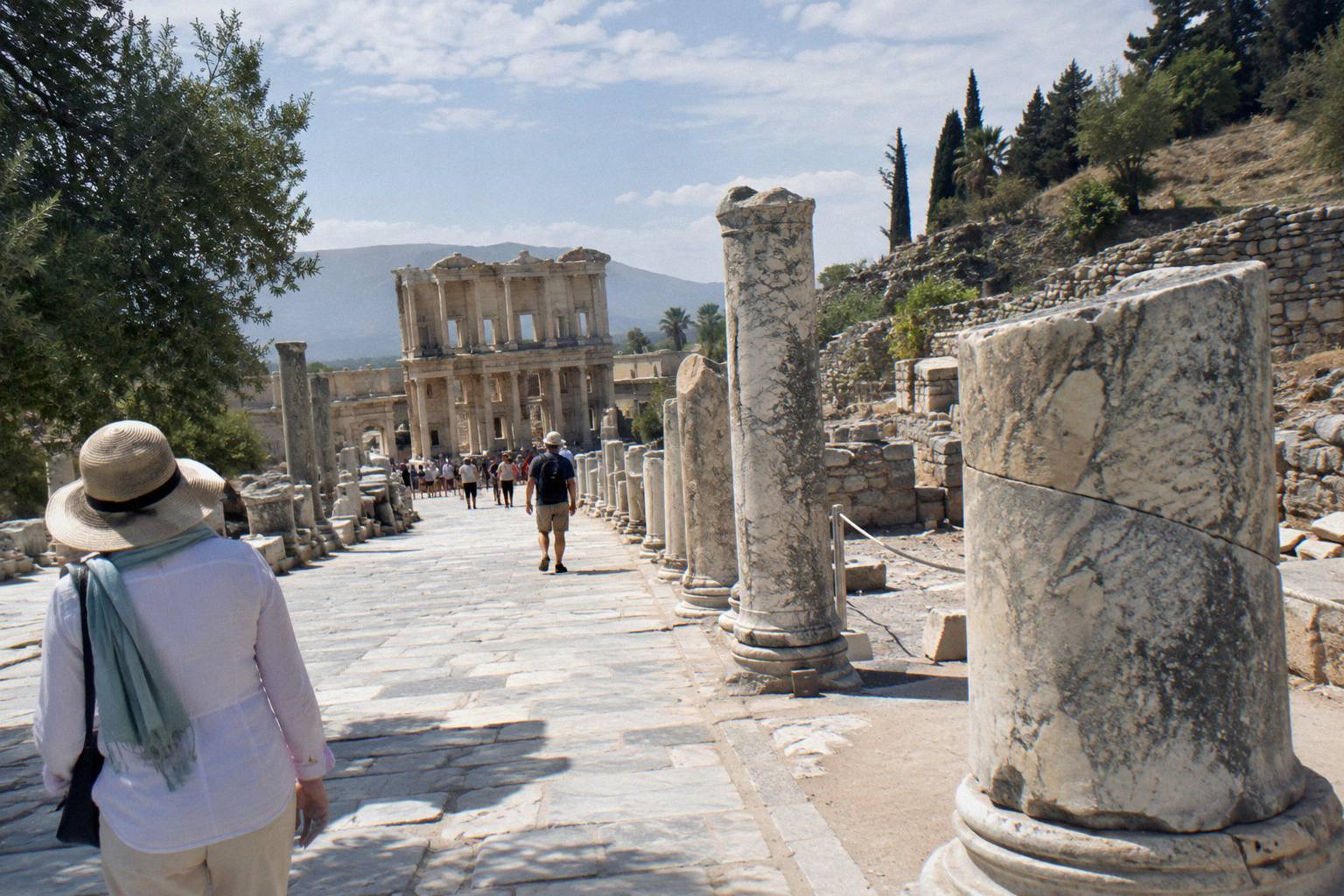
Visitor guides describe the layout plainly: from the upper (Magnesian) gate to the lower (Harbour) gate is about 1.5 km one way, downhill from the upper gate, and the Marble Road and Curetes Street are worn, uneven marble polished smooth by two millennia of feet. A visit takes roughly 2 to 3 hours. The lower gate gives the flatter route to the Library and the Theatre, which matters for anyone steadier on level ground. None of this is difficult walking for a reasonably mobile person, but it is unforgiving of flimsy soles.
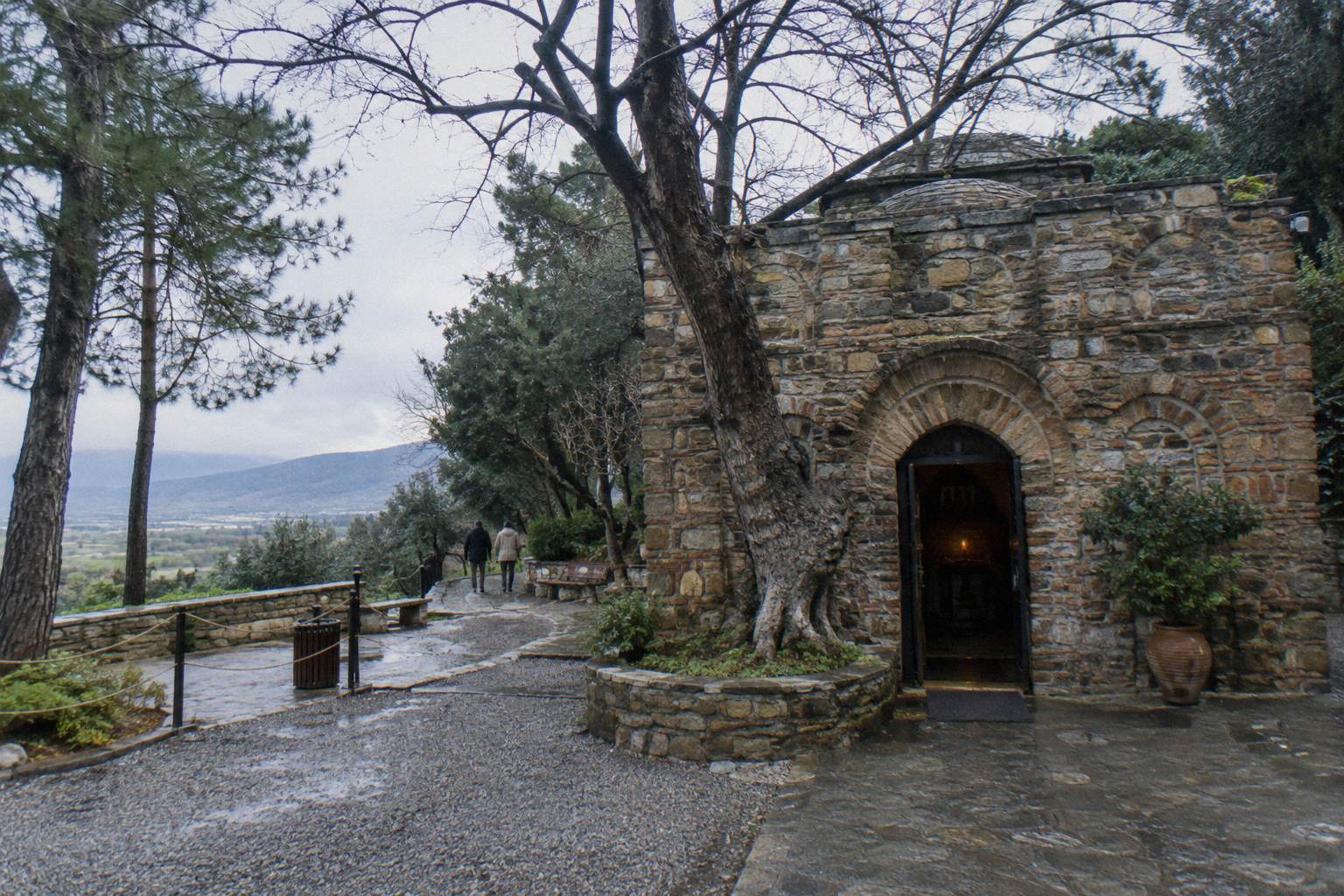
The second physical fact is the chapel. The House of the Virgin Mary, about 7 km from Ephesus on Bulbul Mountain in the Mount Koressos area, is venerated by tradition as the place where Mary is believed to have spent her last years, and Catholic and Muslim pilgrims venerate it. It is an active chapel, not a ruin, and visitor guides report signs at the entrance asking for shoulders and knees covered. That single requirement shapes the outfit more than the weather does, and it catches summer travellers off guard.
The table below sets out what to pack and why, item by item, with the source behind each recommendation.
| Item | Why It Belongs In The Bag | Where The Advice Comes From |
|---|---|---|
| Shoes with rubber grip, closed toe | Marble Road and Curetes Street are worn, uneven marble; about 1.5 km gate to gate | Visitor-guide layout reports |
| Light scarf or wrap | Shoulders and knees covered at the House of the Virgin Mary chapel | Shrine dress signs, as visitor guides report |
| Hat and sun protection | July and August mean daily maxima of 33.3 °C and 33.0 °C (İzmir figures) | Turkish State Meteorological Service normals |
| Light long trousers or a long skirt | Chapel dress code without overheating; also practical on marble | Shrine dress expectations |
| Small backpack or cross-body bag | A visit takes roughly 2 to 3 hours on foot | Visitor-guide layout reports |
| Layers for spring and autumn | April to early June and late September to October sit between winter and the hottest weeks | İzmir climate figures |
| Compact rain layer for winter | January averages 12.6 rainy days, December 12.7 (İzmir figures) | Turkish State Meteorological Service normals |
When the day is organised by an operator rather than walked alone, the packing list stays the same but the ticket question changes. The trips covered here differ sharply on whether entrance is included: the Licensed Guide, Tickets Arranged tour from $39 per person arranges tickets in advance with the fee paid separately, while others list entrance as included. A light day bag that leaves one hand free for a ticket gate or a cash payment is the practical answer either way.
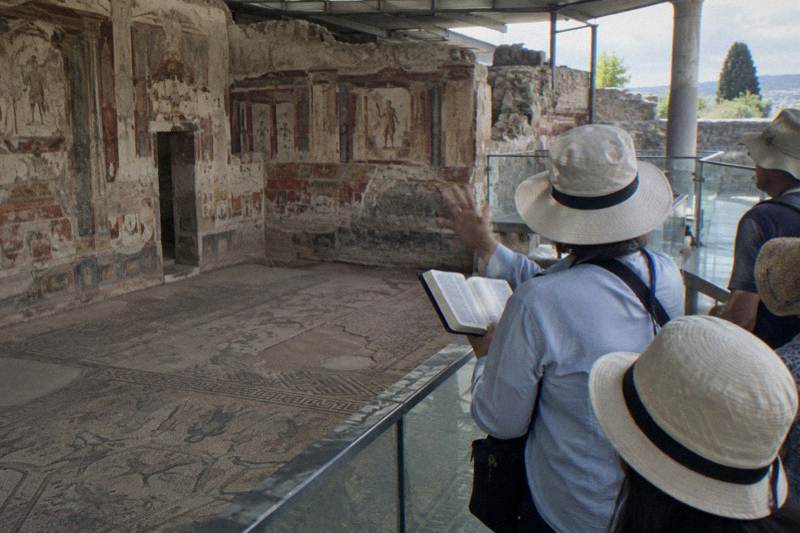
One more layer to the first section: the Terrace Houses, should your day include them, are a separate EUR 15 ticket, published fee, changes yearly, check before going, and they are not covered by the Museum Pass. Their stairs and walkways add a second reason for proper shoes, and the Ministry notes that the seven 1st-century AD Roman houses stand on the slope of Mount Koressos with mosaics, marble walls and underfloor heating (the Ministry's Terrace Houses page). None of the day tours covered here claims a Terrace Houses stop on its itinerary line, so treat them as a possible extra, not a given, and dress for them only if you plan to add the ticket yourself.
Which Shoes Work On Ephesus Marble?
Shoes with rubber grip and closed toes are the right choice at Ephesus, because the Marble Road and Curetes Street are worn, uneven marble and the Terrace Houses add stairs and walkways. Sandals with straps can work in summer; smooth-soled dress shoes, high heels and flip-flops cannot.
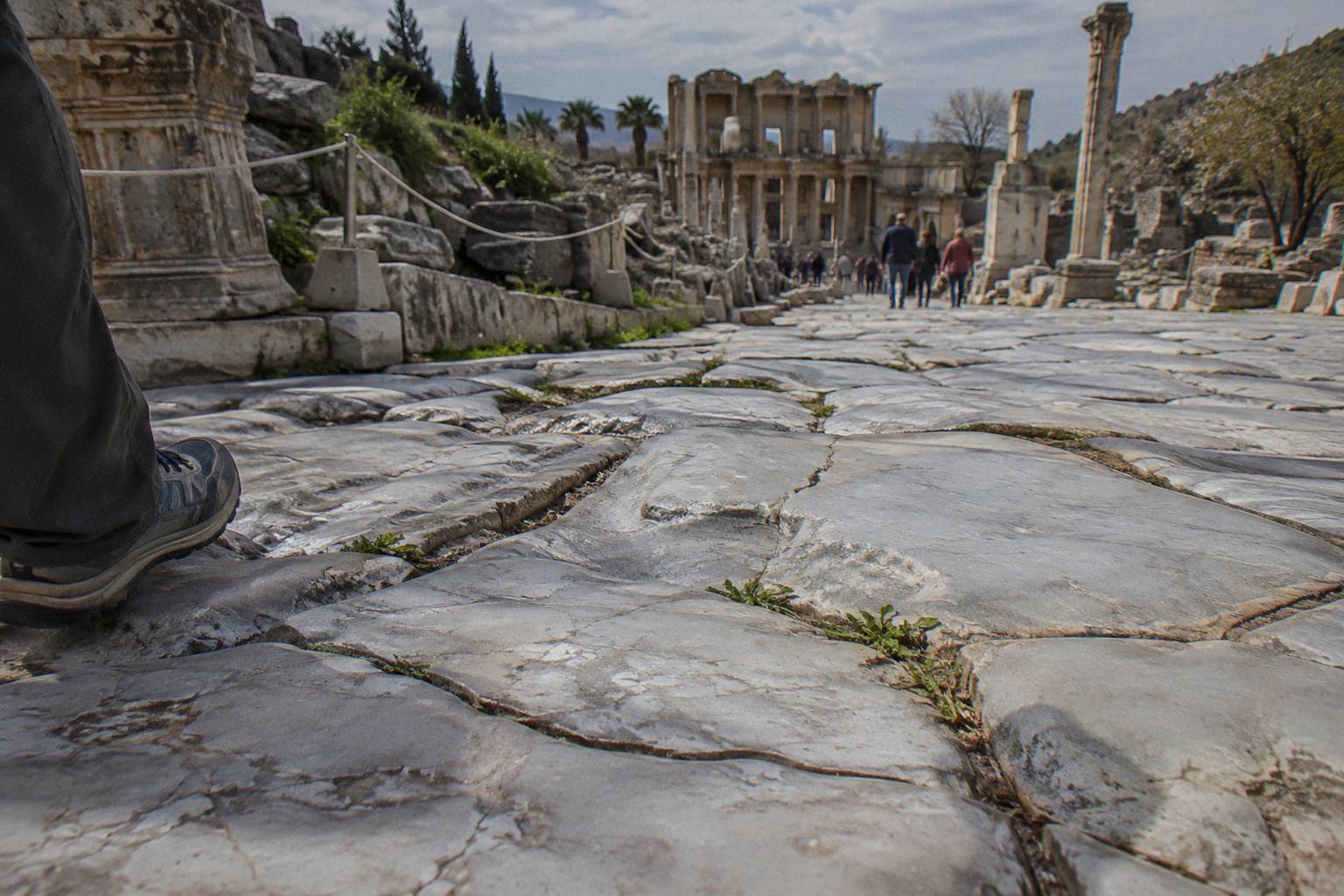
The marble at Ephesus is the real hazard of the day, and it is a low-grade one that good footwear removes entirely. Ancient paving worn by centuries of traffic becomes almost glassy in patches, and visitor guides report the surface as uneven throughout the main streets. Add a downhill stretch of about 1.5 km from the upper gate to the lower gate, plus marble steps at the Great Theatre, which holds roughly 25,000 seats by the usual estimate, and the case for grip and toe protection makes itself. Ephesus has been on the UNESCO World Heritage List since 2015, alongside Ayasuluk Hill and Çukuriçi Mound (the UNESCO listing), and a protected ancient surface is never going to be resurfaced for modern shoes.
Strap-on sandals deserve a fair hearing, because in July and August, when İzmir figures show mean daily maxima of 33.3 °C and 33.0 °C, closed shoes feel hot by midday. A sturdy sandal with a contoured footbed and a heel strap is a reasonable summer compromise for confident walkers. What does not work is anything loose, thin-soled or heeled: flip-flops shift on smooth stone, leather dress soles slide, and heels catch in two-thousand-year-old gaps between slabs.
If your route includes the House of the Virgin Mary, remember the second surface type of the day: the shrine sits on Bulbul Mountain, approached by road, and the paths around the chapel and the holy-water spring are ordinary ground rather than ancient marble. The same walking shoe handles both. For the fuller picture of how a chapel stop fits into a Bible-focused day, the guide to what a House of Mary tour stop means covers the tradition behind the site.
A practical compromise many travellers land on: wear the walking shoes for the site, and keep a pair of light sandals in the day bag for the vehicle between stops. Operators such as Moira Travel Agency, whose Best-Seller Cruise Tour, Ticket Option runs from $15 per person for 4 to 6 hours with port or hotel pickup and drop-off, build in vehicle time between Ephesus, the House of the Virgin Mary, the Library of Celsus, the Great Theatre and the Temple of Artemis. That tour holds 4.9 from 1,190 reviews, its tickets are paid separately (published fees, changes yearly, check before going), and free cancellation applies up to 24 hours before the start. Note that private per-person prices fall as the group grows. For that kind of day, shoes you can slip off in a van are a small comfort worth having.
What Should You Wear At The House Of The Virgin Mary?
The House of the Virgin Mary asks for shoulders and knees covered, because it is an active chapel where Catholic and Muslim pilgrims pray, with signs at the entrance as visitor guides report. A light scarf or a wrap solves this in seconds, so pack one even in the height of summer.
The shrine is the one stop on a standard Ephesus day with a dress code of its own. By tradition it is venerated as the place where Mary is believed to have spent her last years, an identification that dates to the 19th century, when Lazarist priests from Smyrna, guided by the visions of Anne Catherine Emmerich, searched the Mount Koressos area in 1891. The Church has not formally ruled on its authenticity; it is a pilgrimage tradition, and a living one (the shrine's own site). Paul VI visited on 26 July 1967, John Paul II on 30 November 1979 and Benedict XVI on 29 November 2006, celebrating a Eucharist at the shrine. The Assumption feast on 15 August draws a pilgrimage with Mass.
Because people pray there daily, the dress expectation is the one you would meet at any working church: shoulders and knees covered, for men and women alike, with signs at the entrance as visitor guides report. The simplest solution is a light scarf or sarong that folds to nothing in a day bag and drapes over shoulders or legs at the gate. In summer, a loose linen shirt over a vest top and light long trousers or a long skirt meet the code without adding heat. In the cooler months the code meets itself, since the clothing the weather demands already covers what the chapel asks.
The stop is typically short, a visit to the small stone house chapel, the holy-water spring and the wall where visitors tie wishes, before the road drops back down toward Ephesus. Mass is held daily in the warm months and on Sundays through the winter; confirm the current schedule with the shrine before going. If your trip's exclusions list the House of Mary ticket, a separate fee is paid at the gate. None of the operators here prints a fee for it, and neither will this article.
For the deeper background on the tradition, the guide to the House of the Virgin Mary on an Ephesus tour covers the history and what the stop includes. The dress point, though, is complete in one sentence: cover shoulders and knees, and carry the means to do it.
How Do The Seasons Change What You Pack?
The Izmir figures run from a mean daily maximum of 12.5 °C in January to 33.3 °C in July, so the same outfit cannot serve every month. April to early June and late September to October sit between the cool wet winter and the hottest weeks, and July and August are the hottest.
The Turkish State Meteorological Service publishes normals from the İzmir (Konak) station, because Selçuk and Kuşadası are not published separately, so treat these as İzmir figures (the MGM statistics pages). Aydın province, the province of Selçuk and Kuşadası, runs warmer still, with a mean maximum from 13.2 °C in January to 36.4 °C in July. The month table below is copied exactly from the published figures.
| Month | Mean Daily Maximum C | Mean Daily Minimum C | Mean Rainy Days |
|---|---|---|---|
| January | 12.5 | 5.8 | 12.6 |
| February | 13.7 | 6.2 | 10.5 |
| March | 16.4 | 7.7 | 9.2 |
| April | 21.0 | 11.2 | 7.8 |
| May | 26.2 | 15.5 | 5.3 |
| June | 30.8 | 19.9 | 2.3 |
| July | 33.3 | 22.6 | 0.5 |
| August | 33.0 | 22.5 | 0.6 |
| September | 29.3 | 18.8 | 1.9 |
| October | 24.1 | 14.7 | 5.3 |
| November | 18.7 | 10.8 | 8.8 |
| December | 14.2 | 7.6 | 12.7 |
Read as a packing calendar, the table divides the year into three wardrobes. Winter, December through February, means a jacket, warm layers and a rain layer: those months average between 10.5 and 12.7 rainy days, and mean daily minima sit at or below 7.6 °C. Summer, June through August, means the lightest clothing that still satisfies the chapel code: maxima climb from 30.8 °C to 33.3 °C while rainy days fall to between 0.5 and 2.3, so rain gear can stay at the hotel and sun protection takes its place.
The shoulder seasons are the easy middle. April to early June and late September to October sit between the cool wet winter and the hottest weeks, which in practice means light clothing plus one layer for the morning, since April's mean minimum is 11.2 °C and October's is 14.7 °C while afternoons reach 21.0 °C and 24.1 °C respectively. A single light jacket or cardigan in the day bag covers both the morning chill and, at a pinch, the chapel code. No weather promise is made here: these are long-term normals, not a forecast, and the day you travel will differ from the table. For the fuller timing picture beyond clothing, the guide on which months suit an Ephesus visit works through the same figures from a planning angle.
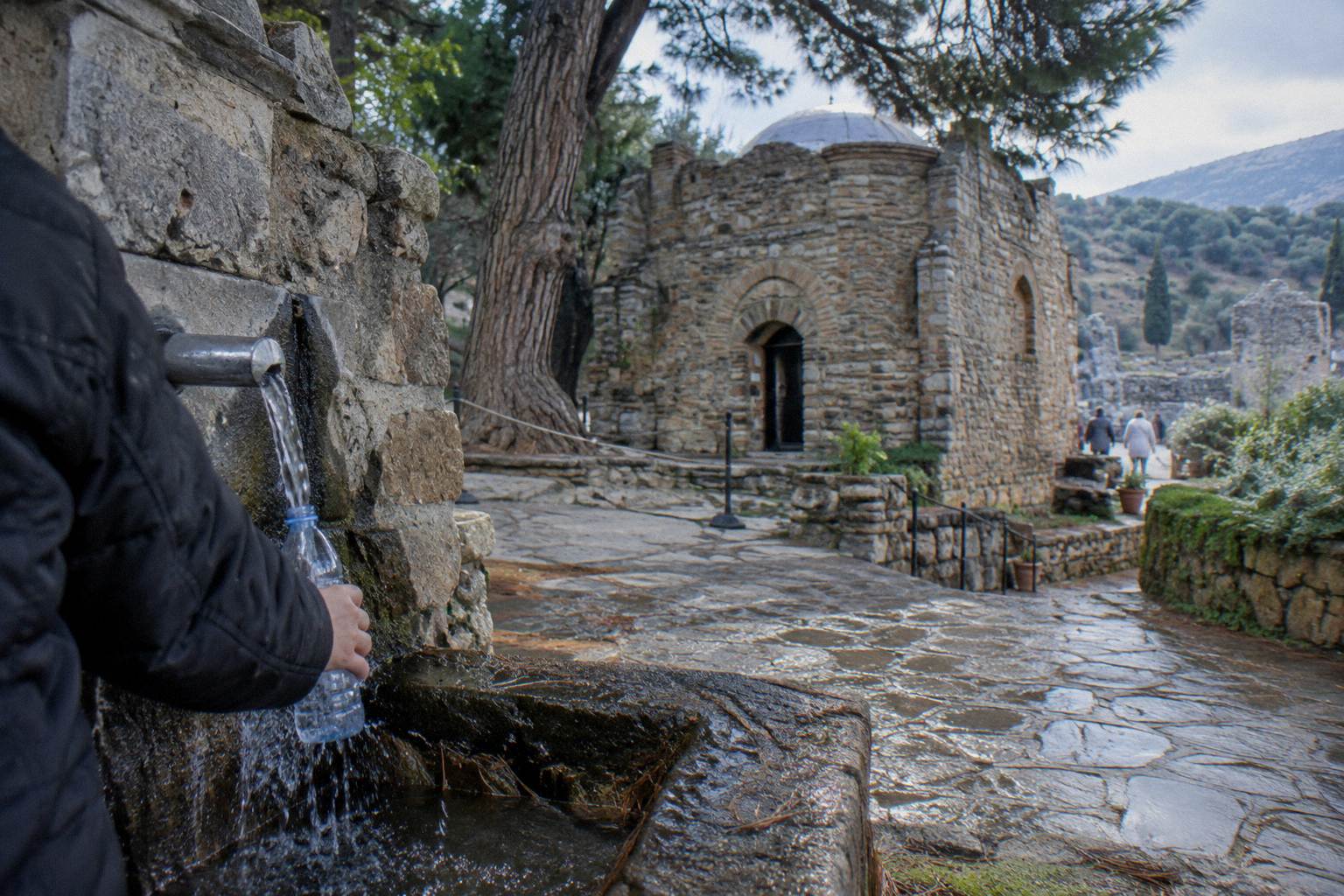
One seasonal footnote belongs with the dress code rather than the thermometer. The Assumption feast on 15 August falls in the hottest fortnight of the calendar and draws a pilgrimage with Mass at the shrine, so a mid-August visit pairs the year's most demanding temperatures with the year's most attended service at the chapel. If your travel dates are fixed then, the cover-up and the water bottle earn their space more than ever.
What Should You Carry In A Day Bag?
Carry water, sun protection, a cover-up for the chapel, euro cash or a card for tickets, and nothing you cannot wear on a 2 to 3 hour walk. A visit to Ephesus takes roughly 2 to 3 hours on foot, gate to gate about 1.5 km one way, so a heavy bag becomes a problem.
The day bag at Ephesus is defined by subtraction. A visit to the site alone takes roughly 2 to 3 hours of walking, downhill from the upper gate or flatter from the lower gate, and most organised days add the House of the Virgin Mary, the Temple of Artemis and sometimes the Basilica of St John before returning to Kuşadası or İzmir. Anything in the bag rides on your shoulders for all of it, so the test for each item is whether the day would be worse without it.
Water comes first, and in July and August it is not optional: the İzmir figures put mean daily maxima above 33 °C with almost no rain. Sun protection, a hat and something for the neck and shoulders, comes second for the same reason; the site is open ground with little shade on Curetes Street. Third, the chapel cover-up from the previous section, a scarf or wrap weighing almost nothing. Fourth, payment for anything not included in your trip: where a tour lists tickets as excluded, the published fees are EUR 40 for the Ephesus Archaeological Site (which includes the Ephesus Experience Museum on the site), EUR 6 for the Basilica of St John and EUR 15 for the Terrace Houses as a separate ticket, published fees, changes yearly, check before going. The Ministry lists these in EUR, so euro cash or a card that works at the gates belongs in the bag.
What stays behind matters as much. There is nowhere to check a bulky bag at the site, and the walk back uphill to the upper gate, about 1.5 km, is where an overloaded backpack makes itself felt. A camera is worth carrying for the Library of Celsus facade; a second pair of shoes, a picnic and anything rigid are not. Valuables should ride in a cross-body bag rather than a back pocket, the ordinary city habit that serves the ancient streets just as well.
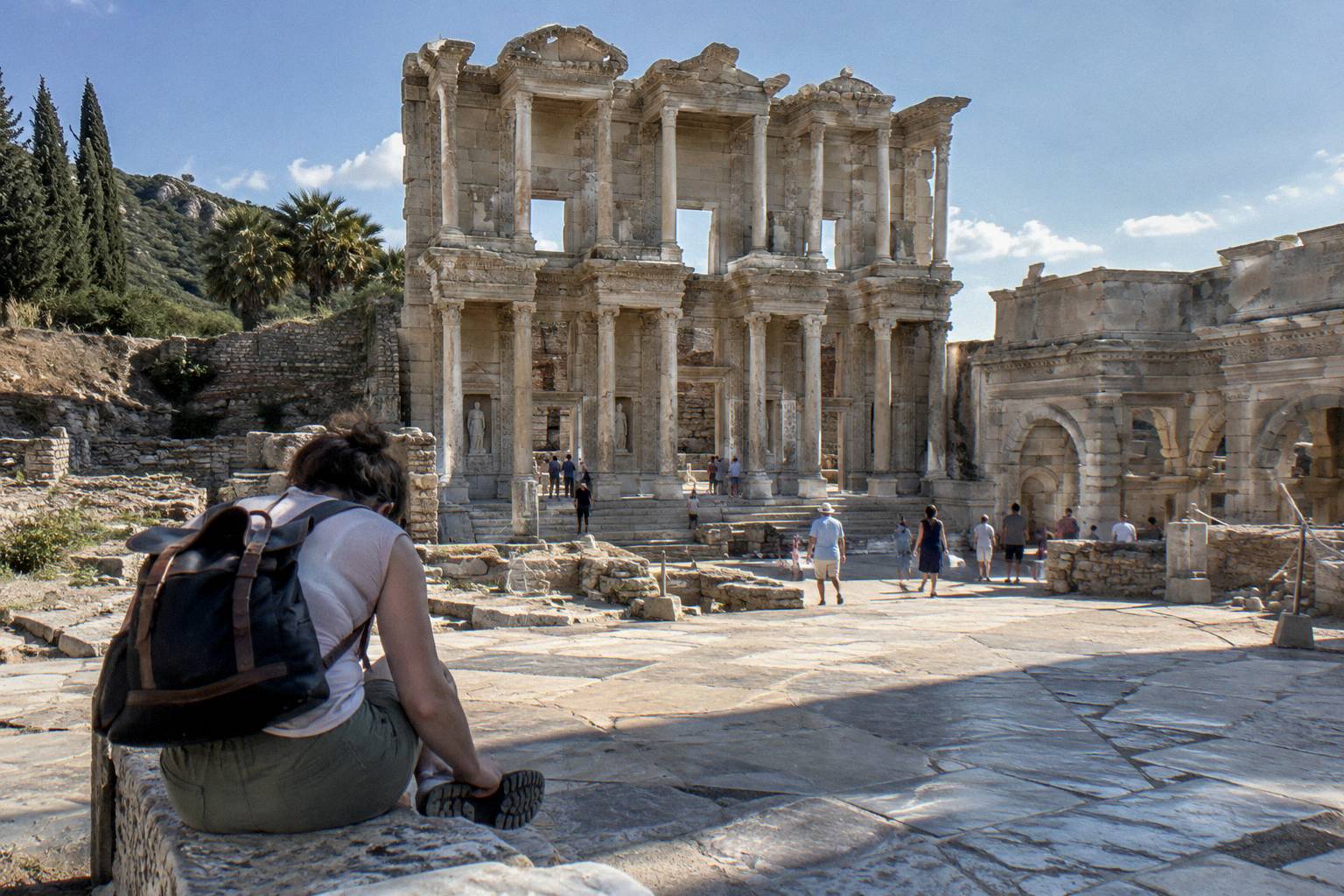
A note on timing the bag, not the body: cruise calls at Kuşadası are typically 8 to 11 hours, and the ship's own all-aboard time governs the day. Packing light in the morning is what keeps the afternoon flexible, whether the itinerary runs to plan or the chapel stop runs long. The detail that most often saves a cruise day is simply having hands free at the port gate.
Which Tours Suit A Church-Stop Visit?
The trips that include a House of the Virgin Mary stop are the ones where the dress code matters most, and several cover the chapel, Ephesus and the Basilica of St John in one day. Compare what each includes before choosing: tickets, lunch and a Bible-oriented guide are included on some and paid separately on others.
Most of the day trips covered here name the House of the Virgin Mary as a stop, so the chapel dress code applies to nearly all of them. What separates them is everything else: duration, what is included, and who is guiding. A short comparison is the fastest way to see which matches a packing-conscious day.
| Tour | Price | Rating | Tickets | Chapel Stop |
|---|---|---|---|---|
| Licensed Guide, Tickets Arranged | from $39 per person | 4.8 from 84 reviews | Paid separately, arranged in advance | House of the Virgin Mary, by tradition |
| No Hidden Fees, St John Basilica | from $127.20 per person | 5.0 from 83 reviews | Operator lists entrance fees as included | House of the Virgin Mary, by tradition |
| Best-Seller Cruise Tour, Ticket Option | from $15 per person | 4.9 from 1,190 reviews | Paid separately unless the ticket option is chosen | House of the Virgin Mary, by tradition |
The private Bible tour for cruisers with tickets arranged is the natural fit for a cruise day built around the chapel: it runs 4 to 6 hours from Kuşadası port with port or hotel pickup and drop-off, a licensed local guide listed on its inclusions, all parking fees and free cancellation up to 24 hours before the start. Its tickets are arranged in advance so you skip long ticket lines, with the fees paid separately against the published prices above. Per-person pricing on private trips falls as the group grows. Check availability
For a day with everything settled in advance, the all-in trip with St John included lists entrance fees as included, with pre-paid tickets to skip lines, a licensed guide, an on-time return to port for cruise guests in its inclusions (the ship's own all-aboard time governs), and stops at Ephesus, the Temple of Artemis, the House of the Virgin Mary and the Basilica of St John. It runs 5 to 7 hours from $127.20 per person and holds 5.0 from 83 reviews, with free cancellation up to 24 hours before the start.
Whichever way the day is organised, the packing list does not change: grip shoes for the marble, a cover-up for the chapel, sun protection for the open streets, and a bag light enough to forget. The Basilica of St John, where the 6th-century basilica stands over the traditional tomb of the apostle on Ayasuluk Hill, adds no dress requirement of its own, but its open hilltop ground rewards the same hat and water bottle. The Ministry's text says John is believed to have written the Gospel of John in Ephesus, and the stop is a highlight rather than a packing complication.
Common Questions About Ephesus Packing
What To Wear On An Ephesus Tour?
Walking shoes with rubber grip, light layered clothing, a cover-up that handles the shoulders-and-knees dress code at the House of the Virgin Mary, sun protection and a light hands-free day bag. The marble streets are worn and uneven across about 1.5 km, the summer maxima run above 33 °C in the İzmir figures, and the chapel is an active place of worship, so each item answers a specific demand of the day.
Can I Wear Sandals At Ephesus?
A sturdy sandal with a heel strap can work in summer for confident walkers. Flip-flops, smooth-soled shoes and heels cannot: the Marble Road and Curetes Street are worn, uneven marble, and loose footwear shifts on the polished stone. Most travellers do better in closed walking shoes and keep sandals for the vehicle.
Is There A Dress Code At The House Of The Virgin Mary?
Yes. The shrine is an active chapel and visitor guides report signs at the entrance asking for shoulders and knees covered, for men and women alike. A light scarf or wrap carried in a day bag covers the requirement in seconds.
Do I Need A Rain Jacket?
It depends on the month. The İzmir figures show December, January and February averaging between 10.5 and 12.7 rainy days, while July and August average 0.5 and 0.6. A compact rain layer earns its place from November through March and can stay behind in high summer.
What Should I Carry For Tickets?
Where a trip lists tickets as excluded, they are paid separately: the published fees are EUR 40 for Ephesus, EUR 6 for the Basilica of St John and EUR 15 for the Terrace Houses as a separate ticket, and the House of Mary ticket is a separate fee paid at the gate. Fees are published figures that change yearly, so check before going, and carry euro cash or a working card.
Does The Season Change The Outfit?
Yes. April to early June and late September to October call for light clothing plus one morning layer. July and August, the hottest months, call for the lightest outfit that still covers shoulders and knees at the chapel. Winter calls for warm layers and a rain jacket, with mean daily minima from 5.8 °C to 7.7 °C in the İzmir figures.