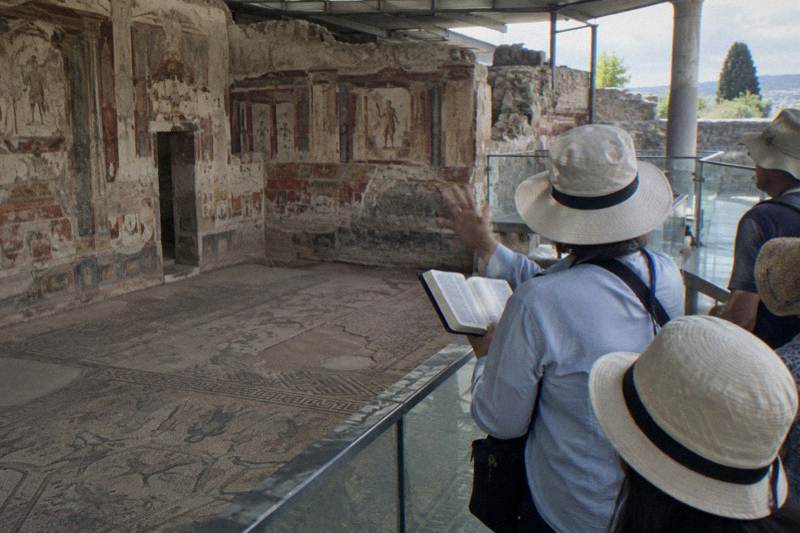
Did St Paul Spend Time In Ephesus?
Acts records Paul in Ephesus across three episodes, including a stay of two to three years; what the text says, what a visitor can see, and what a Bible-oriented guide adds.
Yes. Acts records Paul in Ephesus across three episodes: a brief first visit in Acts 18, a sustained stay of two to three years in Acts 19, and a farewell to the elders from Miletus in Acts 20. The Ministry of Culture and Tourism itself calls Ephesus the city from which St Paul launched many of his missions. Paul's first visit is a single verse, Acts 18:19: "And he came to Ephesus, and left them there: but he himself entered into the synagogue, and reasoned with the Jews." Aquila and Priscilla stayed behind when he moved on, which is why Apollos later finds them there in Acts 18:24: "And a certain Jew named Apollos, born at Alexandria, an eloquent man, and mighty in the scriptures, came to Ephesus."
The longer answer is that Ephesus was not a footnote in Paul's travels. The Biblical Ephesus Tour coverage of the Pauline sites treats it as the centre of his work in Roman Asia, and the text supports that: Acts 19:10 says his teaching continued "by the space of two years; so that all they which dwelt in Asia heard the word of the Lord Jesus, both Jews and Greeks." That is the widest reach Acts gives to any single city in Paul's ministry, and the Ministry's own description of the Ephesus Archaeological Site echoes it, calling the city "a key city in the expansion of Christianity, from which St Paul launched many of his missions".
For a reader choosing a tour around the Paul story, the practical question is which product puts a Bible-focused interpreter in front of these stones. The Bible Oriented Guide, All Inclusive tour by Private & Small Group Ephesus & Istanbul & Turkey Tours lists a Bible Oriented Professional Tour Guide among its inclusions, alongside a traditional Turkish lunch, entrance fees and an on-time return to the port for cruise guests; it runs 6 hours to 7 hours, from $143.20 per person, rated 5.0 from 646 reviews. See the full Bible Oriented Guide, All Inclusive details before deciding, or check availability if that format already fits.
Three tours sit at the top of that comparison for different reasons: the two all-inclusive trips bundle tickets, lunch and a Bible-oriented guide into one price, while the Travelshow Private, Lunch Included tour keeps the per-person figure lower at from $39.04 per person with tickets paid separately. All three name Ephesus ancient city as a stop, and each frames the Paul story differently, which is what the rest of this article unpacks, passage by passage.
What The Book Of Acts Records About Paul In Ephesus?
Acts gives Paul's Ephesus in three movements: a short first stay in chapter 18, the long teaching stay and the silversmiths' riot in chapter 19, and the farewell speech to the elders in chapter 20. The riot scene ends in the Great Theatre, the one structure from the narrative that a visitor can stand inside today. The first movement is quick. Acts 18:19 has Paul reason in the synagogue and leave; his companions stay. The second movement opens in Acts 19:1: "...Paul having passed through the upper coasts came to Ephesus..." and builds through verse 8: "And he went into the synagogue, and spake boldly for the space of three months..." When the synagogue door closes, the teaching moves to the hall of Tyrannus, and Acts 19:10 gives the duration.
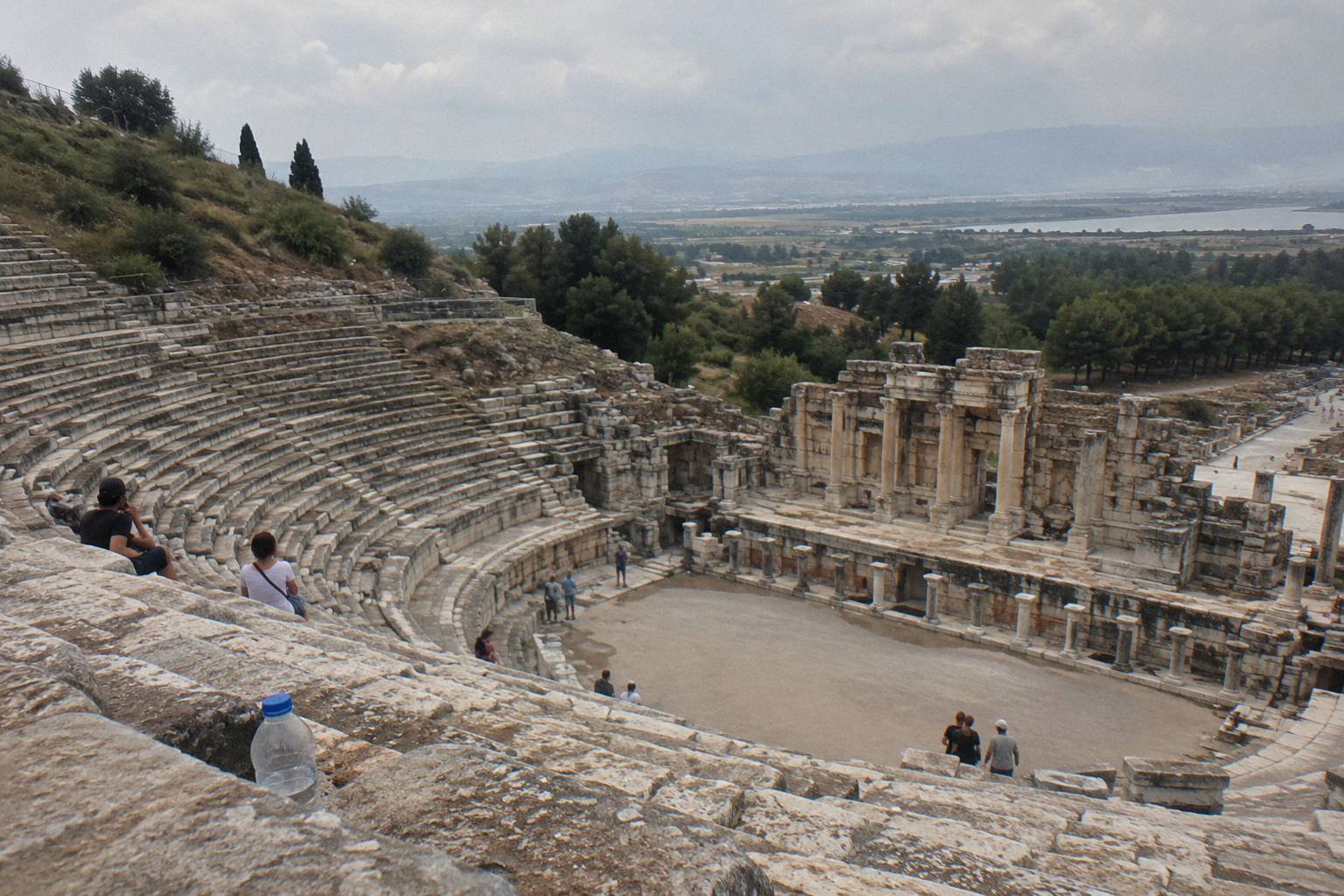
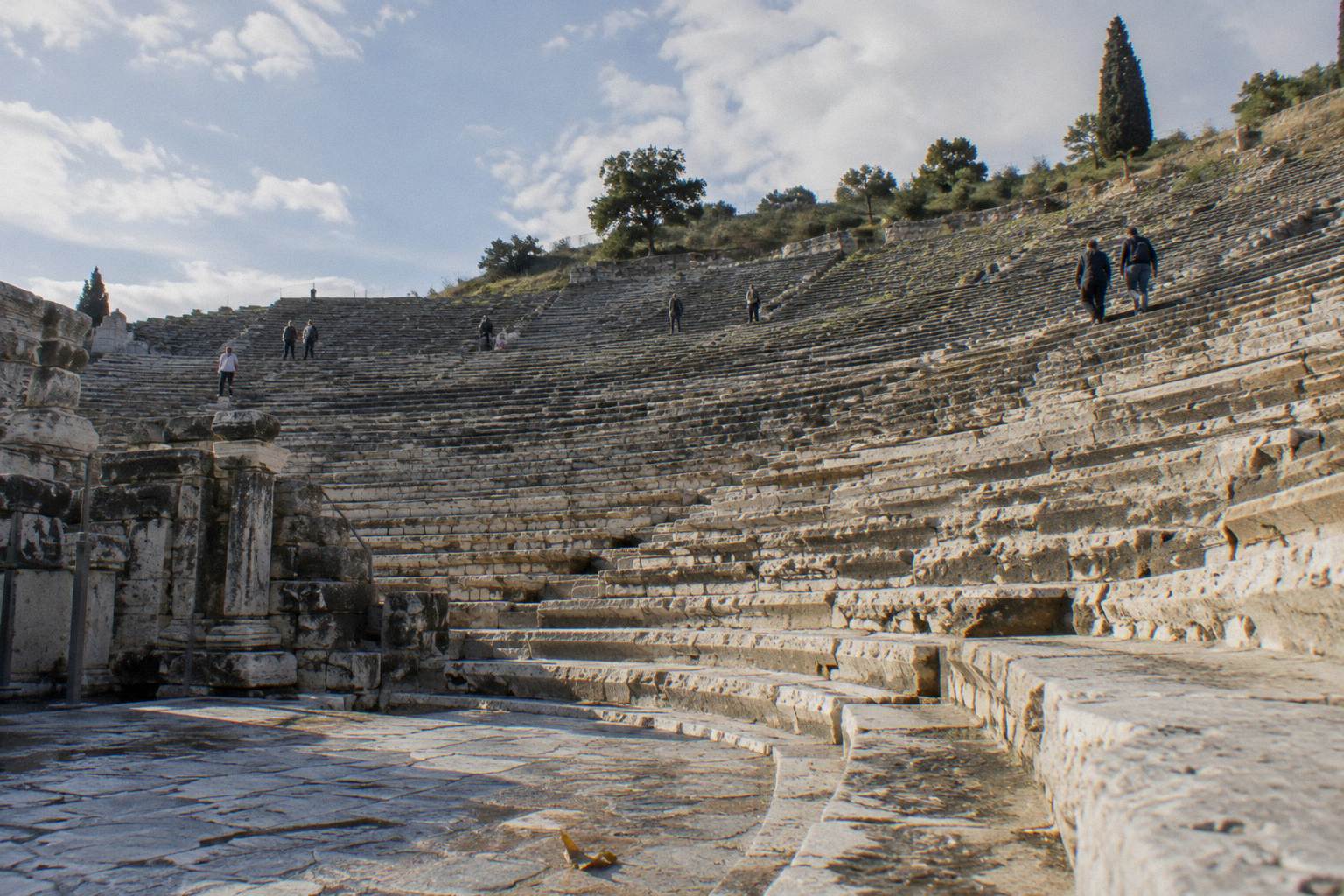
The riot is the most cinematic passage in the chapter, and the one with the most visible remains behind it. Demetrius the silversmith, "which made silver shrines for Diana", fears for "the temple of the great goddess Diana" as Paul's teaching turns customers away. Acts 19:29 records that the crowd "rushed with one accord into the theatre" after catching Gaius and Aristarchus, Paul's travelling companions. The cry in 19:28 is "Great is Diana of the Ephesians", and in 19:35 the town clerk calms the crowd by calling the city "a worshipper of the great goddess Diana, and of the image which fell down from Jupiter". The theatre in that scene is the Great Theatre, roughly 25,000 seats by the usual estimate, and it survives as part of the property inscribed on the UNESCO World Heritage List since 2015.
The passages sort naturally into the topics a visitor cares about, and the table below keeps every quotation to the exact KJV wording.
| Topic | Passage | Exact KJV Wording |
|---|---|---|
| First visit | Acts 18:19 | "And he came to Ephesus, and left them there: but he himself entered into the synagogue, and reasoned with the Jews." |
| Return and teaching | Acts 19:8 | "And he went into the synagogue, and spake boldly for the space of three months..." |
| Duration | Acts 19:10 | "And this continued by the space of two years; so that all they which dwelt in Asia heard the word of the Lord Jesus, both Jews and Greeks." |
| The riot | Acts 19:29 | the crowd "rushed with one accord into the theatre" |
| The city's defence | Acts 19:35 | "a worshipper of the great goddess Diana, and of the image which fell down from Jupiter" |
| The farewell | Acts 20:17 | from Miletus Paul "sent to Ephesus, and called the elders of the church" |
| Length recalled | Acts 20:31 | "by the space of three years I ceased not to warn every one night and day with tears" |
Standing in the Great Theatre with those verses in hand is the closest a visitor gets to the Acts narrative, and a guide who can place the riot scene in its chapter changes what the stones say. If the question is whether a guide with that kind of focus is worth booking, the guide, sites and pace comparison for a Christian tour of Ephesus walks through the options, and the operator's page for any of the three trips above will show what its own inclusions say about guiding.
One reassurance before the money question: every tour discussed here carries free cancellation up to 24 hours before the start on its own terms, so a booking can be held while the guide question is settled. The differences between the trips are mostly about what is bundled: tickets, lunch and the guide's stated orientation, not about where they go, since all of them walk the same ancient city.
How Long Did Paul Stay In Ephesus?
The text gives two figures and neither should be smoothed over: Acts 19:10 says the teaching continued for two years, and Paul himself recalls three years in his farewell, so the stay is best written as two to three years. That makes Ephesus the longest single-city stay recorded anywhere in Acts. The two verses are not in conflict so much as measuring different things, one the daily teaching and the other the whole arc of his work in the city including the comings and goings around it. A guide who quotes both, chapter and verse, gives the visitor the fuller picture without pretending the numbers match.
There is a second duration figure worth carrying into the theatre: three months. Acts 19:8 gives that as the synagogue phase, after which the teaching moved to a private hall when, as the narrative puts it, some were hardened and spoke evil of the way. So the shape of the stay is a short synagogue period, then roughly two more years of daily teaching that reached, in Acts 19:10's phrase, all who dwelt in Asia, both Jews and Greeks. The wide reach matters: the seven churches addressed in Revelation 2 and 3 all lie in the Aegean region of western Turkey, the same Roman province that Acts says heard the word from Ephesus.
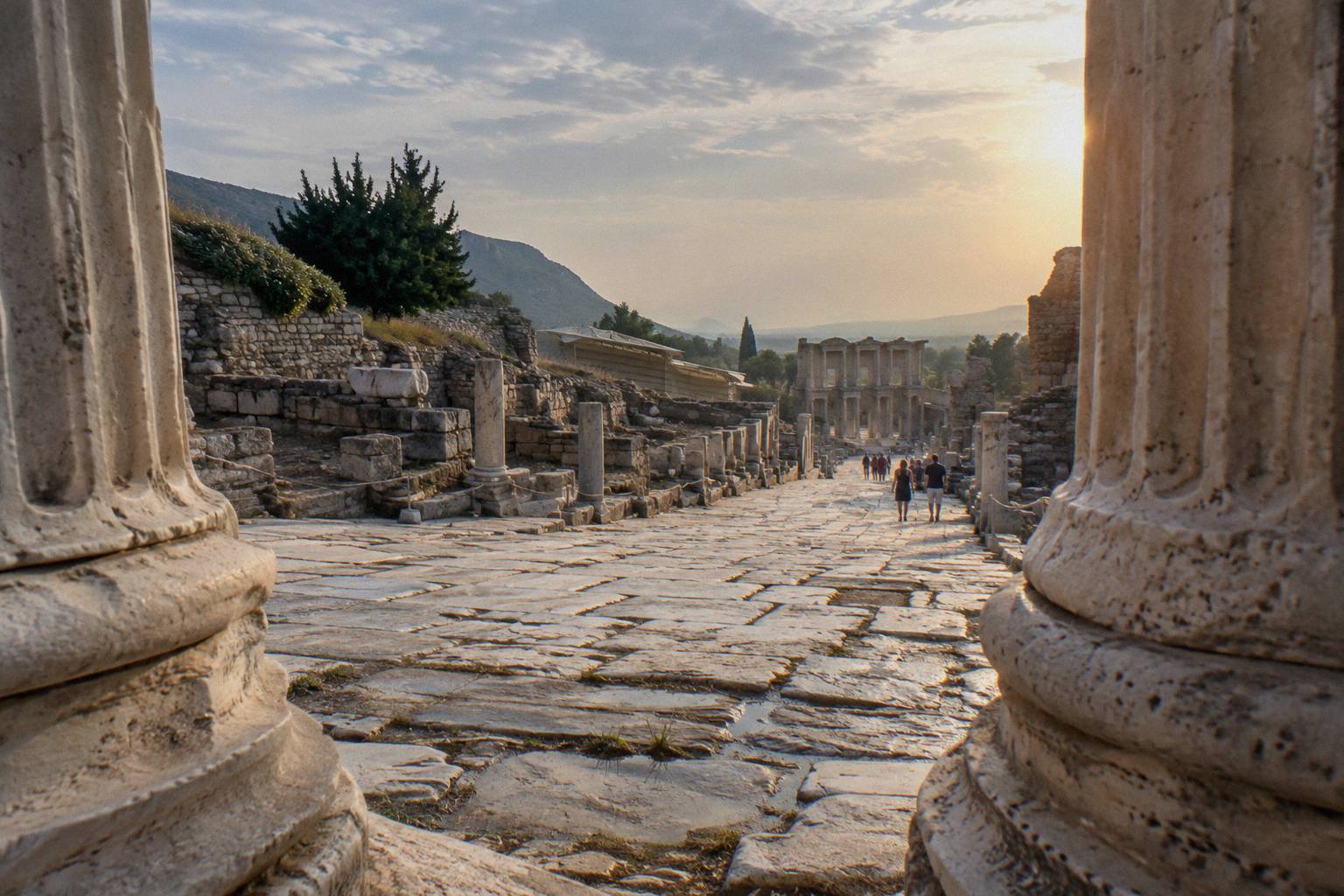
The farewell confirms how deep the stay went. From Miletus, Acts 20:17 says Paul "sent to Ephesus, and called the elders of the church", and the address that follows runs through verse 35. In it he says, Acts 20:31: "by the space of three years I ceased not to warn every one night and day with tears." That is the verse to hold while looking down Curetes Street: the marble is Roman, the shops and fountains are Roman, but the man remembered on it taught there nightly for years.
For travellers who want that teaching paced across a full day rather than compressed, one option is Private 7 Hour Full Day from Ephesus Tours, a private seven-hour trip from İzmir with a professional, private, licensed tour guide, from $450 per person, rated by fewer than 20 reviews so far. It is the only tour whose line names the Cave of the Seven Sleepers, and it names the Great Theatre and the Library of Celsus as stops. See what the private seven-hour day covers for the full inclusions before committing to the longer format.
Duration questions also apply to the tour day itself, not just the first century. The day trips covered here run 4 hours to 8 hours; the Great Theatre alone holds roughly 25,000 seats and the full site walk takes roughly 2 to 3 hours before any guide commentary. A two to three year ministry does not compress well into a rushed morning, which is the case for the longer itineraries. A shorter call at Kuşadası, typically 8 to 11 hours, still leaves room for the theatre and the Marble Road at a walking pace, and the ship's own all-aboard time governs every plan.
Did Paul Write Ephesians In Ephesus?
The safe answer is that nobody knows, and no serious source claims it as fact: the letter to the Ephesians does not name its place of writing, its authorship is debated, and some early manuscripts even omit "at Ephesus" from the address. The one letter that does name Ephesus as its writing place is 1 Corinthians. Ephesians 1:1 opens: "Paul, an apostle of Jesus Christ by the will of God, to the saints which are at Ephesus, and to the faithful in Christ Jesus", and that bracketed phrase in the manuscripts is exactly the hinge the debate turns on, as the authorship and manuscript discussion of the letter sets out in detail.
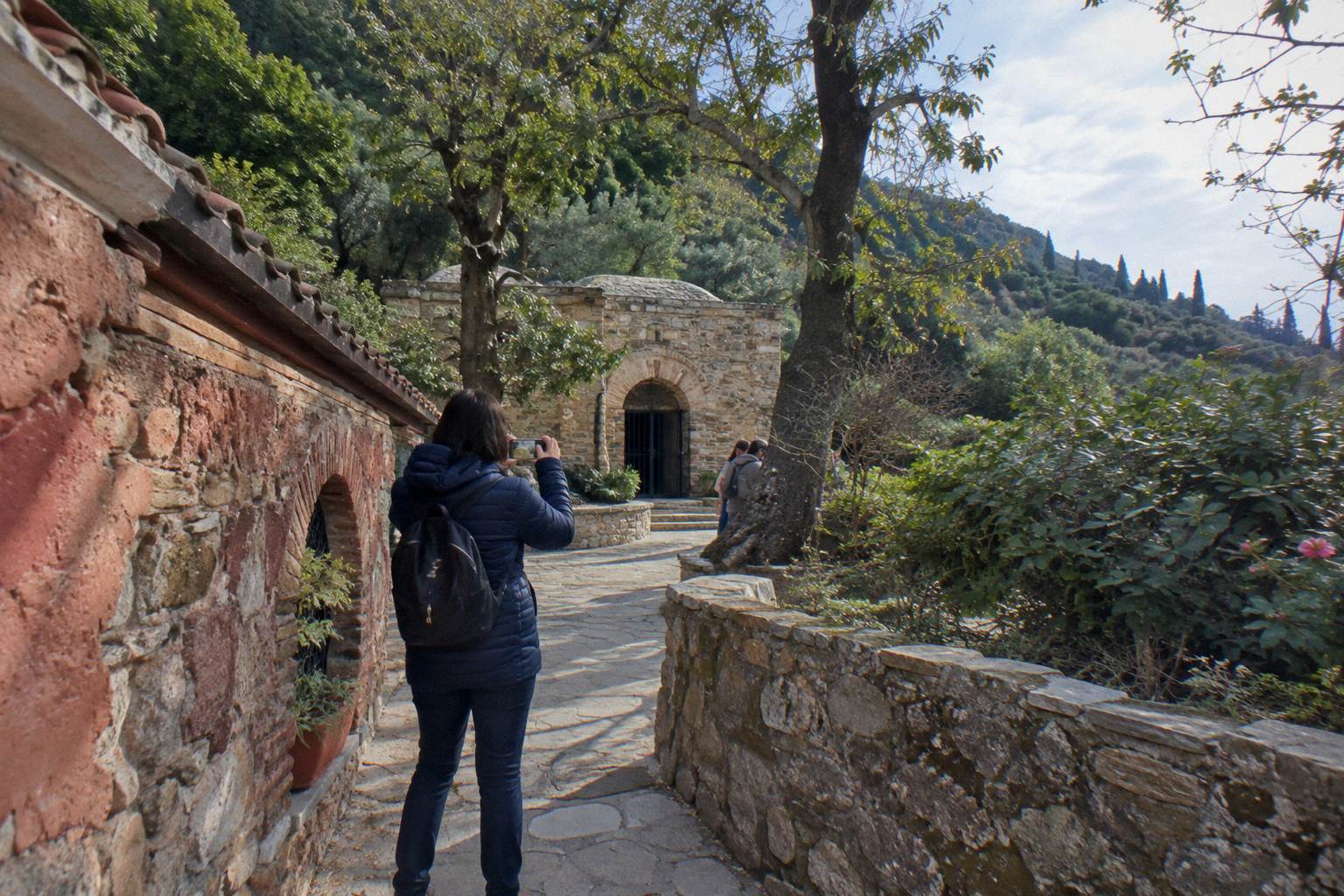
The verse that puts Paul's pen in the city belongs to a different letter. 1 Corinthians 16:8-9 reads: "But I will tarry at Ephesus until Pentecost. For a great door and effectual is opened unto me, and there are many adversaries." That is a first-person statement of location, written from Ephesus, and it lines up with the Acts 19 stay. Paul also looks back at the city in 1 Corinthians 15:32: "If after the manner of men I have fought with beasts at Ephesus, what advantageth it me, if the dead rise not?" Whether that refers to the riot of Acts 19 or to something else is itself debated, and a good guide will say so rather than flatten it.
This is the point where a Bible-oriented guide earns the fee. The line for the Ephesus Shuttle tour, Lunch And Pre-Paid Tickets, lists a Bible Oriented Private Professional Licenced Tour guide among its inclusions, along with a traditional Turkish lunch, pre-paid entrance fees and an on-time return to the port; it runs 6 hours to 7 hours from $143.20 per person, rated 5.0 from 80 reviews. A guide with that stated orientation can walk the visitor through what Acts asserts, what the letters imply and what remains unknowable, instead of selling a confident story the text does not support. The Ephesus in the Bible background guide covers the same ground for reading before a booking.
One practical note on that tour: the operator lists entrance fees as included, with the guide holding pre-paid tickets, and the inclusions list an on-time return for cruise guests; the ship's own all-aboard time still governs. The same caution about claims applies to any tour: no operator's line says Paul stood in a particular spot, and no guide's patter should be treated as scripture. What the lines do say is who guides and what is bundled, which is everything a booking decision actually needs.
What Can You Actually See Of Paul's Ephesus Today?
There is no marked spot where Paul stood, no synagogue building identified, and no archaeological trace tied to him by name; what stands is the city he lived in, above all the Great Theatre where Acts 19:29 places the riot. The framing is a city, not a shrine, and that is what a day at Ephesus actually delivers. The Ministry describes a major Mediterranean city, later capital of Roman Asia, built around an ancient shrine of the earth goddess Artemis, with a settlement history reaching back to about 6,000 BC. The Great Theatre, the Odeum, the Library of Celsus, bathhouses and the Agora are all named on the Ministry's page for the site, which is open daily, with hours shifting by season, so check the Ministry page on the day.
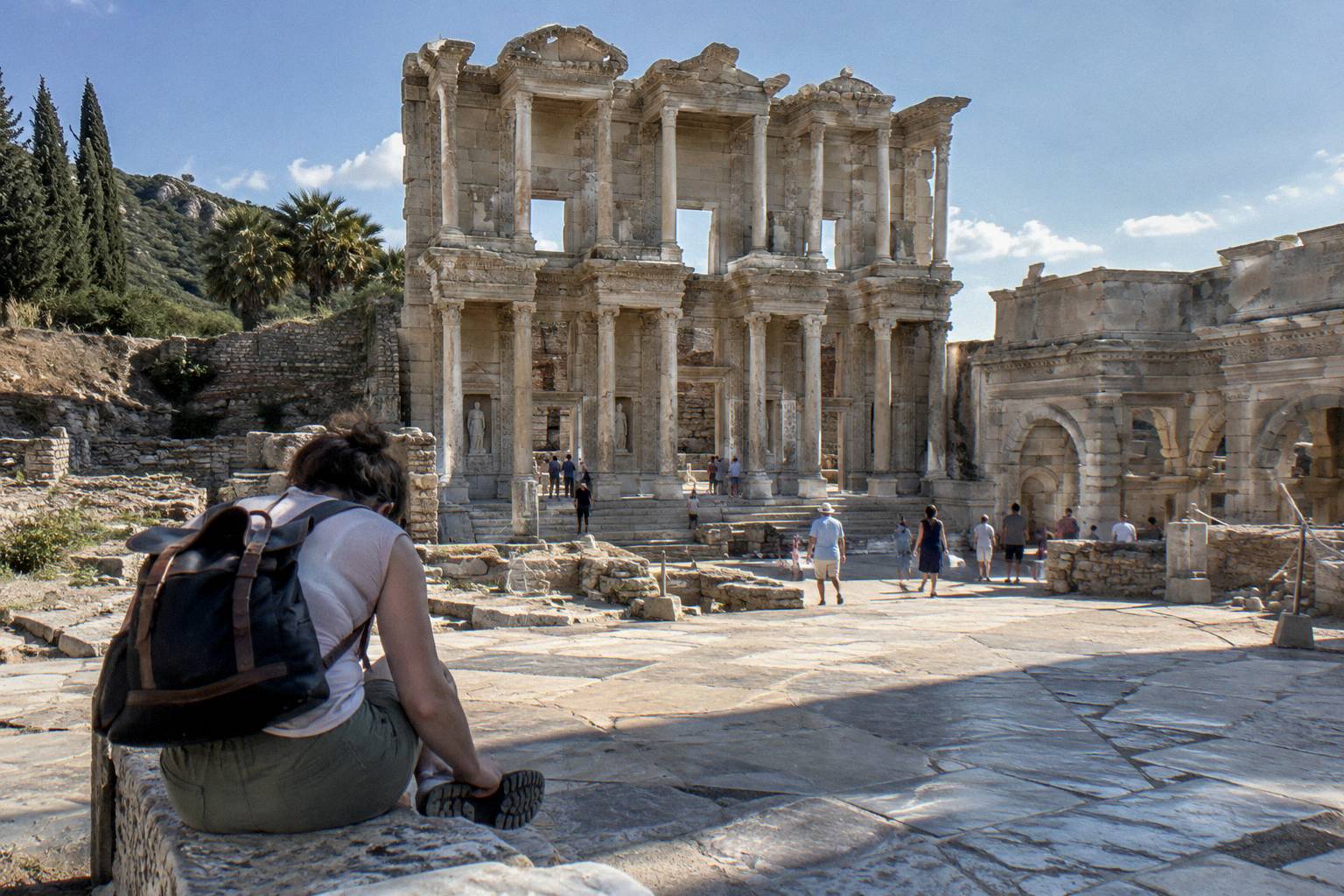
The theatre is the anchor. It sits at the end of the Arcadian Way near the lower gate, and Acts 19:29 puts the crowd in it: they "rushed with one accord into the theatre" with Gaius and Aristarchus in tow. Standing in the seating, the Demetrius episode stops being abstract: the shrine trade of Artemis was the city's economy, the temple of the great goddess Diana was its identity, and a teaching movement that turned customers away was a civic threat, not a theological quarrel. The town clerk's speech in 19:35 shows the city knew exactly what it was defending.
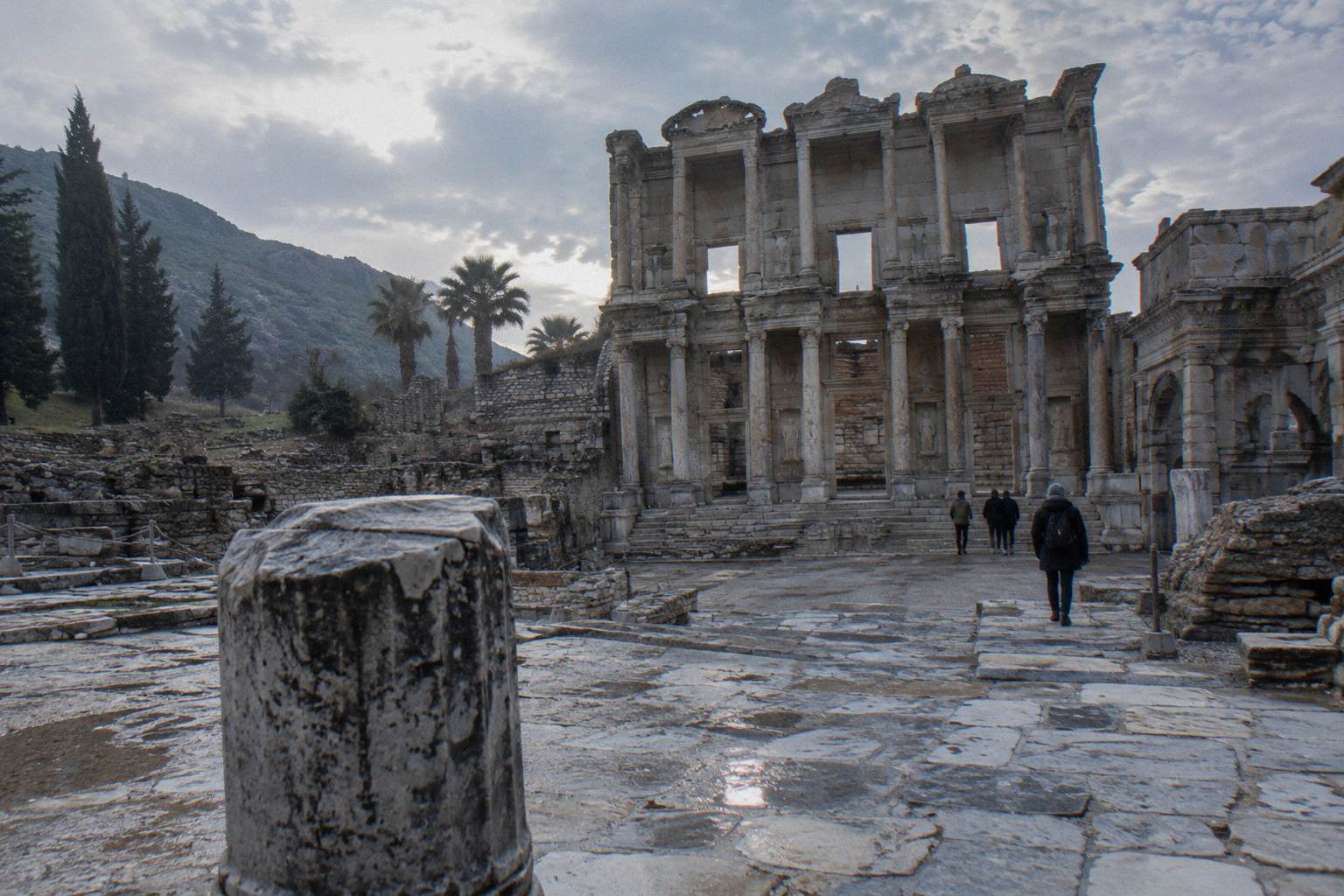
Around the theatre, the walk itself is the evidence of scale. The route from the upper (Magnesian) gate to the lower (Harbour) gate is about 1.5 km one way, downhill, over the worn marble of Curetes Street and the Marble Road, and a visit takes roughly 2 to 3 hours. The serial UNESCO property also includes Ayasuluk Hill, with the Basilica of St John, the Isa Bey Mosque and the Temple of Artemis area, plus Çukuriçi Mound. Two of those connect to the wider New Testament story: the basilica stands over the traditional tomb of the apostle John, and the Temple of Artemis, today a single re-erected column among foundations, is the temple whose silver shrines started the riot.
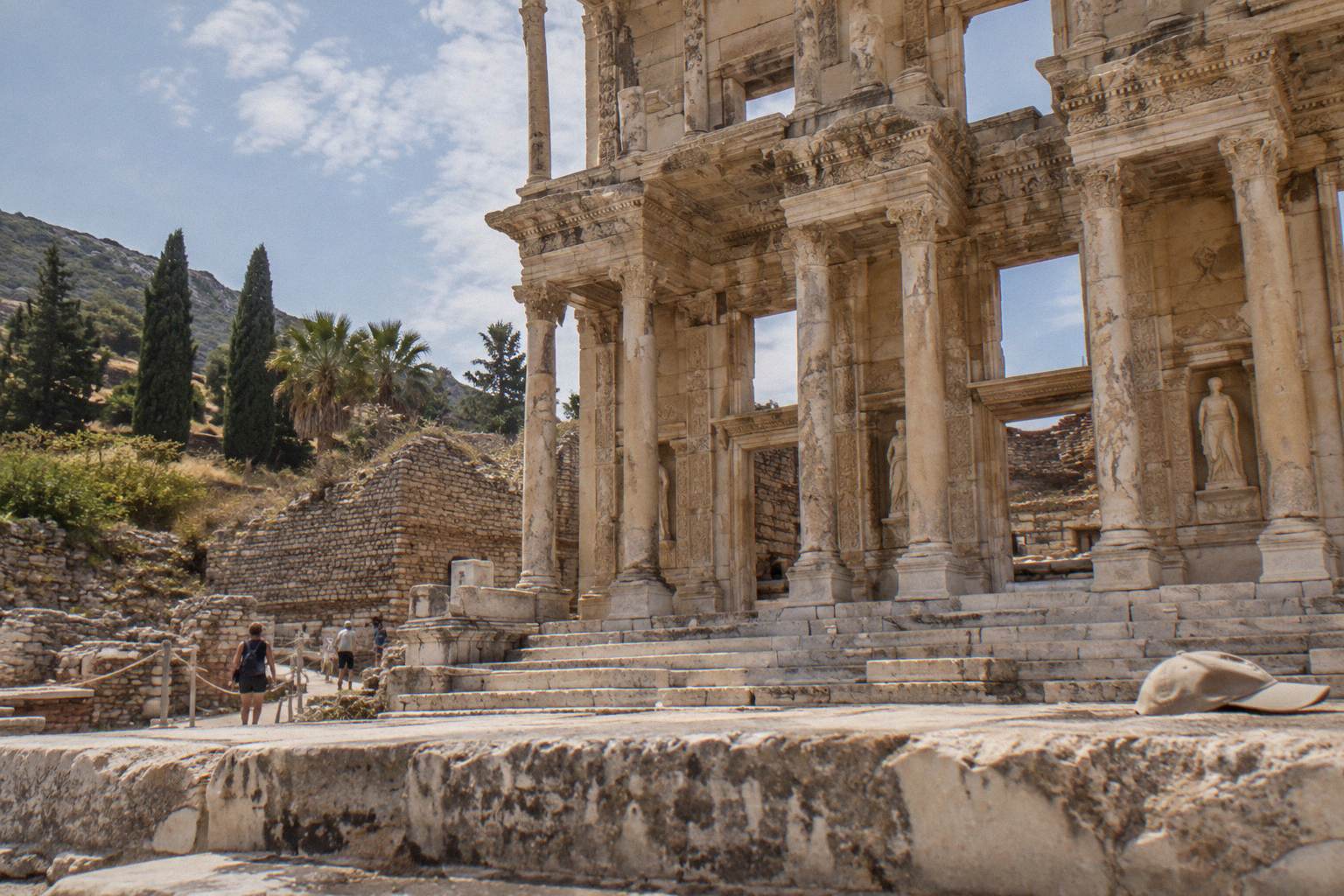
Tickets for the site are a separate matter from the tour price on most of these trips. The published fee for the Ephesus Archaeological Site is EUR 40 for non-Turkish adults, and the ticket includes the Ephesus Experience Museum on the site; the published fee changes yearly, so check before going. Where a tour's exclusions list the entry tickets, the ticket is paid separately at that published fee; where a line lists entrance fees as included, the operator lists them as included and nothing is owed at the gate. Tours that itemise the Great Theatre and the Library of Celsus by name, which most of the lines here do, are describing the same standard route every visitor walks.
What A Bible-Oriented Tour Adds To Paul's Story?
Only some of the tours covered here state a Bible-focused guide on their own inclusions, and those are the ones that change the Paul experience: the Travelshow Private, Lunch Included tour lists a Professional Tour Guide with Biblical Expertise, and two all-inclusive trips list a Bible Oriented guide by name. The rest guide well or not, but say nothing about the scripture, so the claim cannot be made for them. Travelshow's trip runs 4 hours to 6 hours from Kuşadası port, from $39.04 per person, rated 4.9 from 918 reviews, with a delicious local lunch, a private vehicle, skip-the-lines wording attributed to the operator, and an on-time return for cruise guests in its inclusions. Its exclusions list the Ephesus, House of Mary and Basilica of St John entry tickets, so those are paid separately.
The table below groups the most relevant trips by exactly what their own inclusions say about guiding, which is the only claim a booking can rest on.
| Tour | Guide Wording On The Line | Duration | Price | Rating |
|---|---|---|---|---|
| Bible Oriented Guide, All Inclusive | Bible Oriented Professional Tour Guide | 6 hours to 7 hours | from $143.20 per person | 5.0 from 646 reviews |
| Lunch And Pre-Paid Tickets (Ephesus Shuttle) | Bible Oriented Private Professional Licenced Tour guide | 6 hours to 7 hours | from $143.20 per person | 5.0 from 80 reviews |
| Travelshow Private, Lunch Included | Professional Tour Guide with Biblical Expertise | 4 hours to 6 hours | from $39.04 per person | 4.9 from 918 reviews |
| Guide Of Ephesus Private | Professional, licensed local tour guide | 4 hours to 6 hours | from $22.73 per person | 5.0 from 164 reviews |
| Licensed Guide, Tickets Arranged | Professional Licensed Local Tour Guide | 4 hours to 6 hours | from $39 per person | 4.8 from 84 reviews |
The lower rows are fine tours with licensed guides in the ordinary sense, and their prices reflect what they leave out: tickets paid separately, no Bible claim. The upper three state the scriptural orientation outright. For the Paul story specifically, the difference shows up at the theatre, where a Bible-oriented guide can set Acts 19:24-28 against the seat rows in front of the visitor, and on the walk down Curetes Street, where 1 Corinthians 16:8-9, written from this city, can be read in place: "For a great door and effectual is opened unto me, and there are many adversaries."
Private pricing rewards families here: on every private trip mentioned, the per-person figure falls as the group grows, so the all-inclusive figures look very different for four travellers than for one. Between the formats, the decision comes down to bundling and stated guiding rather than destination, since all of these trips name the same ancient city and most name the Great Theatre. The question is Ephesus worth visiting on a biblical tour answers itself at the theatre, but the guide's orientation decides how much of Acts 19 comes back to life while standing there.
Whichever way the decision goes, the underlying facts travel well on their own: Paul was in Ephesus for two to three years, taught daily until the whole province had heard, faced a riot in a theatre that still stands, and wrote 1 Corinthians from the city with its famous open door and many adversaries. A guide who can say all of that with chapter and verse is worth comparing on price; a day among the stones without one still puts the visitor inside the narrative.
Common Questions About Paul In Ephesus
Did St Paul Spend Time In Ephesus?
Yes. Acts records three episodes: a brief first visit (Acts 18:19), a sustained stay of two to three years (Acts 19), and a farewell to the elders from Miletus (Acts 20:17). The Ministry of Culture and Tourism calls Ephesus the city from which St Paul launched many of his missions.
How Long Did Paul Stay In Ephesus?
Acts 19:10 gives two years of teaching and Acts 20:31 has Paul recall three years, so the stay is written as two to three years, the longest single-city stay in Acts. The synagogue phase at the start lasted three months (Acts 19:8).
Did Paul Write Ephesians While In Ephesus?
No source establishes that, and it should never be stated as fact. Ephesians does not name its place of writing, its authorship is debated, and some early manuscripts omit "at Ephesus" from the address. The letter that does name Ephesus as its writing place is 1 Corinthians (16:8-9).
Can You Visit Where Paul Stood In Ephesus?
There is no marked spot tied to Paul by name and no identified synagogue building. What stands is the city itself, above all the Great Theatre, where Acts 19:29 says the crowd rushed during the riot over the silver shrines of Diana.
Which Ephesus Tours Include A Bible-Oriented Guide?
Three lines state it outright: Bible Oriented Guide, All Inclusive (from $143.20 per person, 5.0 from 646 reviews), Lunch And Pre-Paid Tickets by Ephesus Shuttle (from $143.20 per person, 5.0 from 80 reviews), and Travelshow Private, Lunch Included (from $39.04 per person, 4.9 from 918 reviews). Other trips list licensed guides without any stated scriptural orientation.
What Did Paul Do When The Riot Started?
Acts 19 describes the crowd seizing Gaius and Aristarchus, Paul's travelling companions, and rushing into the theatre. Paul wanted to appear before the assembly but was restrained by disciples and by city officials, and the town clerk dismissed the crowd after defending the city's devotion to Diana.