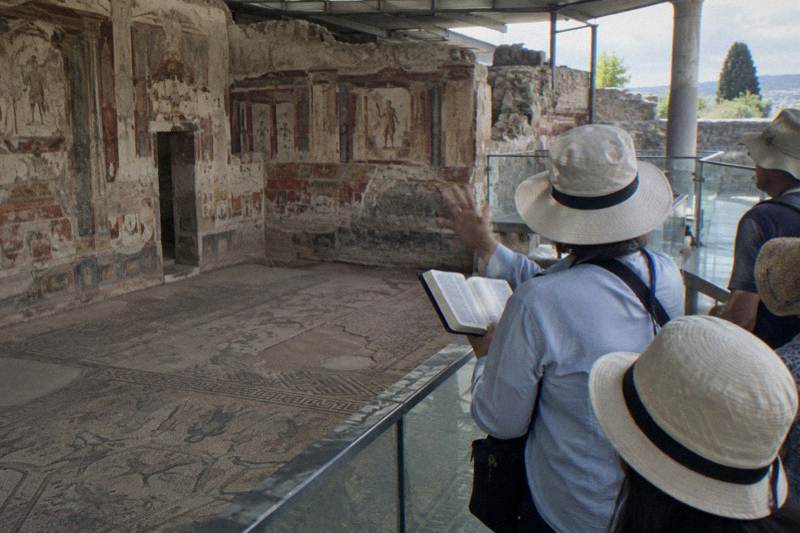
Ephesus In The Bible: What To Know Before You Book A Bible Tour
Ephesus is one of the best documented cities in the New Testament, and the ruins at Selçuk let you stand where Acts, 1 Corinthians and Revelation are set.
Short answer
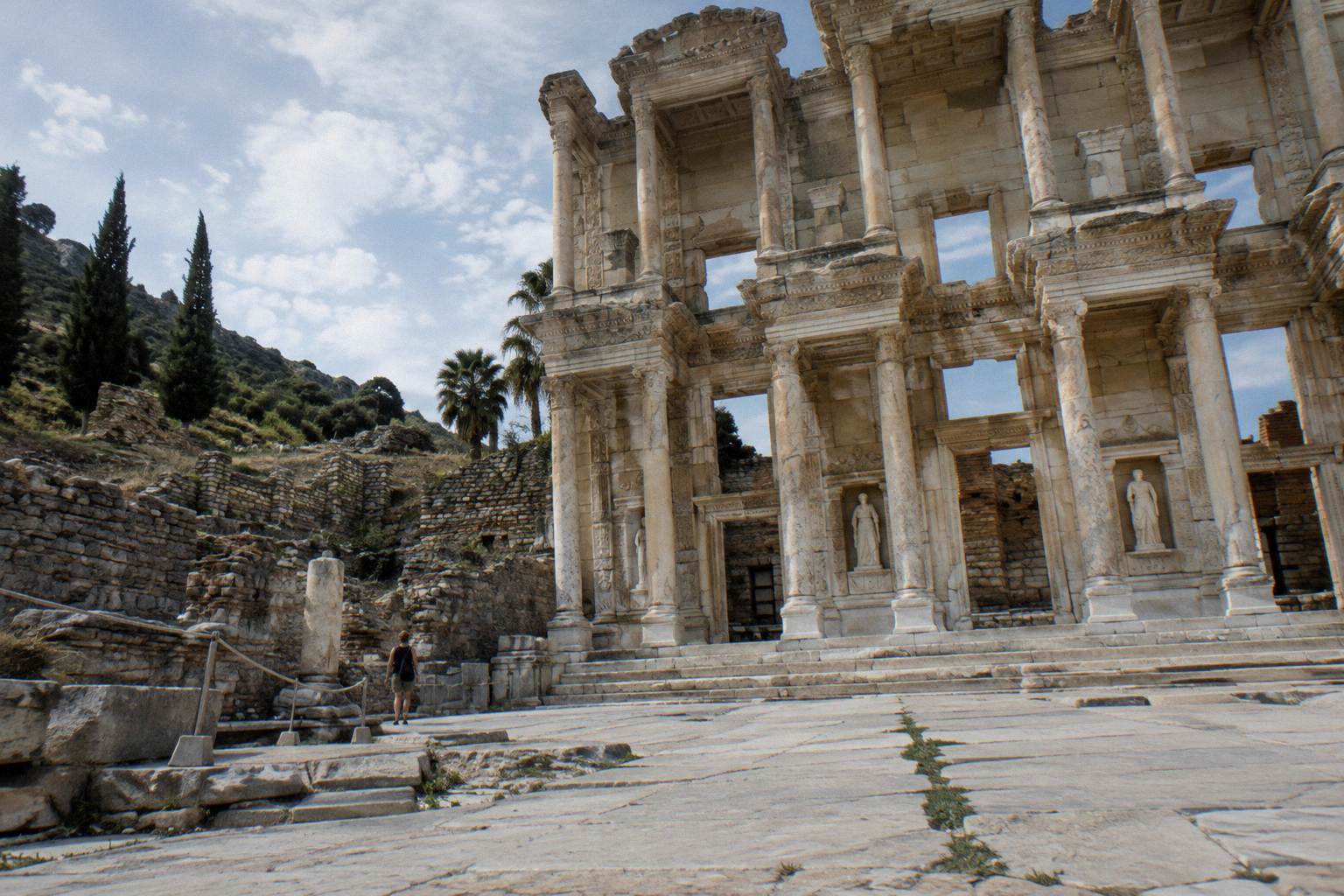
Ephesus is named in Acts 18 to 20, in 1 Corinthians, at the head of the letter to the Ephesians and in Revelation 2. Paul spent two to three years in the city, the silversmiths' riot filled the Great Theatre, and tours from $15 per person visit the sites those passages describe.
The Ministry of Culture and Tourism describes Ephesus as "a key city in the expansion of Christianity, from which St Paul launched many of his missions". That sentence sits on the official museum page for the archaeological site at Selçuk, in İzmir province, and it is the reason so many readers arrive here with a Bible in one hand and a tour page in the other (the Ministry's Ephesus page).
What follows is the scripture map of the city: what the Bible actually says about Ephesus, passage by passage, and then what the tours offered through Biblical Ephesus Tour actually itemise, guide wording by guide wording and stop by stop. The two halves matter equally. A passage you can place is worth far more on the marble than one you read on the bus, and a tour that names a Bible-oriented guide is a different product from one that simply drives past the same stones.
One caution before anything else. The House of the Virgin Mary, the Basilica of St John and the Cave of the Seven Sleepers are all traditions, honoured for centuries but not archaeological proofs, and the letter to the Ephesians carries its own authorship questions. Every section below keeps those distinctions, because a tour that blurs them is selling you something the texts themselves never claim.
What Does The Bible Say About Ephesus?
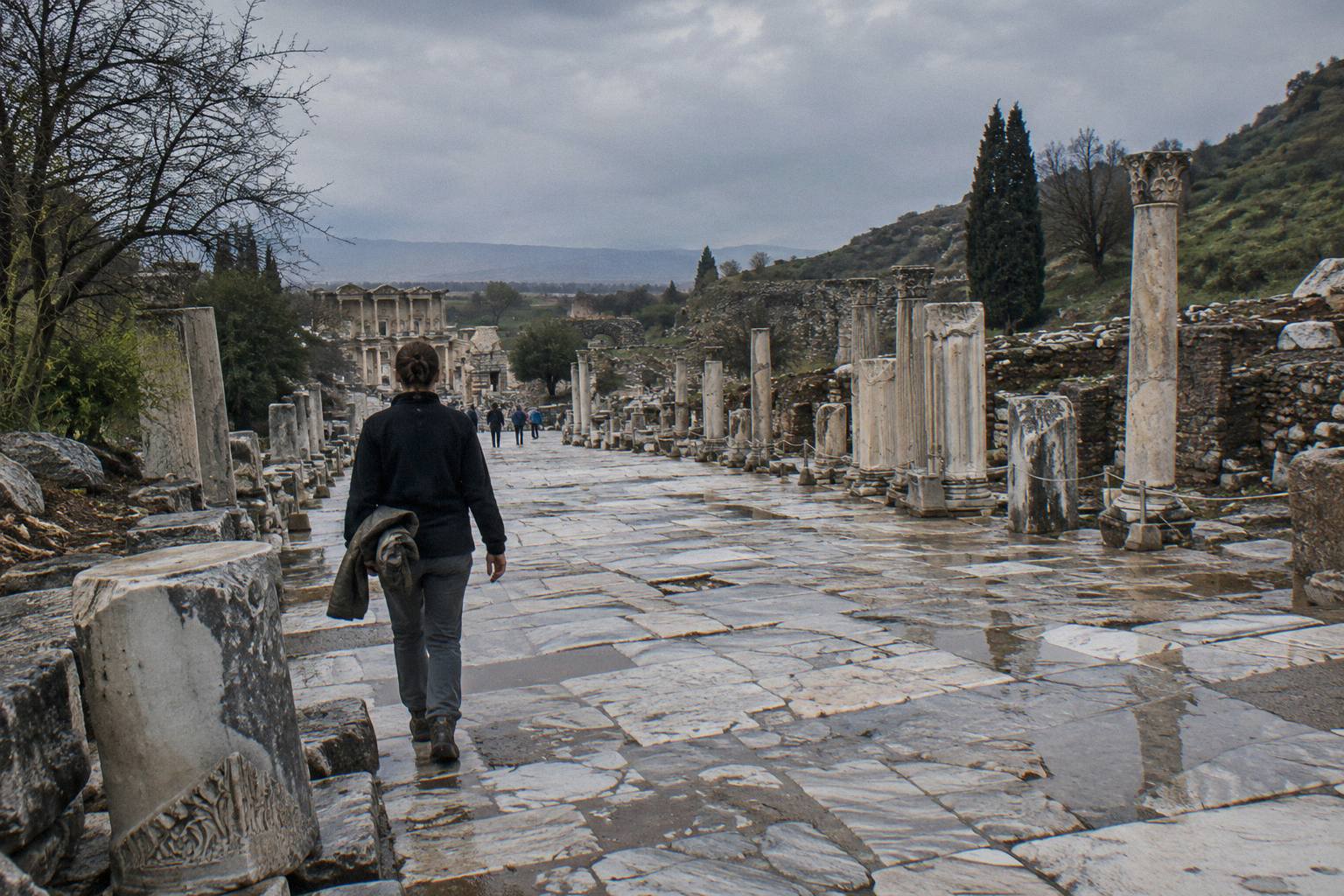
Ephesus appears in Acts, in Paul's letters and in Revelation, one of the most documented cities of the early church. The Ministry of Culture and Tourism calls it "a key city in the expansion of Christianity, from which St Paul launched many of his missions", and the ruins behind those passages can still be walked.
Start with the shape of the material. Acts gives the narrative: Paul's first brief visit, his long stay, the riot, and his farewell to the elders from Miletus. Paul's letters add two first-person flashes, one in 1 Corinthians and the address at the head of Ephesians. Revelation closes the New Testament's interest in the city with the letter to its church, the first of the seven letters of chapters 2 and 3. Between them these texts cover roughly two decades of the city's church life, and almost every location they name is inside the archaeological site at Selçuk or on Ayasuluk Hill beside it.
The table below arranges the passages by topic rather than by book order, because that is how most visitors use them: you are standing somewhere specific, and you want the verse that belongs to that ground.
| Topic | Reference | What The Passage Records |
|---|---|---|
| Paul's first visit | Acts 18:19 | "And he came to Ephesus, and left them there: but he himself entered into the synagogue, and reasoned with the Jews." |
| Apollos in Ephesus | Acts 18:24 | "And a certain Jew named Apollos, born at Alexandria, an eloquent man, and mighty in the scriptures, came to Ephesus." |
| The long stay | Acts 19:10 | "And this continued by the space of two years; so that all they which dwelt in Asia heard the word of the Lord Jesus, both Jews and Greeks." |
| The riot | Acts 19:29 | The crowd "rushed with one accord into the theatre" |
| The letter written from Ephesus | 1 Corinthians 16:8-9 | "But I will tarry at Ephesus until Pentecost." |
| The farewell | Acts 20:17 | From Miletus Paul "sent to Ephesus, and called the elders of the church" |
| The letter to Ephesus | Ephesians 1:1 | "to the saints which are at Ephesus, and to the faithful in Christ Jesus" |
| The Revelation letter | Revelation 2:1 | "Unto the angel of the church of Ephesus write..." |
Two things follow from the table. First, the Bible's Ephesus is not only Paul's Ephesus: Apollos teaches there, the elders of a settled church meet Paul at Miletus, and a generation later the risen Christ addresses the congregation in Revelation 2. Second, the places named are concentrated. The synagogue where Paul "spake boldly for the space of three months" (Acts 19:8) is not a marked ruin you can stand in, but the theatre where the crowd rushed is, and it holds roughly 25,000 seats by the usual estimate, on the UNESCO World Heritage listing since 2015 (the UNESCO entry for Ephesus).
Ephesus in Paul's letters needs its own care. Ephesians 1:1 addresses "the saints which are at Ephesus", yet some early manuscripts omit the words "at Ephesus", and both the authorship and the place of writing are debated among scholars (an overview of the letter's questions). The letter that does name Ephesus as the place of writing is 1 Corinthians, where Paul says plainly, "But I will tarry at Ephesus until Pentecost. For a great door and effectual is opened unto me, and there are many adversaries."
Where Did Paul Preach In Ephesus?
Acts places Paul in Ephesus for two to three years: three months of teaching in the synagogue, then a longer stay that reached all of Asia, ending in the silversmiths' riot that "rushed with one accord into the theatre". The Great Theatre is a named stop on many of the tours here.
The chronology comes in two numbers that the texts never reconcile. Acts 19:10 says the daily teaching "continued by the space of two years", and Paul later reminds the elders, "by the space of three years I ceased not to warn every one night and day with tears" (Acts 20:31). Write it as two to three years and leave the arithmetic alone: whichever figure you prefer, it is the longest recorded stay of any city in Paul's missionary journeys, and the reason Ephesus, not Corinth or Philippi, is the city most associated with his work.
The stay began small. On his first pass through, Acts 18:19 records that Paul "entered into the synagogue, and reasoned with the Jews", leaving Aquila and Priscilla behind. When he returned, Acts 19:8 says "he went into the synagogue, and spake boldly for the space of three months", before opposition pushed the daily teaching into a rented hall, and the message spread so that "all they which dwelt in Asia heard the word of the Lord Jesus, both Jews and Greeks" (Acts 19:10).
The end is the best scene in the book for a visitor, because it happens in a building you can sit in. Demetrius, a silversmith "which made silver shrines for Diana", calls his guild together and warns that their trade and "the temple of the great goddess Diana" are losing their status. The cry goes up, "Great is Diana of the Ephesians" (Acts 19:28), the crowd seizes Gaius and Aristarchus, Paul's travelling companions, and "rushed with one accord into the theatre" (Acts 19:29). The town clerk finally quiets the crowd by calling the city "a worshipper of the great goddess Diana, and of the image which fell down from Jupiter" (Acts 19:35).
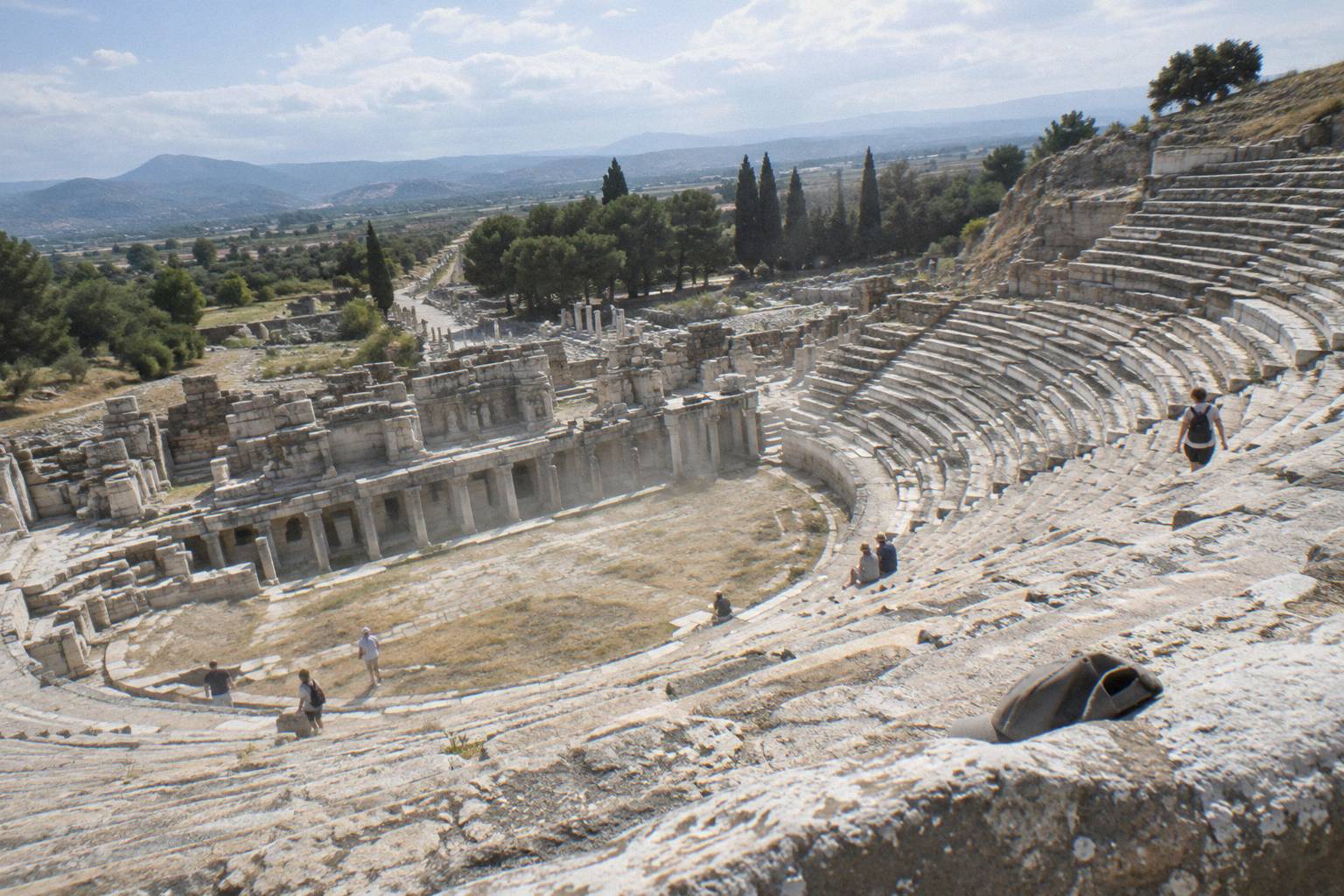
For a tour decision, the theatre is the hinge. It is a named stop on the Best-Seller Cruise Tour, Ticket Option, on Travelshow Private, Lunch Included, on the Skip-The-Line, Guaranteed Port Return trip and on several others, and the tickets are paid separately on most of them (the published Ephesus fee is EUR 40, changes yearly, check before going). Three tours stand out for matching the Acts narrative to the ground, each with a different balance of inclusions and price.
Paul's departure closes the narrative. Sailing past Ephesus on his way to Jerusalem, he "sent to Ephesus, and called the elders of the church" to meet him at Miletus, and the farewell address that follows (Acts 20:18-35) is the most personal speech in Acts. Miletus is a separate site down the coast, so do not expect it on a day tour; the moment belongs to Ephesus emotionally, not geographically. If you want the fuller route, the walk through Paul's steps on a bible tour covers the sites in preaching order.
Which Tours Name A Bible-Oriented Guide?
Only a minority of the tours itemise a Bible-oriented guide: the Bible Oriented Guide, All Inclusive trip and the Lunch And Pre-Paid Tickets trip say so in the inclusions, and Travelshow Private lists a guide with biblical expertise. The rest name biblical stops without a guide speciality, so check the inclusions wording.
The phrase matters because it is the whole difference between a general archaeological tour and the trip most readers of this article are shopping for. Of the twenty-eight trips covered, only a handful put a guide speciality in writing. The Bible Oriented Guide, All Inclusive tour lists a "Bible Oriented Professional Tour Guide" among its inclusions, from $143.20 per person, rated 5.0 from 646 reviews, running 6 to 7 hours with lunch and entrance fees the operator lists as included; the same page offers Check availability.
| Tour | Guide Wording In The Inclusions | Rating | Price |
|---|---|---|---|
| Bible Oriented Guide, All Inclusive | Bible Oriented Professional Tour Guide | 5.0 from 646 reviews | From $143.20 per person |
| Lunch And Pre-Paid Tickets | Bible Oriented Private Professional Licenced Tour guide | 5.0 from 80 reviews | From $143.20 per person |
| No Hidden Fees, Lunch Included (Kusadasi Private Tours) | Bible Oriented Private Professional Tour Guide | 5.0 from 25 reviews | From $127.20 per person |
| Travelshow Private, Lunch Included | Professional Tour Guide with Biblical Expertise | 4.9 from 918 reviews | From $39.04 per person |
| 5 Day Mini Group (Seven Churches) | Professional Bible-Oriented Licenced Tour guide | 5.0 from 39 reviews | From $989 per person |
| All other day trips | No guide speciality mentioned | Varies | Varies |
The Travelshow Private tour from Kusadasi port is the value pick among them: from $39.04 per person, rated 4.9 from 918 reviews, with lunch, a private vehicle, parking, skip-the-lines wording and an on-time return for cruise guests all in the inclusions, though the Ephesus, House of Mary and Basilica of St John tickets are paid separately. You can Check availability beside the tour page.
Two plain limits on the table. A "licensed guide" wording means exactly what it says, a guide the line itself describes as licensed, and nothing more can be confirmed about any guide's training beyond the inclusions text. And a guide speciality is not a denomination: no trip here claims any church affiliation, and none should be read as promising one. The private bible tour cost breakdown shows where the price differences between these trips actually come from.
On the private trips in the table, the per-person price falls as your group grows, so a family of six pays less per head than a couple on the same itinerary.
The multi-day angle deserves one line. The 5 Day Mini Group Seven Churches tour, from $989 per person, rated 5.0 from 39 reviews, is the only trip beyond the day tours that names a Bible-oriented licensed guide in its inclusions, and the 4 Day Private Seven Churches trip from $1,293.42 per person, rated 5.0 from 80 reviews, lists a Bible-oriented guide too, though its line itemises no sites at all, so no stop can be promised for it.
Did Paul Write Ephesians In Ephesus?
Paul never states where he wrote Ephesians, and scholars debate both its authorship and its address, because some early manuscripts omit the words "at Ephesus". The letter that does name Ephesus as a place of writing is 1 Corinthians, where Paul says, "But I will tarry at Ephesus until Pentecost."
This is the most common mistake in Ephesus tour marketing, so it is worth stating flatly: nowhere does the New Testament say that the letter to the Ephesians was written from Ephesus, and the internal evidence points elsewhere, since the author writes as a prisoner and Paul was not imprisoned during the Acts 19 stay. The debate over whether Paul wrote the letter at all, and over whether "at Ephesus" belonged to the earliest text, is old and unresolved; a good guide will say so in one sentence and move on. Anyone who tells you the letter was "written here" is going beyond the sources (the letter's authorship and text questions).
What can be said is still rich. Ephesians 1:1 opens, "Paul, an apostle of Jesus Christ by the will of God, to the saints which are at Ephesus, and to the faithful in Christ Jesus." Read on the marble of Curetes Street, the letter's household codes and its armour-of-God passage belong to a city whose church Paul knew longer than any other, whatever quill wrote the pages. There is a fuller reading guide in reading the letter before you book.
1 Corinthians is the corrective. Paul writes from Ephesus itself: "But I will tarry at Ephesus until Pentecost. For a great door and effectual is opened unto me, and there are many adversaries" (1 Corinthians 16:8-9). The "adversaries" line reads differently once you have stood in the theatre where the mob of Acts 19 spent two hours shouting, and the darker aside in the same letter, "If after the manner of men I have fought with beasts at Ephesus, what advantageth it me, if the dead rise not?" (1 Corinthians 15:32), may or may not be literal, as commentators have noted for centuries.
Revelation adds the afterlife of the church. "Unto the angel of the church of Ephesus write" (Revelation 2:1) introduces a congregation praised for works, labour and patience, then charged with having "left thy first love" (2:4), and called to "Remember therefore from whence thou art fallen, and repent, and do the first works" (2:5). The promise to "him that overcometh" is "to eat of the tree of life, which is in the midst of the paradise of God" (2:7). The standing at the site with Revelation open guide pairs each verse with the ground.
John belongs in the same section. The Ministry's text for the Basilica of St John says John is "believed to have written" the Gospel of John in Ephesus, that the basilica was built over his grave, and that John is said to have taken the Virgin Mary to Ephesus. Tradition, carefully worded, again: the 6th-century basilica on Ayasuluk Hill was rebuilt under Justinian over an earlier shrine marking the traditional tomb of the apostle, and no archaeological confirmation of remains exists (the Ministry's Basilica of St John page).
Which Tour Stops Connect To The Scripture?
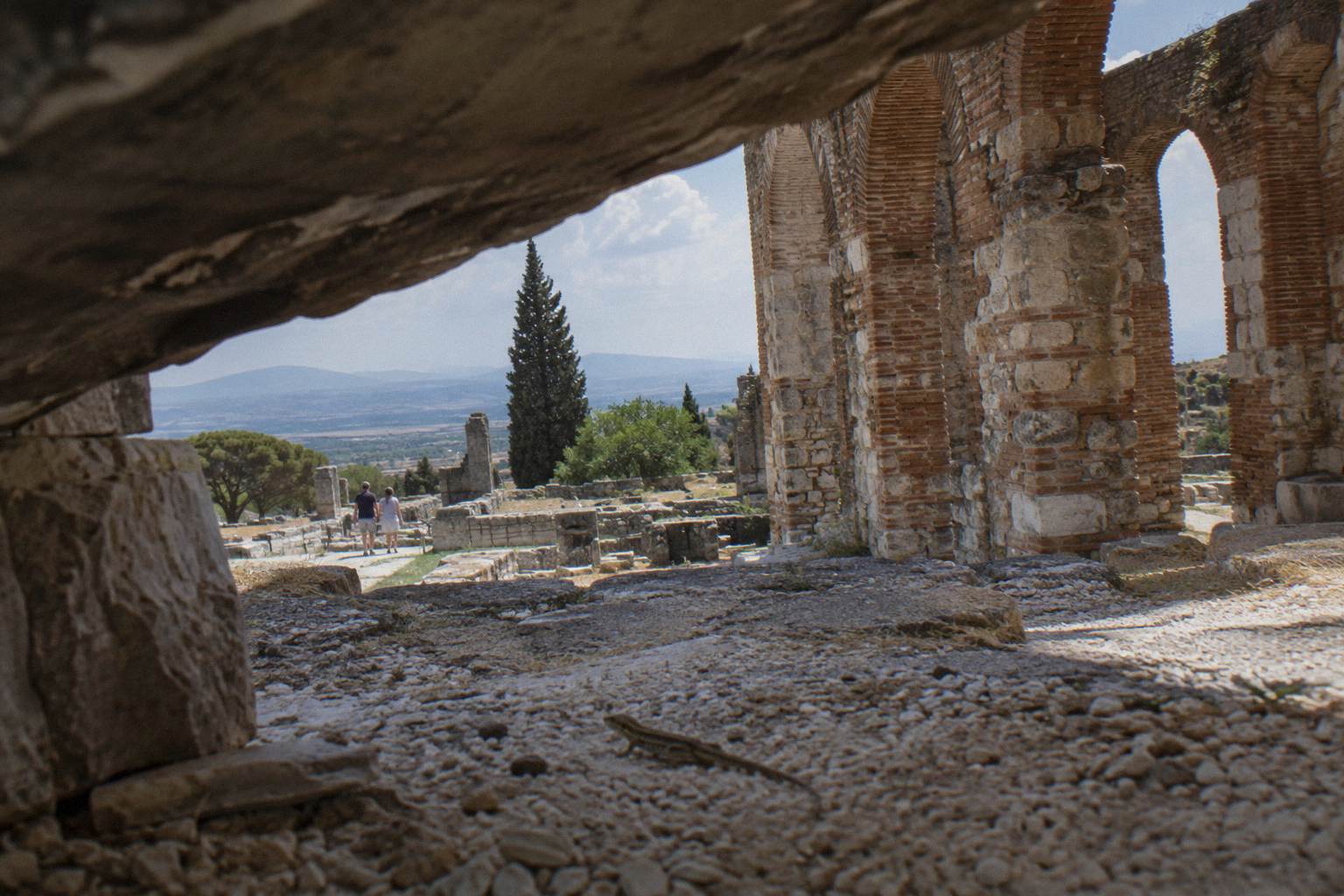
The Great Theatre holds the riot of Acts 19, the Church of Mary is linked by tradition to the Council of 431, the Basilica of St John stands over the traditional tomb of John, and the House of Mary is, by tradition, where Mary spent her last years. Each links a passage to a named stop.
Work down the list by how firmly each stop is tied to a text. The theatre is the firmest: Acts 19:29 names the building, the riot is the narrative, and the stone is the stone. Second comes the Temple of Artemis, whose cult drives the whole riot, "Great is Diana of the Ephesians" being a cry for the goddess the city's wealth was built on; today the Artemision, one of the Seven Wonders of the Ancient World, is an open site with no entry fee where one re-erected column stands among the foundations (the Temple of Artemis today). The Best-Seller Cruise Tour, Ticket Option, from $15 per person and rated 4.9 from 1,190 reviews, names both the theatre and the Artemision among its stops, the simplest way to cover the Acts 19 pair, with entry tickets paid separately (published fee, changes yearly, check before going).
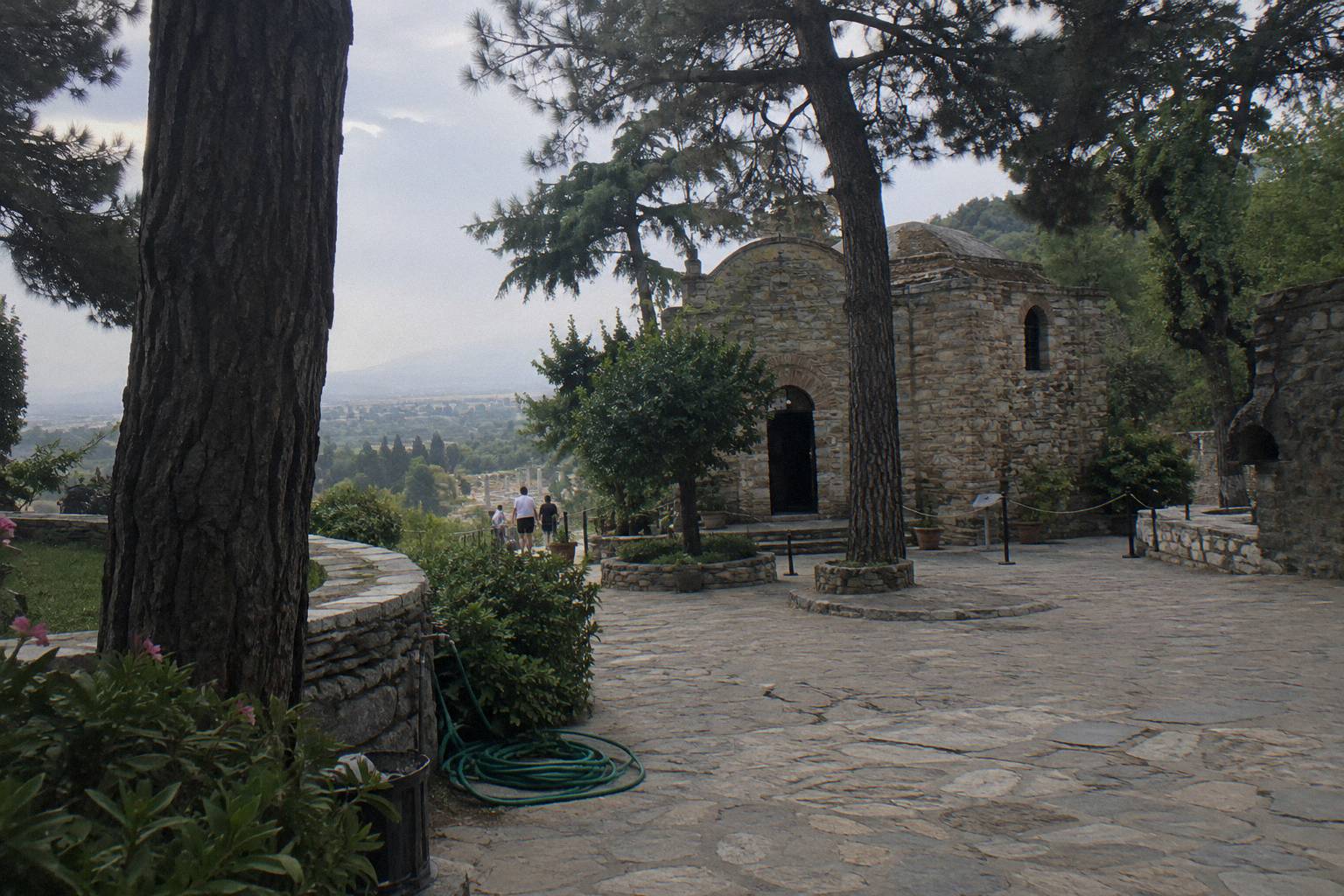
Third, the Church of Mary inside the site: the Council of Ephesus in 431 declared Mary Theotokos, Mother of God, against Nestorius, and the "Double Church", a converted Roman hall and the first church dedicated to Mary, is traditionally identified as a meeting place, though it cannot be said with certainty that the council met in that exact building (the Council of 431 and its site). Fourth, on Ayasuluk Hill, the Basilica of St John and the traditional tomb. Fifth, up Bulbul Mountain about 7 km away, the House of the Virgin Mary, a small stone chapel venerated by Catholic and Muslim pilgrims as the place where Mary is believed to have spent her last years, an identification that dates to an 1891 search by Lazarist priests from Smyrna, on which the Church has never formally ruled; Mass is held daily in the warm months and on Sundays through the winter, and the schedule should be confirmed with the shrine before going (the shrine's own site).
| Site | Scripture Or Tradition It Carries | Named On Which Trips Here |
|---|---|---|
| Great Theatre | Acts 19:29, the riot "rushed with one accord into the theatre" | Best-Seller Cruise Tour, Ticket Option; Travelshow Private, Lunch Included; Lunch And Pre-Paid Tickets |
| Temple of Artemis | Acts 19:24-28, the shrines of Diana and the crowd's cry | Best-Seller Cruise Tour, Ticket Option; Travelshow Private, Lunch Included; No Hidden Fees, Lunch Included |
| Basilica of St John | The traditional tomb of John; the Gospel "believed to have written" in Ephesus | Travelshow Private, Lunch Included; Lunch And Pre-Paid Tickets; No Hidden Fees, Lunch Included |
| House of the Virgin Mary | By tradition, where Mary is believed to have spent her last years | Travelshow Private, Lunch Included; Lunch And Pre-Paid Tickets |
| Cave of the Seven Sleepers | A tradition; ruins reported seen from a viewing path | Private 7 Hour Full Day (the only line that names it) |
Not every trip reaches every stop. The Lunch And Pre-Paid Tickets tour from Ephesus Shuttle, from $143.20 per person and rated 5.0 from 80 reviews, names Ephesus, the House of the Virgin Mary, the Basilica of St John and the Temple of Artemis, with a Bible-oriented licensed guide, lunch and entrance fees the operator lists as included, which makes it the widest scripture coverage of any day trip at that price.
The Kusadasi Private Tours trip, No Hidden Fees, Lunch Included, from $127.20 per person and rated 5.0 from 25 reviews, also lists a Bible-oriented guide with entrance fees included, but its stops run to Ephesus, the Basilica of St John, the Temple of Artemis and the Terrace Houses, not the House of Mary, so read the stop list before assuming the mountain chapel is on the route.
From Izmir, the Private 7 Hour Full Day trip, from $450 per person with fewer than 20 reviews so far, is the only line that names the Cave of the Seven Sleepers, where ruins are reported to be seen from a viewing path and the chambers are not entered; its exclusions list lunch, so no meal should be expected. The question of which tours include Mary and St John has a longer answer, but the pattern above holds: the inclusions and stop list, not the title, tell you what you will actually see.
What Should You Check Before You Book?
Before booking, check three things: whether the inclusions name the guide type you want, whether entrance fees are listed as included or paid separately, and how the duration fits your day. Free cancellation up to 24 hours before the start appears on every trip covered here, and private prices fall as the group grows.
The first check is the guide wording, covered in the table above. The second is money, and it splits the day trips into two clean families. On one side, trips from roughly $15 to $50 per person that pay tickets separately: Ephesus costs EUR 40 as the published fee for non-Turkish adults, the Basilica of St John EUR 6, the Ephesus Museum in Selçuk EUR 10, and the Terrace Houses EUR 15 as a separate ticket, with all fees changing yearly and worth checking before going; a separate fee is paid at the gate for the House of the Virgin Mary, which is not a Ministry site and not covered by the Museum Pass Türkiye (EUR 165, valid 15 days from the first museum visit, covering the main Ephesus site, the Ephesus Museum and the Basilica of St John but not the Terrace Houses). On the other side, trips from $127.20 per person where the operator lists entrance fees as included, usually with pre-paid tickets and lunch.
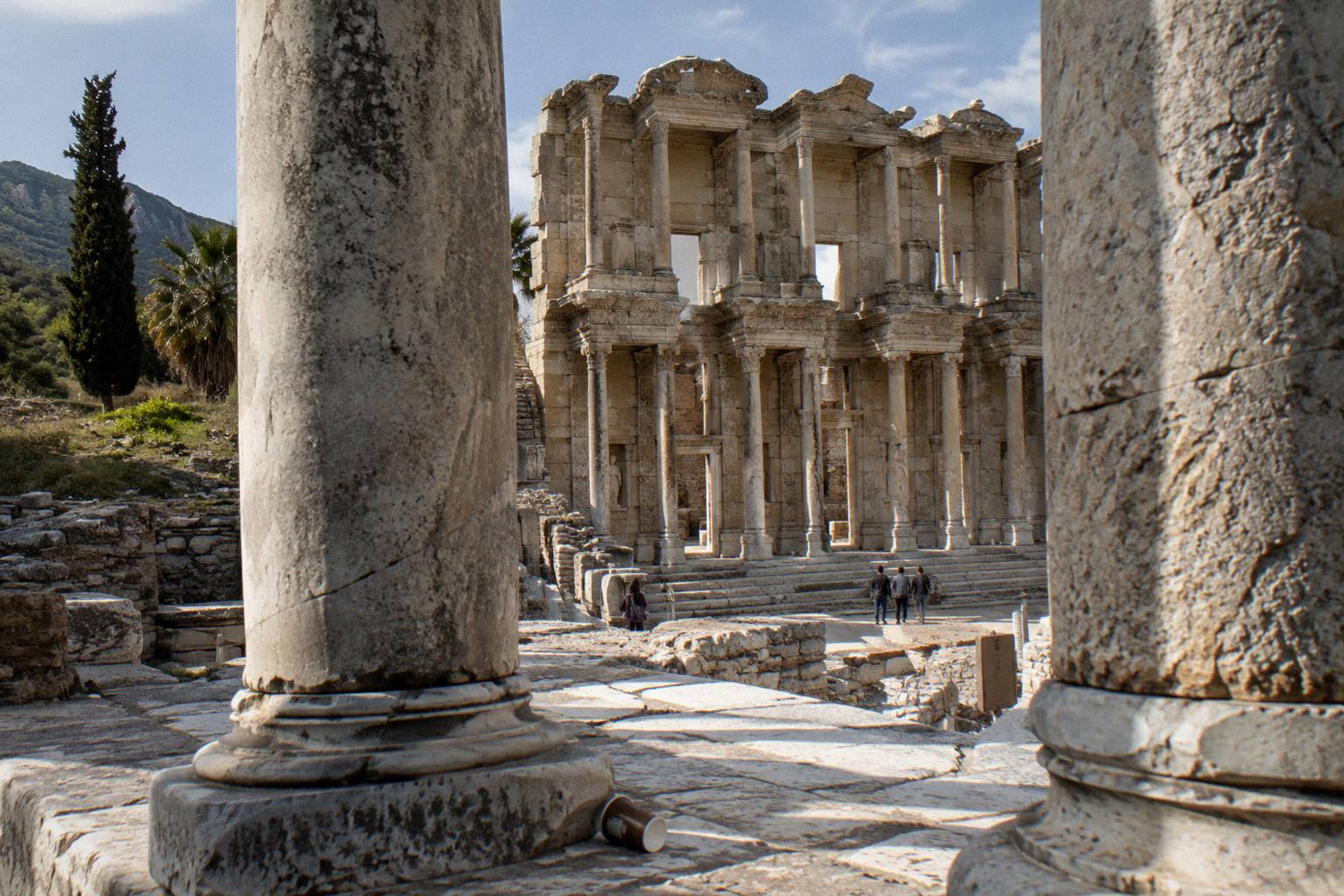
The third check is timing. Day trips run 4 to 8 hours; a walk through the Ephesus site alone takes roughly 2 to 3 hours, downhill from the upper gate to the lower gate along about 1.5 km of worn marble. Cruise calls at Kuşadası are typically 8 to 11 hours, roughly 20 to 35 minutes from the ruins by road, and the ship's own all-aboard time governs; where a trip's inclusions list an on-time return for cruise guests, that is the operator's wording, not a promise of a clock time. The shore excursion timing guide works through the port case in detail, and which tours include the tickets compares the two price families line by line.
Read the current travel advisory before booking as well: the US State Department lists Türkiye at Level 2, "Exercise Increased Caution", with a Level 4 "Do Not Travel" regional advisory covering the area within 10 km of the borders with Syria and Iraq, and the UK advises against all travel to within 10 km of the Syria border; neither advisory names İzmir province, Selçuk, Kuşadası or Ephesus as a restricted area, and both change, so read them on the day you book (the current US advisory for Türkiye). Free-cancellation terms are each trip's own line.
Matched to the scripture, the choice becomes simple. If Acts 19 in the theatre is your priority, any trip naming the Great Theatre and the Temple of Artemis will do, from $15 per person with tickets paid separately. If you want the whole map, Mary's chapel by tradition and John's traditional tomb included, with a Bible-oriented guide's words in the inclusions and the fees handled, the all-inclusive trips from $127.20 per person are the ones that say so in writing.
Common Questions About Ephesus In The Bible
What Does The Bible Say About Ephesus?
Acts 18 to 20 records Paul's first visit, his two to three year stay, the silversmiths' riot in the Great Theatre and his farewell to the elders from Miletus; 1 Corinthians is the letter that names Ephesus as the place of writing; Ephesians addresses "the saints which are at Ephesus"; and Revelation 2:1 opens the letter to the church of Ephesus.
Where Did Paul Preach In Ephesus?
Acts 19:8 says Paul "went into the synagogue, and spake boldly for the space of three months", after which daily teaching continued for two years so that "all they which dwelt in Asia heard the word" (Acts 19:10). The synagogue is not a marked ruin, but the Great Theatre where the Acts 19 crowd rushed is a named stop on many tours.
Did Paul Write Ephesians In Ephesus?
No text says so. Paul never states where he wrote the letter to the Ephesians, some early manuscripts omit "at Ephesus" from the address, and authorship and place of writing are both debated. The letter that does name Ephesus as the place of writing is 1 Corinthians: "But I will tarry at Ephesus until Pentecost."
Which Tours Name A Bible-Oriented Guide?
The Bible Oriented Guide, All Inclusive tour (from $143.20 per person, 5.0 from 646 reviews), the Lunch And Pre-Paid Tickets tour (from $143.20 per person, 5.0 from 80 reviews), the Kusadasi Private Tours trip (from $127.20 per person, 5.0 from 25 reviews) and Travelshow Private (from $39.04 per person, 4.9 from 918 reviews) all put a Bible-oriented or biblical-expertise guide in their inclusions.
Is The House Of The Virgin Mary In The Bible?
No. The house on Bulbul Mountain is a tradition: it is venerated as the place where Mary is believed to have spent her last years, an identification dating to an 1891 search, and the Church has never formally ruled on its authenticity. The Ministry's text for the Basilica of St John says only that John is said to have taken Mary to Ephesus.
What Does The Letter To The Church Of Ephesus Say?
Revelation 2:1-7 praises the church's works, labour and patience, then charges it with having "left thy first love" and calls it to repent and do the first works, promising "to him that overcometh" the fruit of "the tree of life, which is in the midst of the paradise of God".