Temple Of Artemis Ephesus: Visiting The Site On A Biblical Tour
The Temple of Artemis is one of the Seven Wonders of the Ancient World, but nothing like a temple stands there now. Here is what the site holds today, what Acts 19 says about it, and which tours actually stop.
Short answer
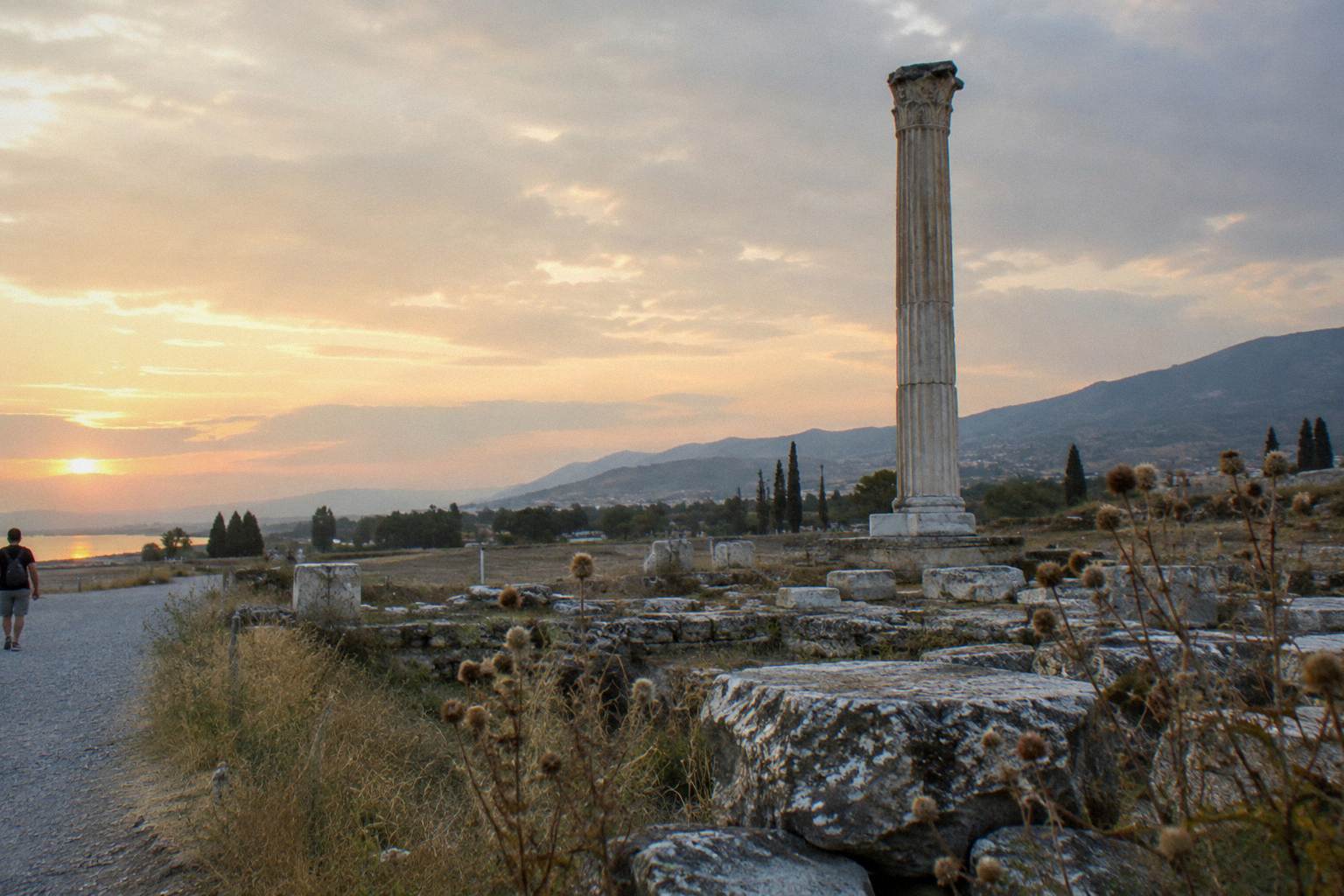
The Temple of Artemis (the Artemision) is an open site on a Selçuk side road with no entry fee. Today one re-erected column stands among the foundations. Many of the tours covered here, including trips from $15 and from $29 per person, name it as a stop, usually after Ephesus and the House of the Virgin Mary.
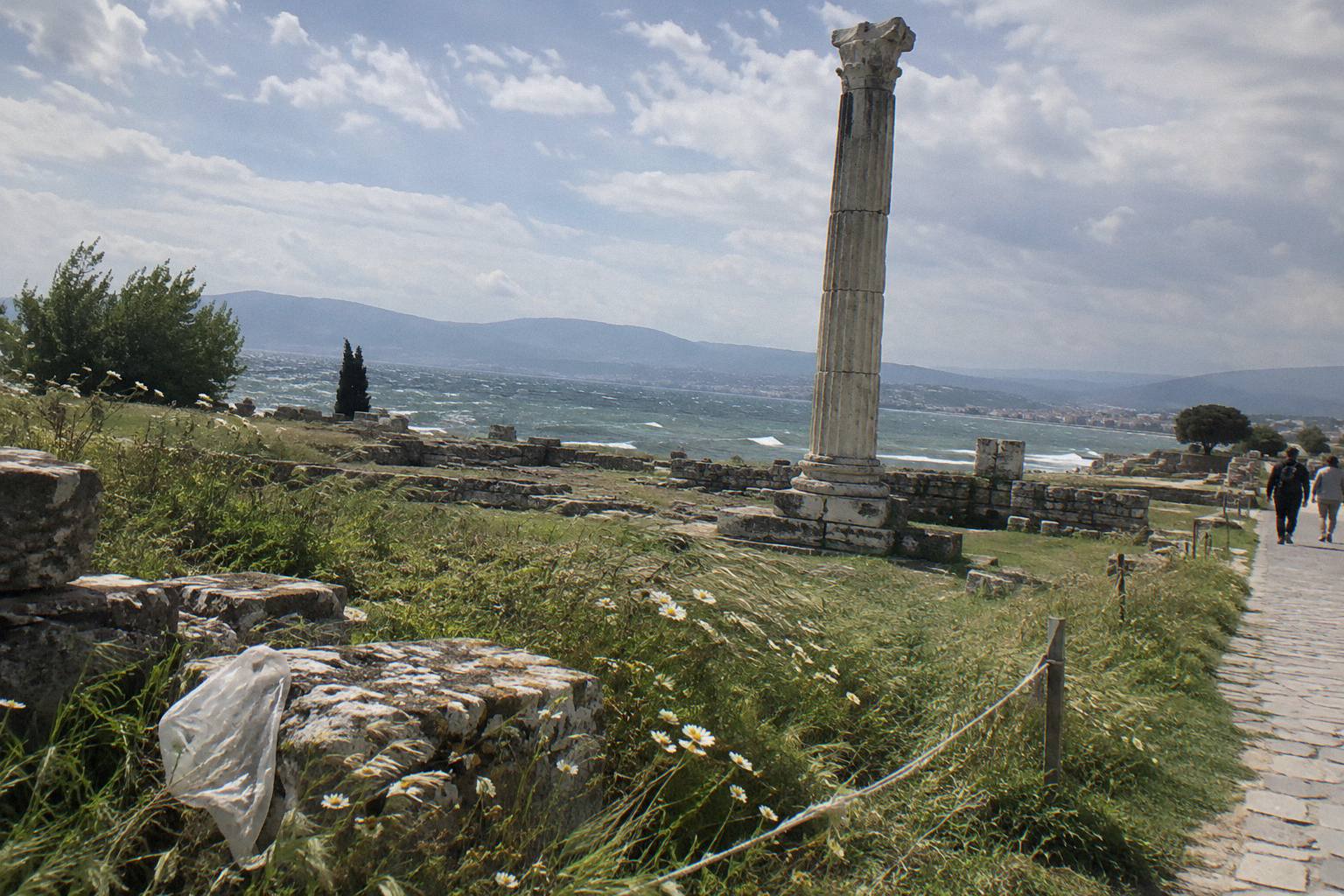
One re-erected column. That is the size of the Temple of Artemis today, the Artemision, the shrine that the silversmiths of Acts 19 defended with a riot. The rest is foundations, marshy ground and stork nests on the low walls, on a side road outside Selçuk, a few minutes by vehicle from the main Ephesus ruins. There is no ticket gate, no opening hours to miss, and no fee to pay: the published Ministry fee list does not include it because it is an open site.
For a Bible reader, that makes the Artemision an unusual stop. You do not come for the architecture, since almost none survives above ground. You come because the goddess honoured here is named in Acts 19 more directly than almost any other object in the New Testament, and because standing at her temple site puts the riot in the Great Theatre into context. Biblical Ephesus Tour covers the whole city stop by stop, and this guide handles the Artemision alone: what stands there, which trips name it, and how long it deserves on your day.
Do Biblical Tours Actually Stop At The Temple Of Artemis?
Yes, and often: more than a dozen of the day trips covered here name the Temple of Artemis explicitly, usually paired with the Ephesus ancient city and the House of the Virgin Mary. It is normally a photo stop of minutes rather than hours, because the site is an open field with one standing column, no entry fee and no interior to walk through. That is why operators add it so readily.
The pattern repeats across the trip descriptions from Kuşadası. The Best-Seller Cruise Tour from the port, run by Moira Travel Agency, lists its stops as the Ephesus ancient city, the House of the Virgin Mary, the Library of Celsus, the Great Theatre and the Temple of Artemis, from $15 per person, rated 4.9 from 1,190 reviews. That trip runs 4 to 6 hours with port or hotel pickup and drop-off; entrance tickets are paid separately under its default option, and the published Ministry fees (EUR, changing yearly, check before going) are covered in the Ephesus entrance fees and Museum Pass guide. Check availability if that shape of day suits your port call.
Private trips follow the same template. "Private Skip-The-Line Access" from OTTI Travel names the Temple of Artemis alongside Ephesus, the House of the Virgin Mary and the Basilica of St John, from $49 per person, 4.9 from 590 reviews. "Guide Of Ephesus Private" does the same from $22.73 per person, 5.0 from 164 reviews, with lunch in the countryside included. On private trips the per-person figure falls as your group grows, so the starting price is the smallest-group case, never a quote for a family of six.
The contrast worth noticing is which trips leave it out. The all-inclusive days with Bible-oriented guides, "Bible Oriented Guide, All Inclusive" and "No Hidden Fees, Lunch Included", itemise only Ephesus, or Ephesus with St John and the Terrace Houses, and do not name the Artemision. If the temple site matters to you, the itinerary list is the place to confirm it before paying for a premium day.
The three trips above all name the temple. They differ in what else is bundled: one is the cheapest way to see it, one adds lunch, and one pairs it with an on-time return listed for cruise guests.
Which Tours Name The Artemision, And What Do They Cost?
The trips naming the Temple of Artemis span from $15 per person on the shared-vehicle Best-Seller up to $189 per person on the Okeanos all-inclusive day, with every price in between. Ratings across these trips range from 4.8 to 5.0 with review counts from 25 to 1,190. None of them charges extra for the Artemision stop itself, since the site has no entry fee; what separates them is lunch, tickets and guide type.
The table below gathers the day trips from Kuşadası that list the Temple of Artemis by name. Every price is a from-price per person; on private trips that figure falls as the group grows.
| Tour | Price | Duration | Rating | Tickets |
|---|---|---|---|---|
| Best-Seller Cruise Tour, Ticket Option | from $15 per person | 4 to 6 hours | 4.9 from 1,190 reviews | Paid separately (included only via its ticket option) |
| Travelshow Private, Lunch Included | from $39.04 per person | 4 to 6 hours | 4.9 from 918 reviews | Paid separately |
| Private Skip-The-Line Access | from $49 per person | 4 to 6 hours | 4.9 from 590 reviews | Paid separately |
| Guide Of Ephesus Private | from $22.73 per person | 4 to 6 hours | 5.0 from 164 reviews | Paid separately, guide arranges |
| Licensed Guide, Tickets Arranged | from $39 per person | 4 to 6 hours | 4.8 from 84 reviews | Paid separately, arranged in advance |
| Shore Of Legend, Lunch Included | from $29 per person | 5 to 6 hours | 5.0 from 55 reviews | Paid on site |
| Tour Altinkum Travel port day | from $50 per person | 4 to 6 hours | 4.8 from 29 reviews | Paid separately |
| Okeanos All Inclusive, 6 Hours | from $189 per person | 6 hours | Fewer than 20 reviews | Operator lists entrance fees as included |
Two details to read closely. First, "paid separately" means the Ephesus ticket (published fee EUR 40, changes yearly, check before going) and the other Ministry sites are your own cost on top of the tour price; the Artemision itself adds nothing because it is free. Second, only the Okeanos day on this list has the operator listing entrance fees as included. If you want the temple stop with zero on-the-day payments, that is the row to compare.
All of these trips carry free cancellation up to 24 hours before the start, which matters when a port call is uncertain.
How Does Acts 19 Tie Paul To The Temple Of Artemis?
Acts 19 makes the Artemision the backdrop to the most dramatic scene of Paul's Ephesus years. A silversmith named Demetrius, who made silver shrines for the goddess, rallies the city's craftsmen against Paul's teaching, and the crowd storms the Great Theatre crying her name. The temple itself is never described physically in the New Testament; its presence is felt through the economy and civic pride it commanded.
Paul's connection to Ephesus begins earlier. Acts 18:19 records his first, brief visit: "And he came to Ephesus, and left them there: but he himself entered into the synagogue, and reasoned with the Jews." He returned on his third journey, per Acts 19:1, "...Paul having passed through the upper coasts came to Ephesus...", and stayed two to three years: Acts 19:10 gives two years and Acts 20:31 three, and the two figures are simply left side by side.
The chapter's sequence, verse by verse, is worth laying out before you stand at the site:
| Verse | What Happens | Where It Lands Today |
|---|---|---|
| Acts 18:19 | Paul's first, brief visit; he reasons in the synagogue | Ephesus ancient city |
| Acts 19:8 | He speaks boldly in the synagogue for three months | Ephesus ancient city |
| Acts 19:10 | Two years of teaching; "all they which dwelt in Asia heard the word" | Ephesus, city-wide |
| Acts 19:24-28 | Demetrius the silversmith rallies the craftsmen; the crowd cries "Great is Diana of the Ephesians" | Temple of Artemis |
| Acts 19:29 | The crowd "rushed with one accord into the theatre" with Gaius and Aristarchus | Great Theatre |
| Acts 19:35 | The town clerk calls Ephesus "a worshipper of the great goddess Diana" | Great Theatre and Artemision |
| Acts 20:17, 20:31 | From Miletus, Paul sends for the elders; "by the space of three years" | Recalled from the site |
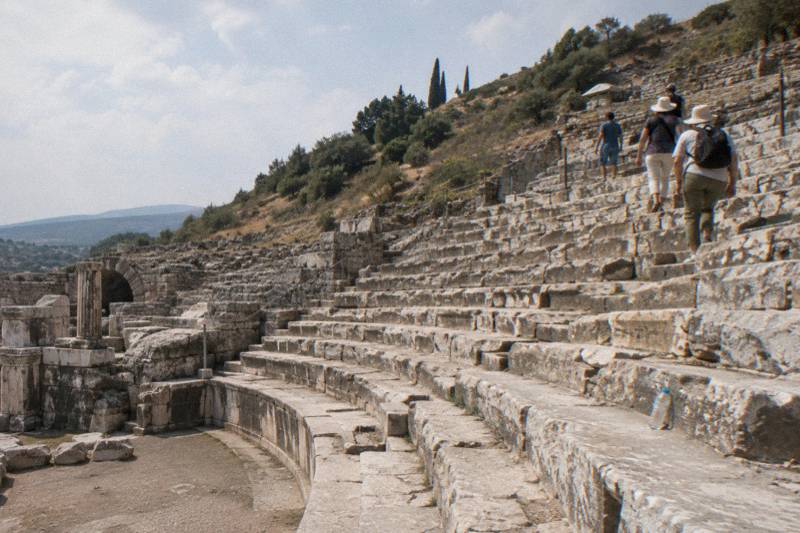
The theatre named in Acts 19:29, roughly 25,000 seats by the usual estimate, is the same Great Theatre you can sit in today inside the Ephesus ruins; the Great Theatre and Curetes Street guide covers that half of the story. The town clerk's line in Acts 19:35, "a worshipper of the great goddess Diana, and of the image which fell down from Jupiter", points straight at the temple's legendary cult statue. Standing at the Artemision after reading those verses, the geography does its own teaching: the temple and the theatre belong to one city, one goddess, one economy. Walking Paul's full Ephesus story is laid out in the following Paul's steps guide.
The Moira Travel Agency day is the cheapest trip here that names the Artemision, the Great Theatre and the House of the Virgin Mary in one itinerary, and its cancellation terms are free up to 24 hours before the start.
What Do You Actually See At The Site Today?
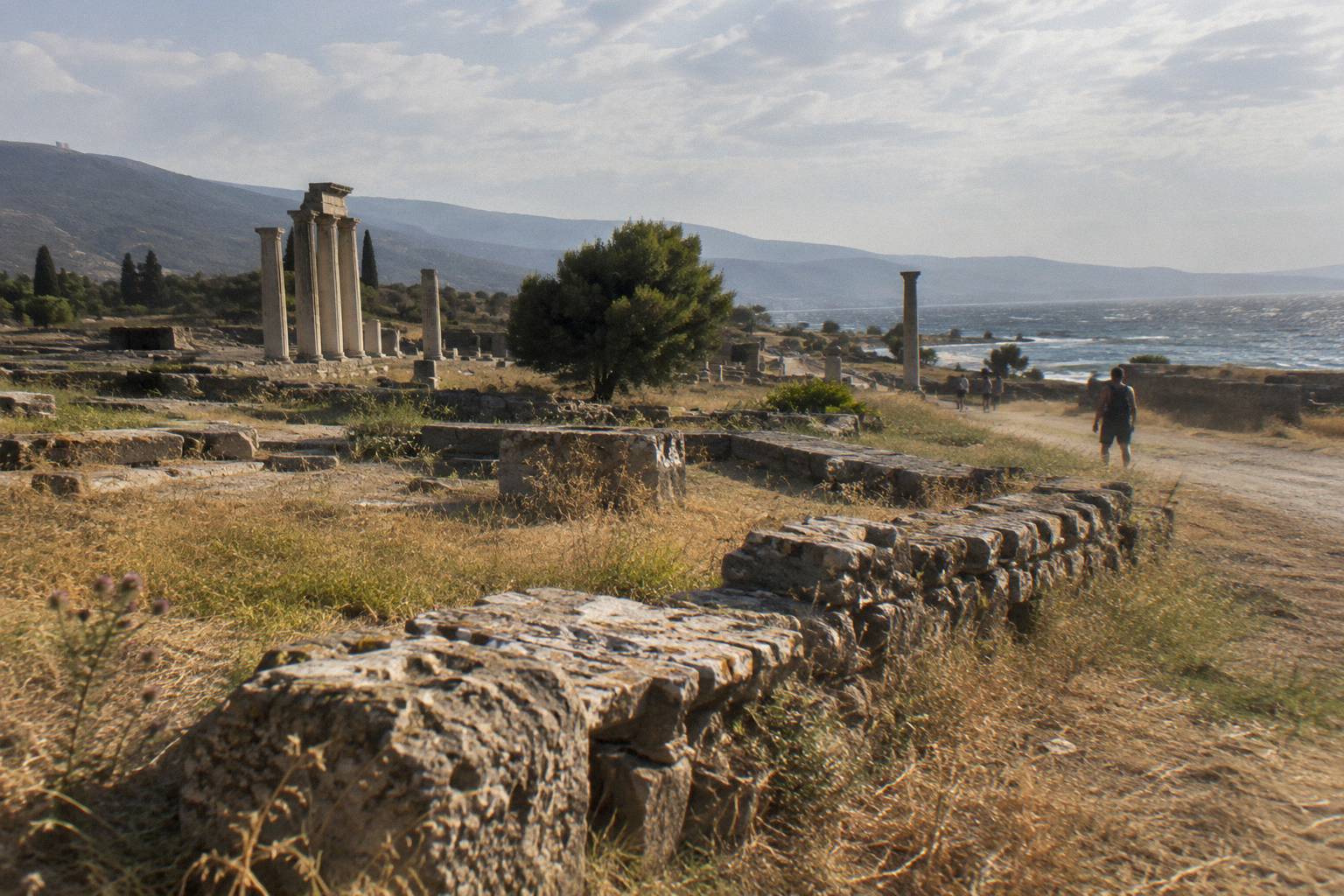
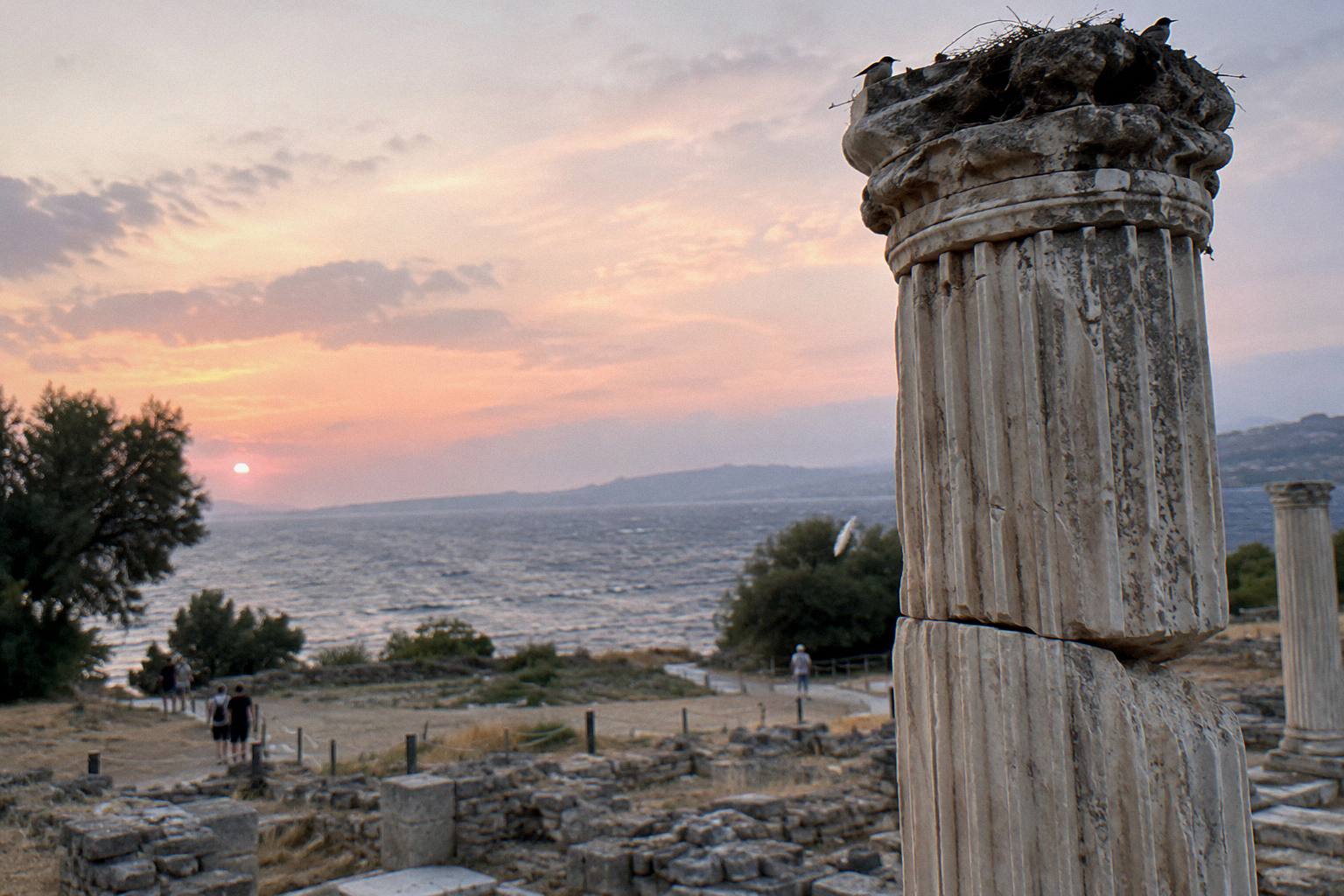
You see foundations, a marshy depression where the temple platform sat, and a single column re-erected from original drums in modern times. There is no colonnade, no cella, no sculpture garden and no roof: the standing temple vanished centuries ago. The visit is a short walk along the edge of the ruins, with the Isa Bey Mosque on the rise above and storks often nesting on the walls.
The Temple of Artemis was one of the Seven Wonders of the Ancient World, and its scale in antiquity was the wonder: the site is larger than a football pitch even as an empty rectangle. The temple's history covers the successive builds on the spot, ending with its final destruction and the gradual robbing of its stone for other buildings, including, by tradition, elements of later Selçuk construction. The Ministry's own Ephesus page describes the city as built around an ancient shrine of the earth goddess Artemis, which places this empty field at the origin of everything up the hill. See the Ministry of Culture and Tourism's Ephesus page for that framing.
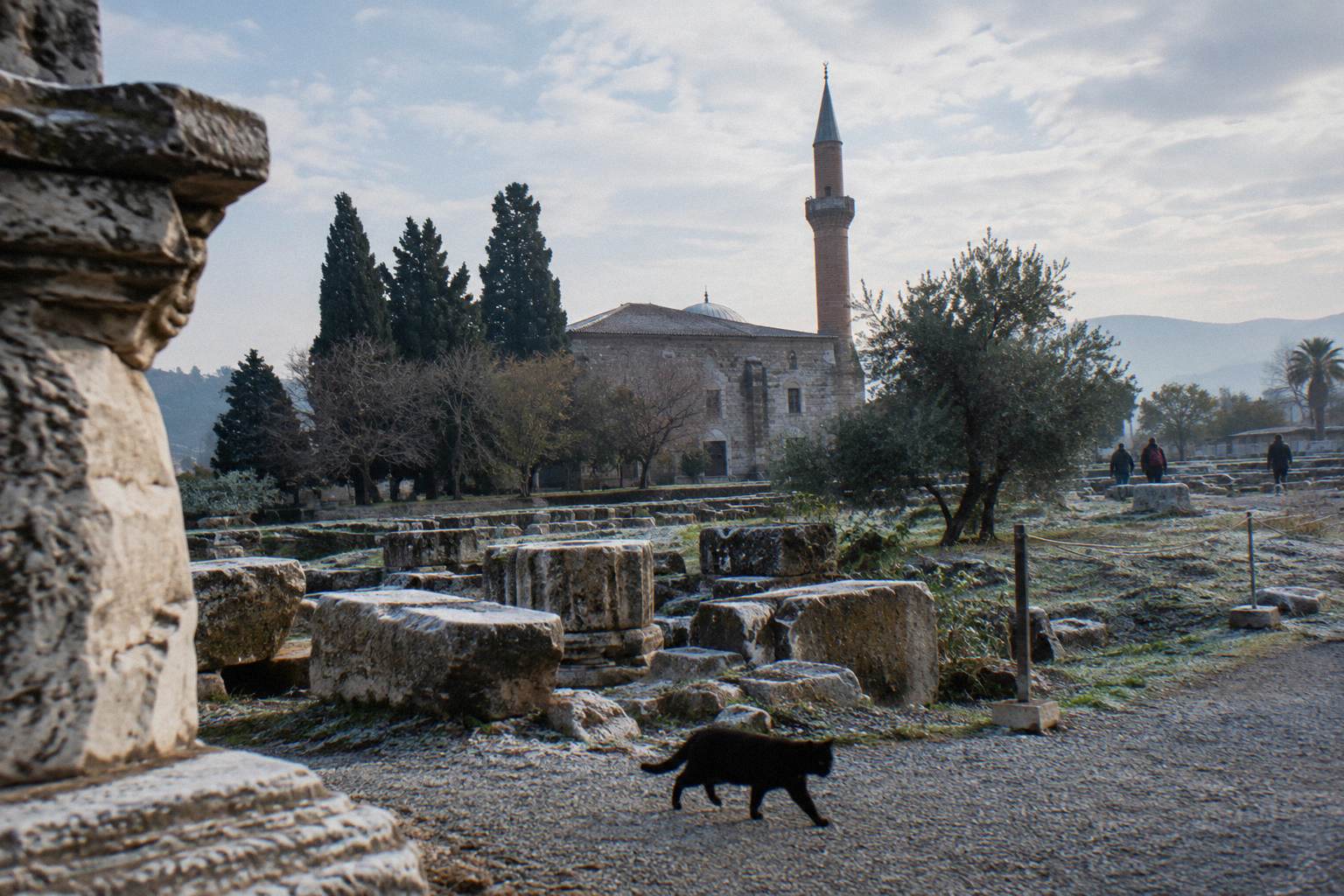
What a stop typically looks like: the vehicle pulls off the Selçuk side road, the guide gives the Acts 19 context while you look across the foundations, you take a photo with the column behind you, and you move on. Some guides point out the nesting storks; some connect the site visually to the Basilica of St John on Ayasuluk Hill above, whose story is covered in the Basilica of St John guide. Ten to fifteen minutes is a typical photo stop; no trip here promises longer, and longer is not really needed at an open site with no interior.
One caveat: travelers expecting the Seven Wonders postcard are sometimes deflated. The wonder is in the story, not the stones. If you want the temple's marble up close, the Ephesus Museum in Selçuk town (published fee EUR 10, changes yearly, check before going) has an Artemis Temple Findings hall, and the Ephesus Museum stop guide explains what is in it.
Is The Stop Free, And How Long Should It Take?
Yes, the Artemision costs nothing to enter: it is an open roadside site with no gate and no published fee, unlike Ephesus (EUR 40) and the Basilica of St John (EUR 6). Plan on a stop of minutes rather than an hour, since there is no interior, no ticket queue and roughly one column to see. The only cost attached to the stop is the tour price that carries you to it.
Because there is nothing to buy at the site, the money questions on this stop are all about the rest of the day. The Ministry's published fees for non-Turkish adults, which change yearly (check before going), look like this:
| Site | Published Fee (EUR) | Notes |
|---|---|---|
| Temple of Artemis | None | Open site on the Selçuk side road |
| Ephesus Archaeological Site | 40 | Includes the Ephesus Experience Museum |
| Basilica of St John | 6 | On Ayasuluk Hill in Selçuk |
| Ephesus Museum (Selçuk town) | 10 | Includes Artemis Temple Findings hall |
| Terrace Houses | 15 | Separate ticket, not covered by the Museum Pass |
| Museum Pass Türkiye | 165 | 15 days, one entry per museum, 350+ Ministry sites |
The Museum Pass covers the main Ephesus site, the Ephesus Museum and the Basilica of St John but not the Terrace Houses and not the House of the Virgin Mary, which is not a Ministry site. The Artemision needs no pass because it needs no ticket. A full worked comparison of ticket options sits in the which prices include tickets guide.
"Shore Of Legend, Lunch Included" is a good mid-price example of how the free stop combines with paid ones: from $29 per person, 5.0 from 55 reviews, 5 to 6 hours, with lunch, an air-conditioned vehicle, guiding and insurance included while the Ephesus, House of Mary and St John fees are paid on site. The Artemision appears in its stop list at no extra cost.
Timing matters on cruise days more than money does. Kuşadası calls typically run 8 to 11 hours, and the ship's own all-aboard time governs everything; the Artemision's brevity is exactly why it fits so easily into a tight shore day between the two ticketed sites.
Which Trip Shape Pairs Best With The Temple Stop?
The trips naming the Artemision fall into three shapes: budget port days with tickets separate, private days with lunch and arranged tickets, and all-inclusive days where the operator lists entrance fees as included. All three reach the same open field. The choice turns on whether you want to handle EUR fees at each gate or pay one price and walk through.
The budget shape is the Moira Travel Agency day: from $15 per person, port or hotel pickup and drop-off, 4 to 6 hours, tickets separate unless you take its ticket option. The private-lunch shape includes "Travelshow Private, Lunch Included" (from $39.04 per person, 4.9 from 918 reviews), which lists a Professional Tour Guide with Biblical Expertise, a local lunch, a private vehicle, skip-the-lines wording attributed to the operator, and an on-time return for cruise guests among its inclusions; its exclusions list the Ephesus, House of Mary and St John tickets, so those are paid separately. A second private option, "Licensed Guide, Tickets Arranged" from Private Ephesus Tours, from $39 per person, 4.8 from 84 reviews, has the operator arranging tickets in advance for you to skip long ticket lines.
The all-inclusive shape is "Okeanos All Inclusive, 6 Hours": from $189 per person, 6 hours, with the operator listing entrance fees to museums and sites as included, along with pickup and drop-off service and a licensed professional guide; lunch is not mentioned in its inclusions. It shows fewer than 20 reviews, so there is no rating to weigh; judge it on its itinerary rather than its stars.
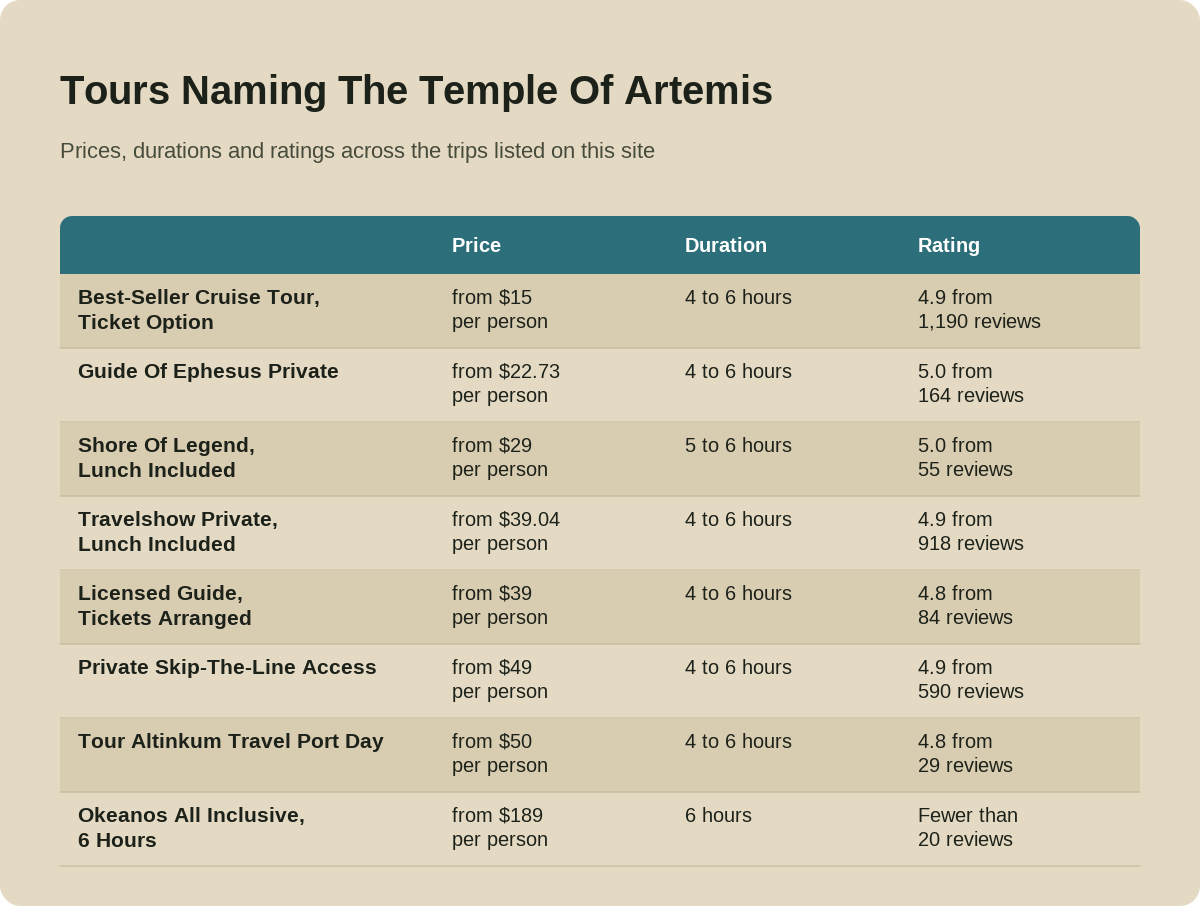
The comparison above shows the real spread: the temple stop is identical everywhere, so the price gap between the cheapest and the most expensive day buys tickets, lunch, guide type and vehicle privacy, not a better column.
What Else Is Near The Artemision On The Same Stop?
The site sits between three other stops that most tours bundle into the same hour: the Basilica of St John and the Isa Bey Mosque on Ayasuluk Hill directly above it, the Ephesus Museum in Selçuk town a short drive away, and the main Ephesus ruins a few minutes onward. Together with the Artemision these form the Ayasuluk component of the UNESCO World Heritage listing.
Ephesus has been on the UNESCO World Heritage List since 2015, and the inscribed serial property is broader than the marble streets most visitors see: it includes the Ancient City of Ephesus, Ayasuluk Hill (the Basilica of St John, the Isa Bey Mosque and the Temple of Artemis area) and Çukuriçi Mound. The Artemision is therefore inside the World Heritage boundary even though it charges nothing.
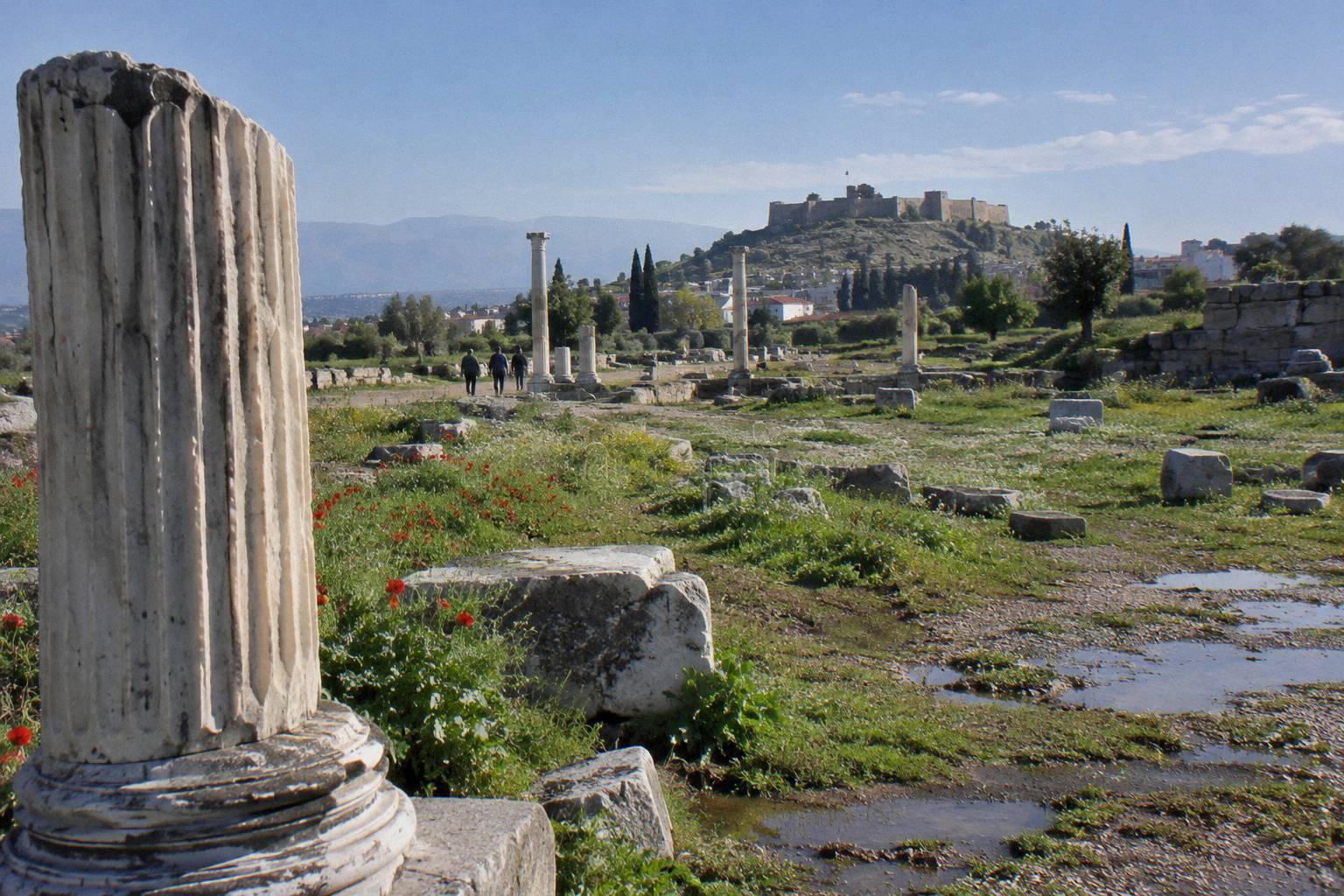
The pairing with the Basilica of St John is the most common. The Ministry text says John is "believed to have written" the Gospel of John in Ephesus, and the 6th-century basilica stands over his traditional tomb; there is no archaeological confirmation of remains, so it is always the traditional tomb. Tour Altinkum Travel's port day (from $50 per person, 4.8 from 29 reviews) names Ephesus, the House of the Virgin Mary, the Temple of Artemis, the Basilica of St John, the Great Theatre and the Library of Celsus in one 4 to 6 hour itinerary with a licensed guide and an on-time return listed for cruise guests; its exclusions list the entrance fees. Two stops, one hill, ten minutes apart.
The multi-day Seven Churches trips that pass through the region, such as the 3-day Tour Altinkum Travel itinerary (from $1,190 per person, fewer than 20 reviews, free cancellation up to 144 hours before the start), also name the Temple of Artemis and the Basilica of St John on their Ephesus day, with entry tickets to historical sites listed as excluded. The Seven Churches route guide covers how those longer trips string the sites together.
What Should You Know Before The Artemision Stop?
Almost nothing can go wrong at this stop: there is no ticket, no gate, no schedule and no fee. Bring water in summer, keep shoulders and knees covered out of respect at the nearby shrine stop, hold the ship's all-aboard time as your real deadline, and read the current official travel advisory for Türkiye on the day you book, since advisories change.
On clothing: the Artemision itself imposes nothing, but most itineraries pair it with the House of the Virgin Mary, an active chapel where shoulders and knees are covered per the signs at the entrance, as visitor guides report. The what to wear on a Bible tour guide handles the full kit list. On weather, İzmir figures (the nearest published station) show July and August as the hottest months with mean daily maxima of 33.3 °C and 33.0 °C and almost no rain; April to early June and late September to October sit between the cool wet winter and the hottest weeks. The seasonal detail is in the when to visit guide.
On safety, the facts as the official advisories word them: the US State Department lists Türkiye at Level 2, "Exercise Increased Caution", citing terrorism, armed conflict and arbitrary detentions, with a Level 4 "Do Not Travel" advisory covering the area within 10 km of the Syrian and Iraqi borders. The UK Foreign Office advises against all travel to within 10 km of the Syria border. Neither advisory names İzmir province, Selçuk, Kuşadası or Ephesus as a restricted area. Advisories change; read them on the day of booking, and pair that with each trip's own free-cancellation terms, which on every day trip above run up to 24 hours before the start.
Common Questions About The Temple Of Artemis Stop
Is The Temple Of Artemis Worth Seeing If Only One Column Stands?
It depends on what you come for. The site has no standing temple, but it is one of the Seven Wonders of the Ancient World, it is free, and it is the geographical anchor for Acts 19. Most tours make it a stop of minutes, which is enough for the foundations, the column and the story.
Does The Temple Of Artemis Have An Entrance Fee?
No. It is an open site on a Selçuk side road with no gate and no published fee. The Ministry fee list does not include it. The nearby Ephesus site (EUR 40) and Basilica of St John (EUR 6) do charge published fees, which change yearly; check before going.
Which Biblical Tours Stop At The Temple Of Artemis?
More than a dozen of the trips covered here name it, including the Best-Seller Cruise Tour (from $15 per person), Travelshow Private (from $39.04 per person), Private Skip-The-Line Access (from $49 per person) and the Tour Altinkum Travel port day (from $50 per person). The all-inclusive Bible-oriented days that itemise only Ephesus do not name it.
What Does Acts 19 Say About The Temple Of Artemis?
Acts 19:24-28 records Demetrius the silversmith, who "made silver shrines for Diana", warning that Paul's teaching threatened "the temple of the great goddess Diana", after which the crowd cried "Great is Diana of the Ephesians" and rushed into the theatre. Acts 19:35 has the town clerk call the city "a worshipper of the great goddess Diana, and of the image which fell down from Jupiter".
How Far Is The Artemision From The Ephesus Ruins?
It is in the Selçuk area, a few minutes by vehicle from the main Ephesus entrance and directly below Ayasuluk Hill, where the Basilica of St John stands. Tours typically pair the two in the same stretch of the day.
Is The Temple Of Artemis Part Of The UNESCO Listing?
Yes. The World Heritage listing for Ephesus, inscribed in 2015, includes Ayasuluk Hill with the Temple of Artemis area, the Basilica of St John and the Isa Bey Mosque, along with the Ancient City of Ephesus and Çukuriçi Mound.
The temple stop is identical on all three: one column, open foundations, Acts 19 in your guide's telling. What you are choosing between is the rest of the day, from the from-$15 budget port run to the from-$50 Tour Altinkum Travel itinerary with the Basilica of St John included.